Teaching Kafka: When the Extraordinary Becomes Ordinary
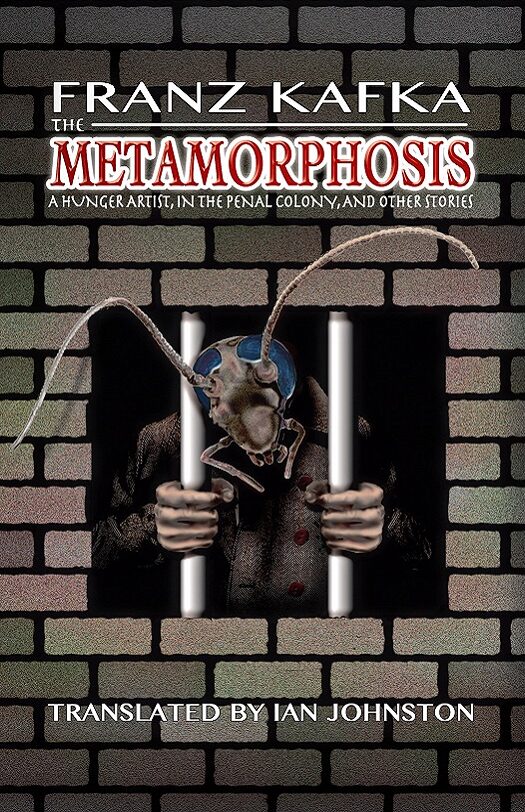
Franz Kafka’s stories often present impossible or disturbing events in a calm, precise voice. Their unsettling power comes partly from the distance between what happens and how it is narrated. Ian Johnston’s translation for Richer Resources Publications brings together eleven stories that invite students to examine identity, social pressure, authority, guilt, and the limits of interpretation.
Historical and Literary Context
Franz Kafka (1883–1924) was a German-language Jewish writer living in Prague, then part of Austria-Hungary. His work is associated with literary modernism, though it resists simple classification.
Kafka’s employment in insurance and his experience of complex institutions offer useful context, but no single biographical explanation can account for the stories. Several texts in the collection were unfinished or published after his death; teachers should be alert to their editorial histories.
Stories in the RRP Collection
The collection includes “Metamorphosis,” “In the Penal Colony,” “A Hunger Artist,” “A Report for an Academy,” “The Great Wall of China,” “Jackals and Arabs,” “Before the Law,” “Up in the Gallery,” “A Country Doctor,” “The Hunter Gracchus,” and “An Imperial Message.”
Rather than attempting every story in equal depth, select a core group and use shorter pieces for comparison.
Key Texts and Questions
“Metamorphosis.” Gregor Samsa awakens transformed. Examine the family’s changing treatment of him, his work obligations, and the distinction between human worth and usefulness. Avoid reducing the transformation to one fixed symbol.
“In the Penal Colony.” An elaborate execution machine makes punishment visible on the body. Discuss law, institutional violence, obedience, and the officer’s devotion to a collapsing system.
“A Hunger Artist.” A performer’s fasting becomes a public spectacle. Explore artistic identity, audience expectations, recognition, and the ambiguous final revelation.
“Before the Law.” A man waits for admission to the law. Consider inaccessible authority, self-restraint, and why the story frustrates any definitive moral.
“A Report for an Academy.” A former ape describes his acquisition of human behavior. Analyze adaptation, coercion, performance, and the distinction between freedom and finding a way out.
Major Themes and Narrative Methods
Alienation and belonging. Characters are excluded from family, society, or systems they hope to enter.
Authority and bureaucracy. Rules appear powerful even when their grounds remain obscure.
Body and identity. Transformation, hunger, injury, and performance raise questions about personhood.
Flat narration and ambiguity. A restrained voice reports extraordinary situations without fully explaining them.
Interpretive uncertainty. Allegorical readings are useful when supported by details, but Kafka rarely supplies a single answer.
Learning Objectives
Students should be able to identify Kafka’s characteristic narrative tone; analyze how social and institutional authority operates; compare at least two stories; distinguish textual evidence from speculative allegory; and develop interpretations that acknowledge ambiguity.
Suggested Four-Session Sequence
Session 1 — The Kafkaesque: Read the opening of “Metamorphosis.” Discuss tone, expectations, and Gregor’s first concerns.
Session 2 — Family and identity: Trace shifts in the Samsa household and debate the meanings of responsibility and usefulness.
Session 3 — Institutions and punishment: Pair “In the Penal Colony” with “Before the Law.” Compare visible violence and inaccessible rules.
Session 4 — Art and performance: Read “A Hunger Artist” or “A Report for an Academy”; synthesize across stories through a short comparative essay.
Discussion Questions
- Why does Kafka describe disturbing events in such controlled language?
- When does Gregor’s family begin to treat him as less than a person?
- What sustains the authority of the machine in “In the Penal Colony”?
- Is the man in “Before the Law” prevented from entering, or does he also restrain himself?
- How do performance and social expectations shape identity in “A Hunger Artist” and “A Report for an Academy”?
- What is gained—and lost—when we call a Kafka story an allegory?
Activities and Assessment
Tone experiment: Rewrite a brief passage in an emotional voice; compare the effect with Kafka’s restrained narration.
Authority map: Chart who gives orders, who obeys, and which rules remain unexplained in two stories.
Comparative essay: Analyze how two Kafka stories present a character seeking acceptance from a family, audience, or institution. Require close textual evidence and a discussion of ambiguity.
Teaching Considerations
“In the Penal Colony” includes graphic institutional cruelty; “Metamorphosis” involves neglect and death; other stories address distress and coercion. Give content context and alternative discussion formats as needed.
Do not equate Kafka’s Jewish identity or personal experiences with a universal explanation of his fiction. Assign by story title and verify quotations in Johnston’s edition; some posthumously published stories have variant editorial histories.
Concluding Perspective
Kafka’s fiction is most rewarding when students learn to make careful claims without expecting every mystery to disappear. Its unusual events expose ordinary habits of obedience, exclusion, and judgment, while remaining open to competing readings.
A printable PDF version of this resource is available by email.