Introduction: Teaching Transformation in Ovid’s Metamorphoses
Ovid’s Metamorphoses is a fifteen-book Latin narrative poem that moves from the creation of the world to the age of Julius Caesar and Augustus. Its stories of changed bodies, shifting identities, divine interventions, and human desires invite students to examine what transformation reveals about power, vulnerability, memory, and art.
Rather than reading the work as a loose mythological encyclopedia, students should consider how Ovid links episodes through recurring images, contrasts, and transitions.
The Richer Resources Publications edition is translated into English verse by Ian Johnston. Because wording and pagination differ across editions, this guide uses book references rather than unverified English quotations or line numbers.
Historical and Literary Context
Ovid (Publius Ovidius Naso, 43 BCE–17/18 CE) wrote during the Augustan age. The poem draws on Greek and Roman myth, earlier epic, tragedy, and Hellenistic storytelling.
Its opening invokes change and establishes an expansive scope; its closing turns to poetic survival. Teaching should distinguish the mythical time within stories from the Roman political world in which Ovid wrote.
The Poem’s Structure and Narrative Movement
Books I–II: Beginnings and Divine Power
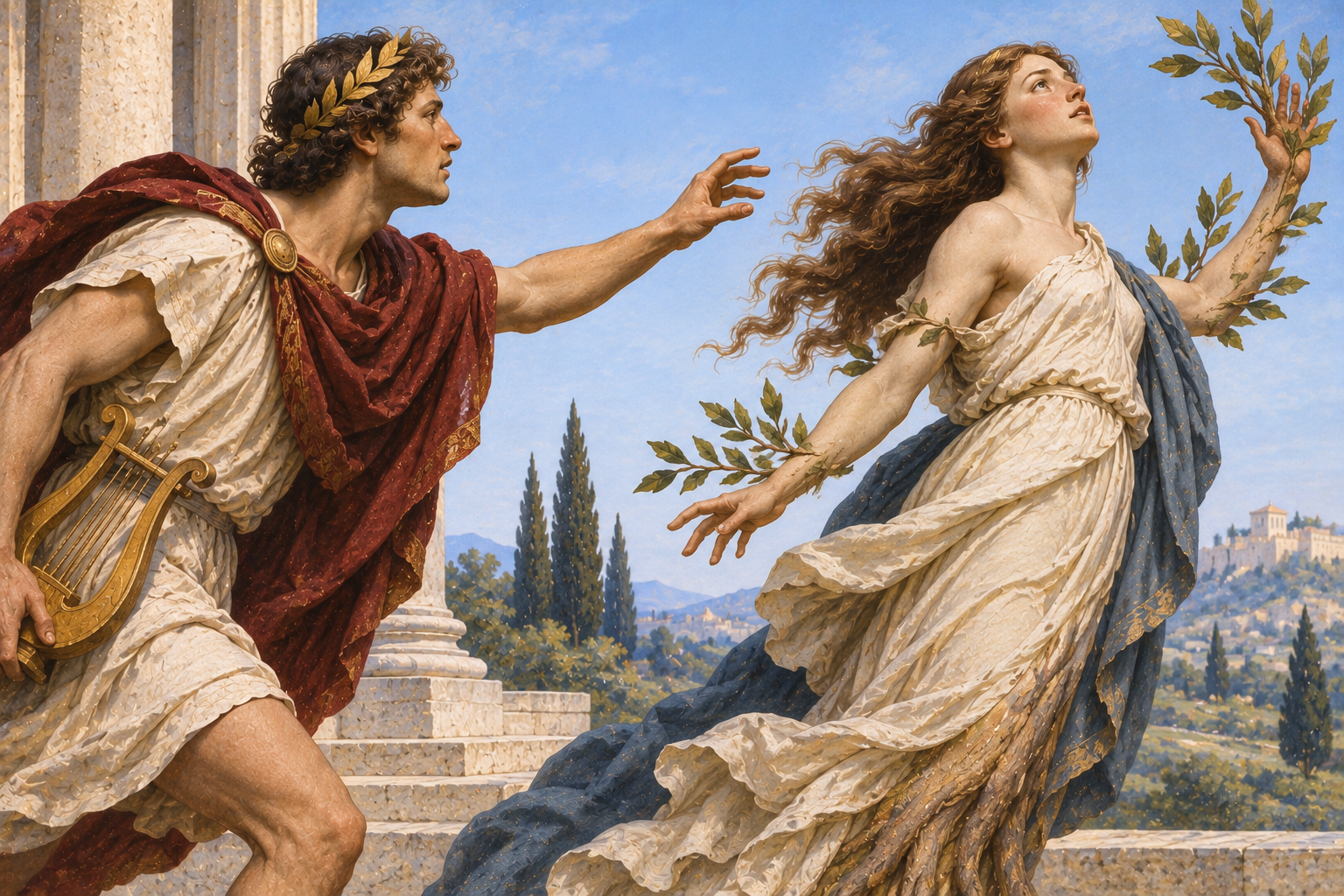
Creation, the ages of humankind, the flood, Apollo and Daphne, Io, Phaethon, and Callisto introduce change as both cosmic principle and personal crisis.
Books III–IV: Seeing, Speaking, and Believing
Actaeon, Narcissus and Echo, Pentheus, and the daughters of Minyas explore forbidden vision, desire, resistance, and the consequences of disbelief.
Books V–VI: Artistic Contest and Punishment
Persephone, Arachne, and Niobe raise questions about divine authority, rivalry, pride, grief, and the power of representation.
Books VII–IX: Desire, Violence, and Heroic Lives
Medea, Cephalus and Procris, Daedalus and Icarus, and Hercules connect transformation to ingenuity, love, and loss.
Books X–XI: Art, Desire, and Mourning
Orpheus, Pygmalion, Myrrha, Adonis, and Midas make storytelling and artistic creation central concerns.
Books XII–XV: Epic History and Continuity
The Trojan cycle, Aeneas, Rome, Pythagoras’ account of change, and Caesar’s apotheosis move toward the poet’s claim to enduring fame.
Major Themes and Teaching Approaches
Transformation and Identity
Ask what changes physically and what remains recognizable. A metamorphosis can be escape, punishment, preservation, or a mixture of these.
Power and Consent
Many episodes involve unequal power, pursuit, coercion, and suffering. Teach these events without treating divine behavior as automatically morally justified.
Voice, Silence, and Witness
Echo, Philomela, and other figures invite close attention to who can tell a story, who is silenced, and how testimony survives.
Art and Rivalry
Arachne, Orpheus, and Pygmalion raise questions about what artists create, whom they challenge, and what art can or cannot restore.
Change and Permanence
Contrast Pythagoras’ account of a changing world in Book XV with the poet’s closing assertion that his work will endure.
Narrative Framing
Stories are frequently embedded within other stories. Ask who narrates, why a particular tale is told, and how framing shapes the reader’s judgment.
Learning Objectives
By the end of the unit, students should be able to:
- Identify the poem’s fifteen-book structure and describe its movement from origins to Rome.
- Analyze at least three different functions of metamorphosis.
- Explain how narrator, audience, and framing affect a myth’s meaning.
- Evaluate the portrayal of divine authority, consent, and human agency.
- Compare recurring images and themes across separate episodes.
- Support interpretations with precise references to the relevant book and episode.
Suggested Five-Session Teaching Sequence
Session 1 — Origins and the Logic of Change (Book I)
Begin with creation and the ages of humankind; examine Apollo and Daphne to distinguish cosmic transformation from personal loss.
Session 2 — Vision, Desire, and Identity (Books III–IV)
Pair Actaeon with Narcissus and Echo; ask how looking and being looked at shape each story.
Session 3 — Art, Power, and Grief (Book VI)
Read Arachne and Niobe; consider the difference between artistic excellence, defiance, and punishment.
Session 4 — Love and the Artist (Books VIII and X)
Compare Daedalus and Icarus with Orpheus and Pygmalion; examine invention, artistic ambition, and limits.
Session 5 — Philosophy, Rome, and Poetic Immortality (Book XV)
Discuss Pythagoras’ discourse, the movement into Roman history, and the poem’s final claim.
Passages for Close Reading
Book I — Creation and Apollo and Daphne
What connects the opening idea of change to a story of pursuit and attempted escape?
Book III — Narcissus and Echo
How does the narrative use repetition, reflection, and the inability to communicate?
Book VI — Arachne
What does the woven artwork depict, and how might its subject matter challenge divine authority?
Book VIII — Daedalus and Icarus
How does the episode balance admiration for invention with anxiety about its consequences?
Book X — Orpheus and Eurydice
What does the episode suggest about the power and limits of song?
Book XV — Pythagoras and the Epilogue
How does perpetual change coexist with the poet’s promise of literary survival?
Discussion Questions
- Does transformation usually resolve a conflict, or merely change its form?
- When Ovid describes divine punishment, does the narrator invite admiration, sympathy, criticism, or uncertainty?
- How does Ovid’s treatment of the same theme differ between Apollo and Daphne and Narcissus and Echo?
- What can a character preserve after losing a human body or voice?
- How do the stories of Arachne and Orpheus comment on Ovid’s own art?
- What effect does the poem’s movement from mythology to Roman history have on its ending?
Classroom Activities and Assessments
Transformation Map
Groups classify six episodes by the agent of change, the new form, and whether the result is protective, punitive, liberating, or ambiguous. Discuss cases that resist a single category.
Narrator Investigation
Students choose an embedded tale and identify the speaker, immediate audience, and possible motive for telling it.
Comparative Close Reading
Pair Apollo and Daphne with Arachne or Narcissus and Echo. Require evidence for a claim about agency, identity, or power.
Creative Retelling with Commentary
Students retell a brief scene from a marginalized character’s perspective, then explain in a short commentary which details from Ovid they retained or changed.
Analytical Essay
“In Metamorphoses, physical change reveals rather than erases identity.”
Assess the claim using three episodes from different books.
Teaching Challenges and Safeguards
Several episodes depict sexual pursuit, coercion, violence, and the suffering of children or families. Preview assigned passages, provide content notices where appropriate, and offer alternative episodes for students who need them. Distinguish careful literary analysis from approval of characters’ actions.
Avoid reducing every transformation to a simple moral lesson: Ovid often makes causes and consequences morally unstable. Similarly, do not present the poem as a continuous chronological history; its unity is literary and thematic as much as sequential.
Connections to Other RRP Classics
Homer’s Iliad and Odyssey provide points of comparison for epic narration and divine intervention.
Greek tragedy, including Euripides’ Medea and Bacchae, offers related but differently framed accounts of passion, authority, and divine power.
Lucretius’ On the Nature of Things can support a comparison between mythic and philosophical explanations of change.
Concluding Teaching Perspective
The strongest teaching approach balances close attention to individual myths with the architecture of the whole poem. Students should leave understanding that Ovid’s transformations are not only spectacular events: they are a flexible way of thinking about bodies, power, language, history, and the survival of stories.
A printable PDF version of this resource is available by email.