Family Loyalty, Revenge, and the Search for Justice
Aeschylus’ Oresteia traces a cycle of violence within the House of Atreus. Across three tragedies, relationships between husbands and wives, parents and children, mortals and gods become increasingly difficult to reconcile. The trilogy begins with revenge inside a royal household and concludes with an attempt to establish a different way of resolving bloodshed.
Agamemnon: King, Husband, and Father
Agamemnon returns to Argos after commanding the Greek forces in the Trojan War. His victory cannot erase the suffering caused by his earlier sacrifice of his daughter Iphigenia.
His position as a celebrated military leader contrasts with his responsibilities as a husband and father.
In Agamemnon, his return brings the family's unresolved conflicts to a crisis when Clytemnestra murders him.
Clytemnestra: Wife, Mother, and Avenger
Clytemnestra is among the trilogy's most complex characters. She condemns Agamemnon for sacrificing Iphigenia and presents his murder as an act of justice.
Yet her actions also establish a new obligation of revenge for their surviving children.
Students should consider how Aeschylus gives Clytemnestra powerful reasons for anger without necessarily endorsing the violence she commits.
Aegisthus: Partner in Revenge
Aegisthus joins Clytemnestra in ruling Argos after Agamemnon's death.
His hostility toward Agamemnon arises from an older family conflict involving their fathers, Atreus and Thyestes.
Through Aegisthus, the audience sees that the violence within the House of Atreus extends beyond one marriage or one generation.
Orestes: A Son Divided by Duty
Orestes returns in The Libation Bearers to avenge his father's murder.
Apollo commands him to punish Agamemnon's killers, but fulfilling that command requires him to kill his own mother.
Orestes therefore confronts incompatible obligations: loyalty to his father, obedience to Apollo, and the prohibition against shedding a parent's blood.
His pursuit by the Furies carries this conflict into The Eumenides.
Electra: Daughter and Sister
Electra mourns Agamemnon and joins Orestes in seeking justice for their father's death.
Her reunion with Orestes in The Libation Bearers strengthens the emotional and familial dimensions of his mission.
Although Orestes performs the killings, Electra's grief and loyalty help establish why the surviving children regard revenge as necessary.
Cassandra: The Voice of Prophecy
Cassandra, a Trojan princess brought to Argos as Agamemnon's captive, possesses prophetic knowledge but cannot persuade others to believe her.
She foresees the violence awaiting Agamemnon and herself.
Her presence broadens the tragedy beyond the royal family's immediate grievances, reminding the audience that military victory also produces suffering among the defeated.
Apollo: Divine Command and Defense
Apollo directs Orestes to avenge Agamemnon and later defends him against the Furies.
His authority creates a central difficulty: an action commanded by a god can still violate another sacred obligation.
Apollo's conflict with the Furies reveals competing ideas about guilt, family relationships, and divine justice.
The Furies: Guardians of Blood Kinship
The Furies pursue Orestes because he has killed his mother.
They represent an ancient demand that the shedding of family blood must be punished.
Their claims cannot simply be dismissed as cruelty. The trilogy's conclusion depends upon finding a place for their authority within a new civic order.
Athena: Judgment and Reconciliation
In The Eumenides, Athena establishes a court to hear Orestes' case.
Rather than allowing the conflict to continue through further revenge, she introduces a public process of judgment.
Athena also persuades the Furies to accept an honored place in Athens, making reconciliation an essential part of the trilogy's conclusion.
Understanding the Relationships
- Agamemnon and Clytemnestra: Husband and wife whose marriage becomes the setting for revenge.
- Agamemnon and Iphigenia: Father and daughter; her sacrifice motivates Clytemnestra's anger.
- Clytemnestra and Aegisthus: Partners in Agamemnon's murder and subsequent rule.
- Orestes and Electra: Siblings united by grief and loyalty to their father.
- Orestes and Clytemnestra: Son and mother whose relationship becomes the trilogy's central moral crisis.
- Apollo and the Furies: Divine powers defending conflicting obligations.
- Athena and the Furies: Opposing positions brought toward accommodation through civic judgment.
Questions for Discussion
- How does Agamemnon's sacrifice of Iphigenia shape the audience's judgment of Clytemnestra?
- Why does Clytemnestra regard her husband's murder as justified?
- What makes Orestes' obligation to avenge his father especially difficult?
- How does Electra's role differ from that of Orestes?
- What does Cassandra contribute to the audience's understanding of the royal household?
- Why do Apollo and the Furies disagree about Orestes' guilt?
- How does Athena change the way competing claims of justice are resolved?
- Does the trilogy's conclusion end the family's violence, or transform the institutions responsible for judging it?
Note to the Educator
Encourage students to trace how each act of revenge creates a new claim for retaliation. A relationship diagram can help distinguish the family's inherited conflicts from the divine obligations imposed upon Orestes.
It is particularly useful to compare Clytemnestra's justification for killing Agamemnon with Orestes' justification for killing Clytemnestra. Students should also consider why the Furies must be accommodated rather than simply defeated at the trilogy's conclusion.
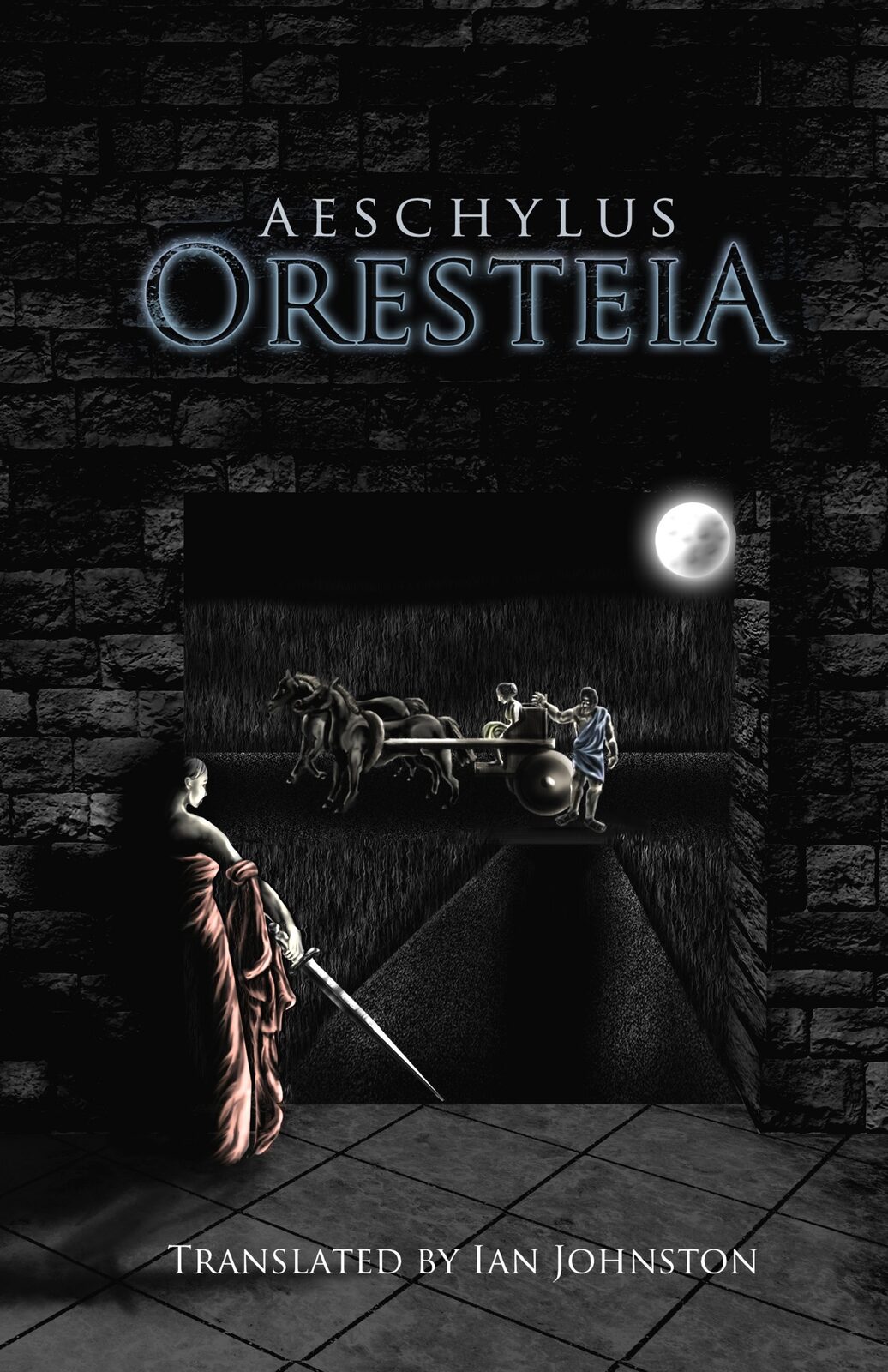
This guide accompanies the Richer Resources Publications edition of The Oresteia, translated by Ian Johnston.
A printable PDF version of this resource is available by email.