Honor, Betrayal, and the Burden of Choice
A classroom reference to motivations, moral conflicts, and relationships in Sophocles’ tragedy.
Sophocles’ Philoctetes presents a conflict between military necessity and personal integrity. Through a small group of characters, the play explores betrayal, suffering, compassion, deception, and the difficult choices that arise when individual conscience conflicts with collective demands.
This character guide helps students understand the motivations and relationships that drive the drama.
Philoctetes — The Wounded Exile
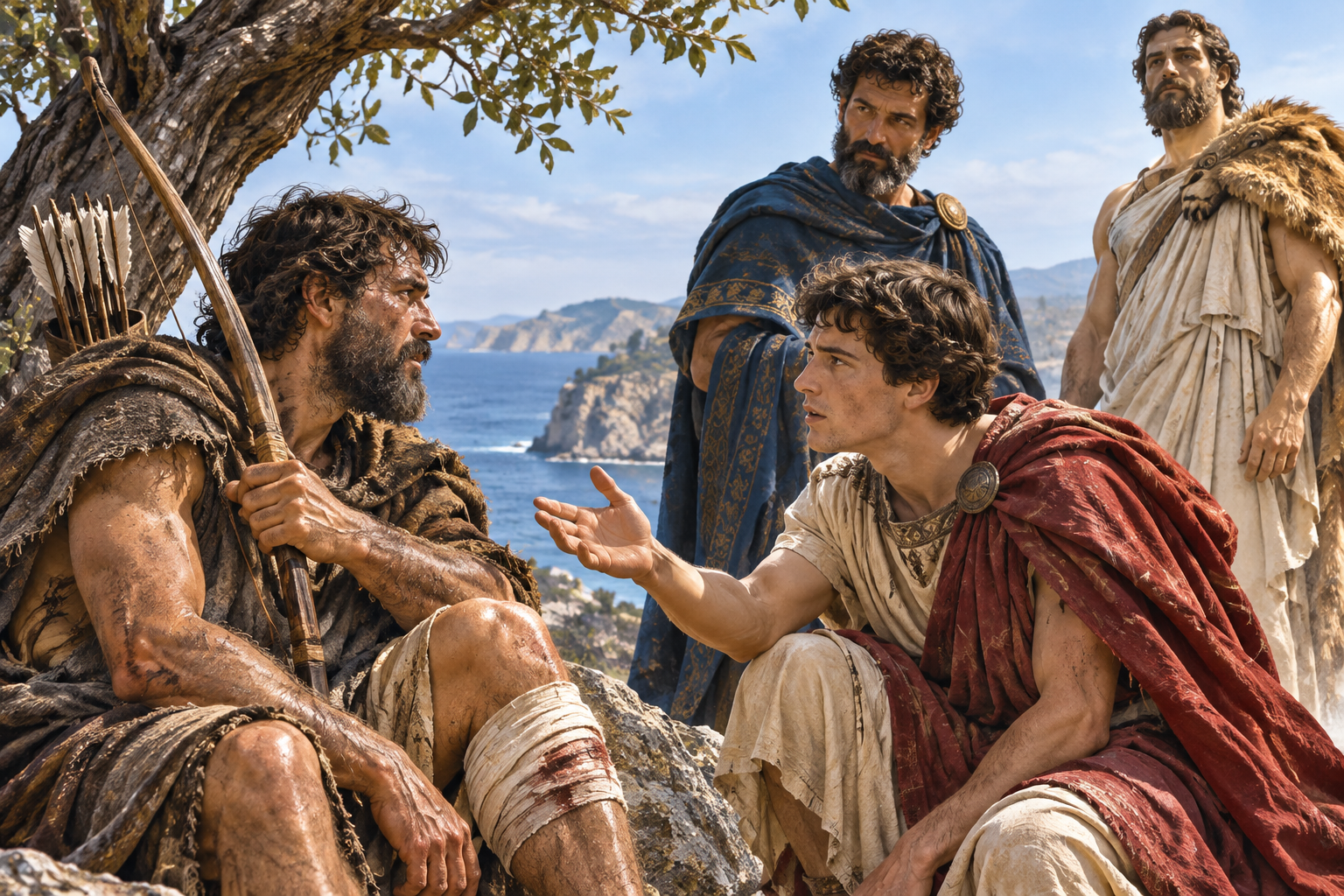
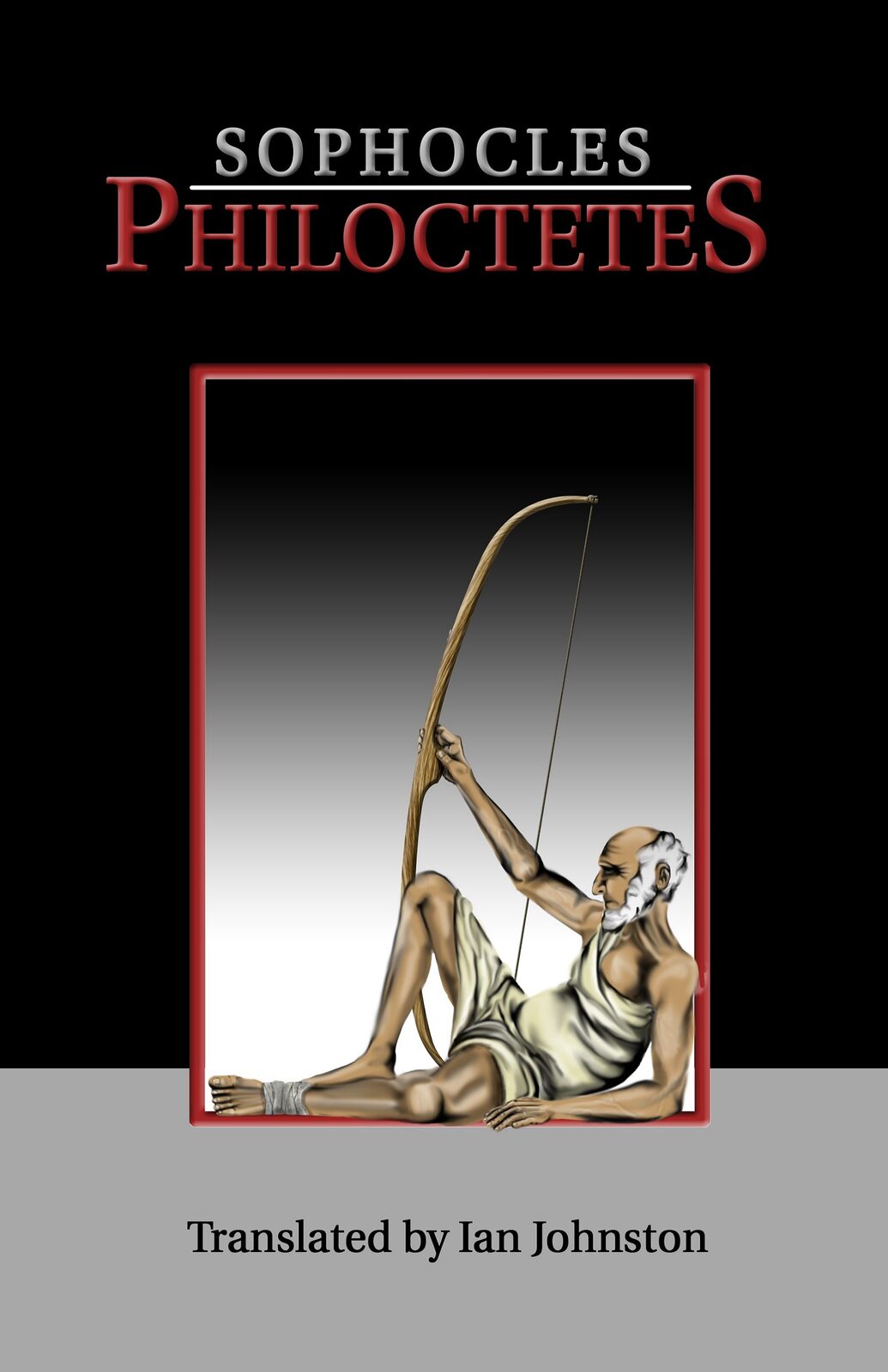
Abandoned on Lemnos because of a painful wound, Philoctetes has spent years in isolation. He possesses the bow of Heracles, which the Greeks need to capture Troy.
His anger is rooted not simply in physical suffering but in the betrayal of those who abandoned him.
Central conflict: Philoctetes must decide whether to cooperate with the people who wronged him or preserve his dignity by refusing their demands.
Neoptolemus — The Young Man Facing a Moral Choice
Neoptolemus, the son of Achilles, is recruited by Odysseus to deceive Philoctetes and obtain his bow.
Although initially willing to follow instructions, he becomes increasingly troubled by the suffering and trust of the man he has been sent to manipulate.
Central conflict: Neoptolemus must choose between obedience to military authority and his developing sense of personal honor.
Odysseus — The Strategist
Odysseus believes that obtaining Philoctetes’ bow is essential to the Greek victory at Troy. He is willing to employ deception to achieve that objective.
His approach contrasts sharply with Neoptolemus’ growing concern for honesty and justice.
Central conflict: Odysseus places strategic success above individual moral objections, raising questions about whether desirable ends can justify dishonest means.
Heracles — The Divine Authority
Heracles appears near the conclusion of the tragedy and directs Philoctetes toward Troy, promising healing and glory.
His intervention resolves the immediate conflict while inviting readers to consider the relationship between divine authority and human moral responsibility.
Relationships and Character Development
The relationship between Philoctetes and Neoptolemus forms the emotional center of the play. Their developing trust challenges the original plan of deception.
Odysseus and Neoptolemus represent competing approaches to duty and leadership, while the hostility between Philoctetes and Odysseus reveals the lasting consequences of betrayal.
Using the Character Guide
The downloadable guide includes:
- Character profiles and motivations
- Central moral conflicts
- Relationships among the principal characters
- Character development throughout the play
- Close-reading and discussion questions
- Teacher notes and a suggested classroom activity
Students can use the guide to prepare for discussion, analyze important passages, and develop evidence-based interpretations of Sophocles’ tragedy.
Continue Exploring Philoctetes
Explore Sophocles’ Philoctetes and related resources in the Classical Reference Library.