How Language Makes Defeat Tragic
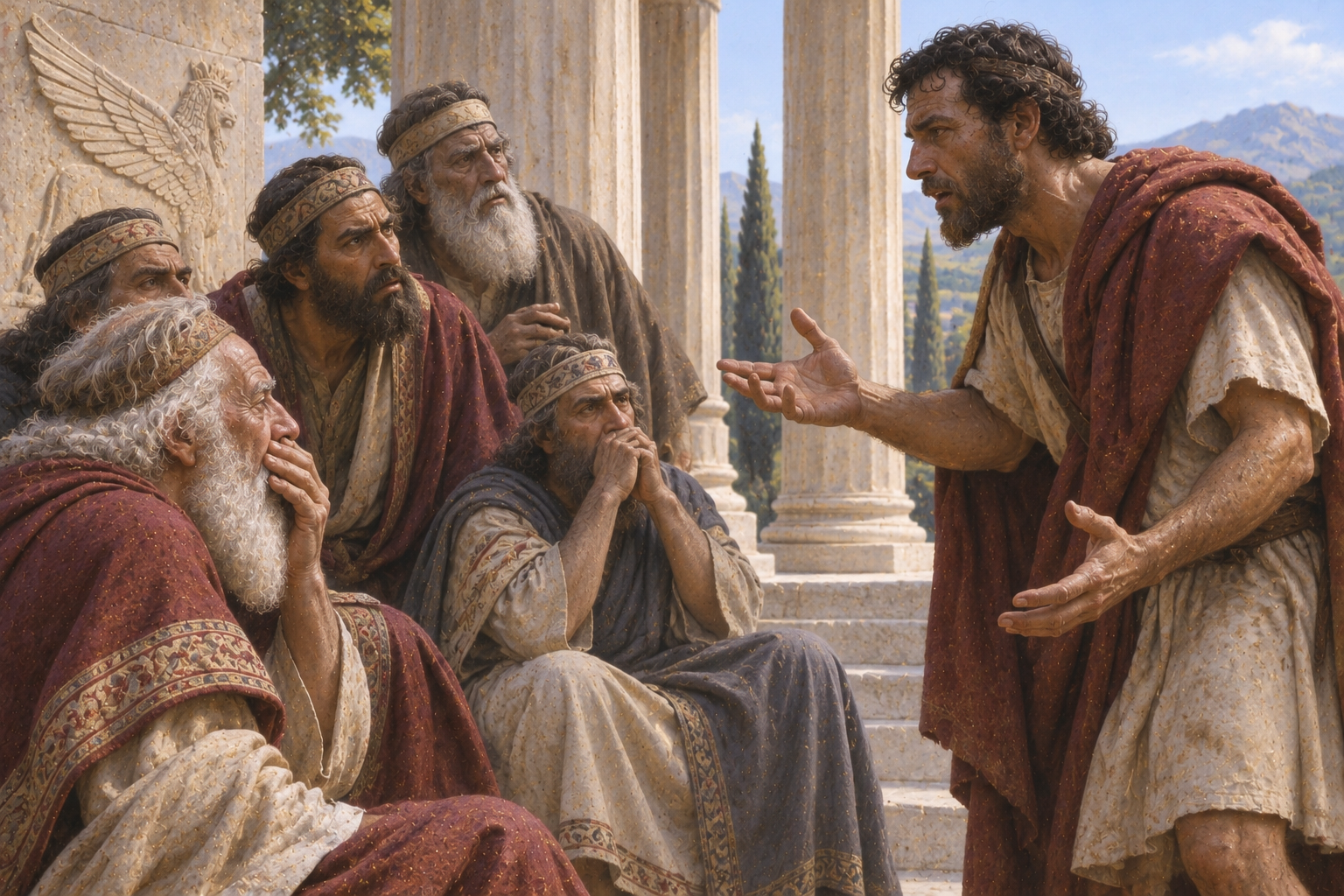
Aeschylus’ The Persians depicts a military catastrophe without staging the battle itself. Through ominous images, vivid reports, and communal lament, the playwright transforms the events at Salamis into an exploration of leadership, human vulnerability, and the limits of imperial power.
Dramatic Irony and the Opening Chorus
The Persian elders begin by recalling the size and splendor of Xerxes’ expedition while expressing unease about its outcome. An Athenian audience in 472 BCE already knew that the Persians had lost at Salamis. This difference between the characters’ uncertainty and the audience’s knowledge creates dramatic irony.
Close-reading task: Compare the Chorus’s descriptions of Persian strength with its expressions of fear. How does the contrast prepare the audience for disaster?
Atossa’s Dream: Symbolism and Foreshadowing
Atossa dreams of two women associated with Persia and Greece. Xerxes attempts to harness both to his chariot, but the Greek woman resists and breaks the yoke. The image turns political conquest into a struggle over restraint and independence. It also foreshadows the failure of Xerxes’ campaign.
Close-reading task: Explain what the yoke symbolizes. Why is resistance represented through a woman rather than an army?
The Messenger Speech: Making an Unseen Battle Visible
The messenger describes the Persian defeat at Salamis through movement, sound, confusion, and destruction. His narrative allows the audience to imagine events that cannot be performed onstage. The accumulation of losses shifts the emphasis from military spectacle to human suffering.
Close-reading task: Select a passage from the battle report. Identify two descriptive details and explain how they influence the audience’s emotional response.
The Hellespont: Imagery of Boundaries and Control
Darius condemns Xerxes’ attempt to bind the Hellespont with a bridge. The language of binding connects military engineering to the larger idea of excessive ambition. What is physically possible is not necessarily presented as wise or acceptable within the play’s moral framework.
Contrasting Voices: Messenger, Darius, and Xerxes
The messenger recounts events, Darius interprets their causes, and Xerxes gives voice to their consequences. Their different kinds of speech move the tragedy from revelation to judgment and finally to grief.
Close-reading task: Compare a passage from Darius with one from Xerxes. How do their vocabulary and tone differ?
Choral Lament and Repetition
The Chorus changes from anxious anticipation to mourning. In the final exchange with Xerxes, repeated cries, questions, and references to absent warriors emphasize collective loss. The ending offers no restoration of Persian power; instead, shared lament becomes the final dramatic action.
Questions for Literary Analysis
- How does the audience’s knowledge of Salamis create dramatic irony?
- What meanings are suggested by the broken yoke in Atossa’s dream?
- How does the messenger make an unseen battle emotionally immediate?
- What does the image of binding the Hellespont reveal about Xerxes?
- How do Darius’ explanations differ from Xerxes’ expressions of grief?
- Why does Aeschylus end the tragedy with a prolonged lament?
Note to the Educator
Ask students to trace one literary technique through two passages and explain its effect on the audience. Encourage them to distinguish identifying a device from interpreting its dramatic purpose. Wording and line numbers vary among translations, so students should cite the classroom edition.
This guide accompanies the Richer Resources Publications edition of The Persians, translated by Ian Johnston.
A printable PDF version of this resource is available by email.