Justice, Revenge, and the Responsibilities of Power
Across Agamemnon, The Libation Bearers, and The Eumenides, Aeschylus examines the consequences of vengeance and the challenge of establishing justice. These questions encourage close attention to competing claims, character choices, and the trilogy’s dramatic development.
Questions for Classroom Discussion
- How does the sacrifice of Iphigenia affect our understanding of Clytemnestra’s actions?
- What reasons does Clytemnestra give for killing Agamemnon, and how convincing are they?
- How does Cassandra’s prophetic knowledge deepen the tragedy of Agamemnon’s return?
- Why does Orestes believe he must avenge his father?
- How does Orestes’ hesitation before killing his mother reveal conflicting obligations?
- What does Electra contribute to the revenge plot in The Libation Bearers?
- Why do the Furies regard Orestes as guilty despite Apollo’s command?
- How do Apollo and the Furies represent different principles of justice?
- What changes when Athena transfers Orestes’ case to a public court?
- Why is the tied vote important to the outcome of the trial?
- Why does Athena persuade the Furies to accept a place in Athens instead of driving them away?
- Does the trilogy resolve the problem of justice, or reveal how difficult justice remains?
Analytical Essay Prompts
1. Justice or Revenge?
Compare Clytemnestra’s killing of Agamemnon with Orestes’ killing of Clytemnestra. How does each character justify the act, and what does the comparison suggest about retaliation?
2. Inherited Violence and Personal Choice
Examine the history of the House of Atreus. To what extent are its members shaped by inherited conflicts, and where do they exercise individual responsibility?
3. Divine Commands in Conflict
Analyze the opposing claims of Apollo and the Furies in The Eumenides. Why is Orestes’ case difficult to settle through divine authority alone?
4. Three Choruses, Three Perspectives
Compare the elders of Argos, the women bearing libations, and the Furies. How does each Chorus influence the audience’s understanding of justice?
5. From Household to City
Trace the trilogy’s movement from private revenge to public judgment. What does Athena’s court accomplish, and why is reconciliation with the Furies necessary?
Developing an Evidence-Based Argument
Begin with a specific, debatable thesis. Select speeches, decisions, and dramatic exchanges from at least two plays when appropriate. Explain how the evidence supports the argument rather than retelling the plot.
Address a reasonable alternative interpretation. Cite passages according to the classroom edition.
Note to the Educator
Invite students to distinguish between a character’s reasons for acting and the consequences of the action. Comparing Clytemnestra, Orestes, Apollo, and the Furies helps students recognize why competing obligations cannot be resolved simply by identifying a villain.
Encourage attention to the role of civic institutions in the final play.
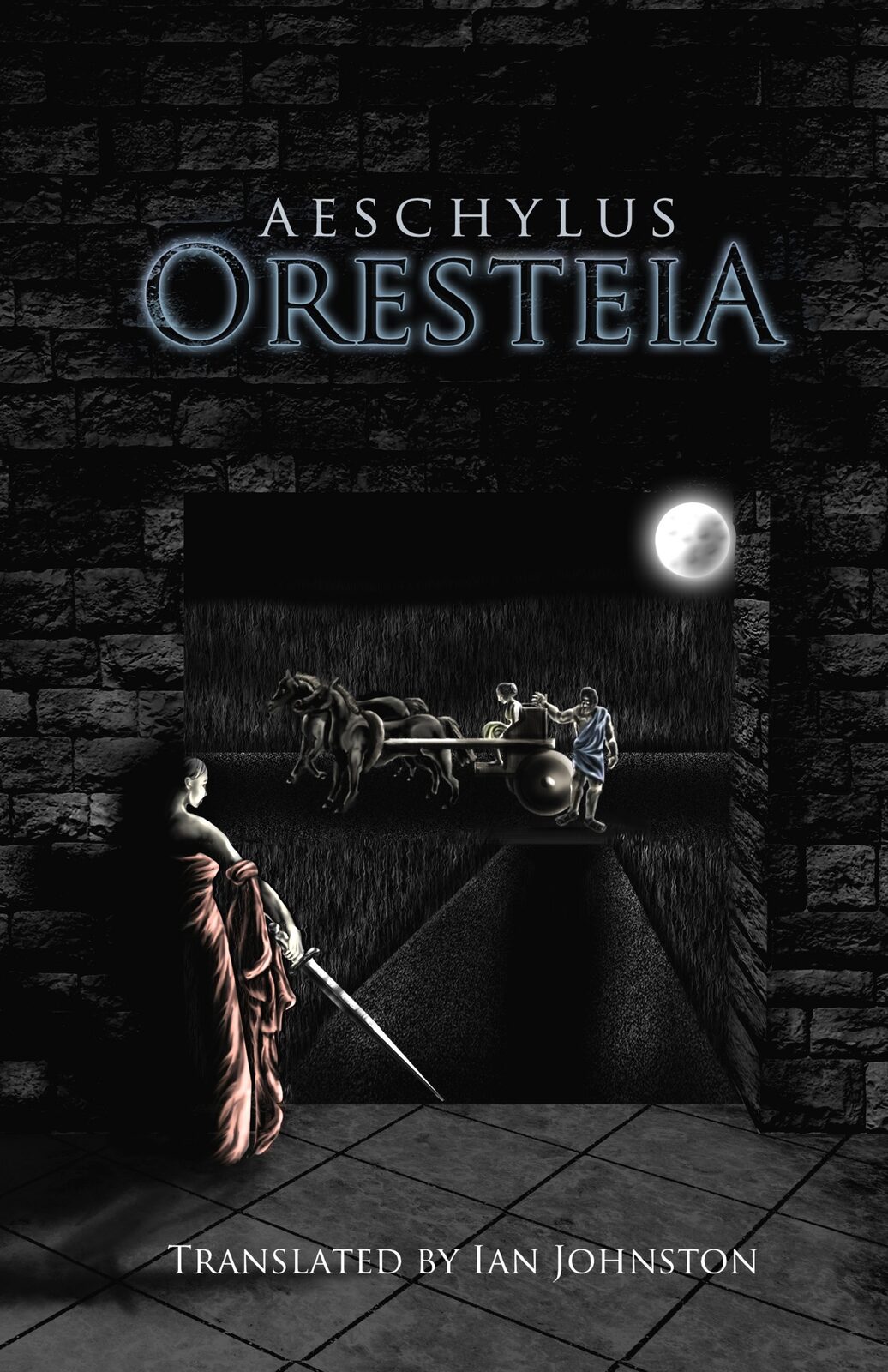
This resource accompanies the Richer Resources Publications edition of The Oresteia, translated by Ian Johnston.
A printable PDF version of this resource is available by email.