When Duty and Conscience Collide
Exploring suffering, honor, deception, and moral responsibility in Sophocles’ tragedy.
Sophocles’ Philoctetes examines the difficult choices people face when personal integrity conflicts with the demands of a larger cause. Set against the background of the Trojan War, the play follows an abandoned warrior whose suffering becomes the center of a struggle over justice, loyalty, and military necessity.
This resource explores seven major themes and provides questions to encourage close reading and thoughtful classroom discussion.
Suffering and Abandonment
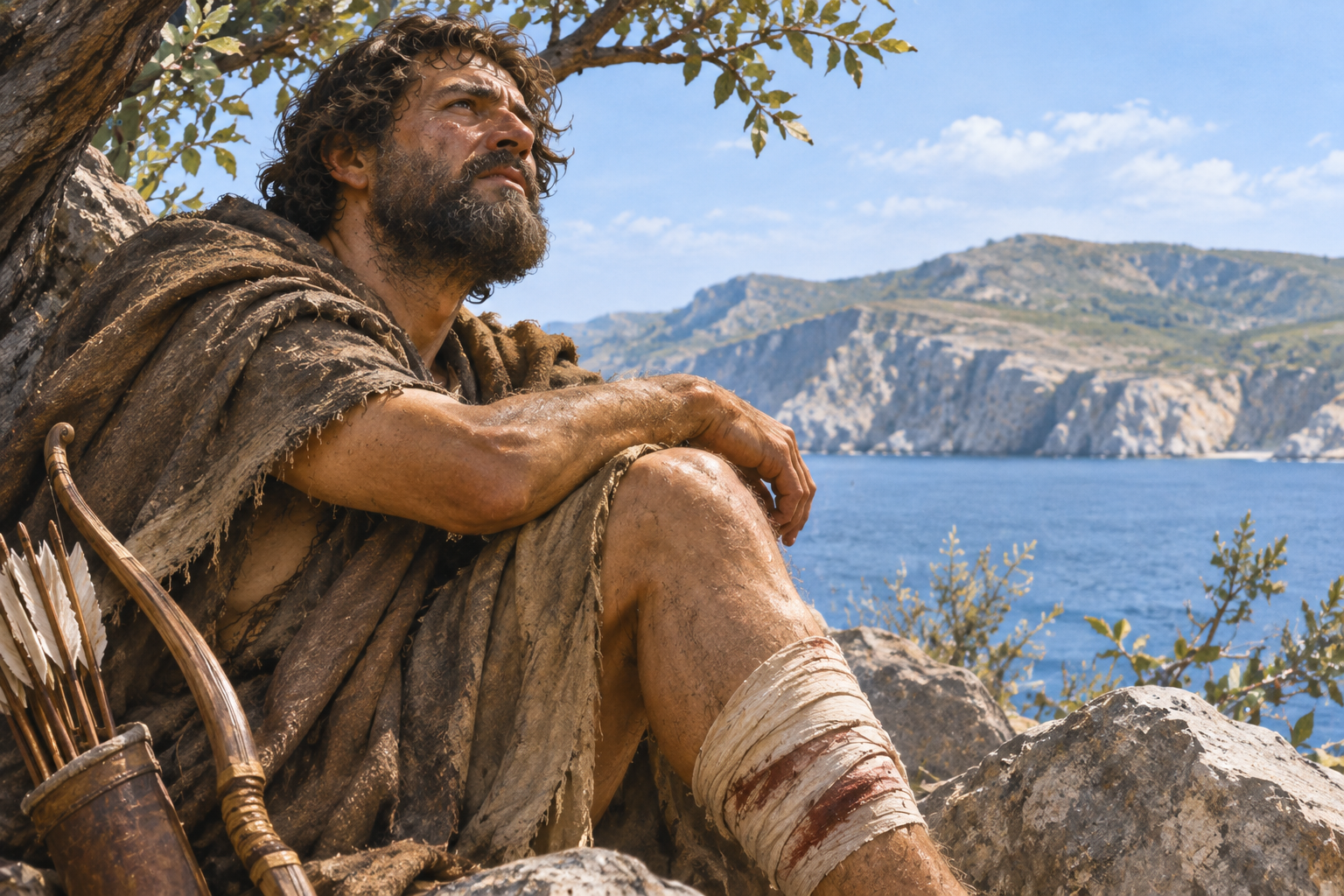
Philoctetes’ years of isolation on Lemnos reveal the lasting consequences of betrayal. His physical wound is accompanied by emotional suffering, anger, and a profound loss of trust.
Deception and Moral Responsibility
Odysseus persuades Neoptolemus to deceive Philoctetes in order to obtain his bow. Their plan raises an essential ethical question: can dishonesty be justified when it serves an important goal?
Honor and Personal Integrity
Neoptolemus must decide whether to follow military orders or act according to his developing sense of honor. His struggle reveals the difference between achieving success and behaving honorably.
Individual Conscience and Collective Duty
The Greeks need Philoctetes’ bow to capture Troy. Yet their military objectives conflict with the rights and dignity of the man they abandoned. The play asks how far individuals should go in serving a collective purpose.
Compassion and Trust
The developing relationship between Philoctetes and Neoptolemus demonstrates how compassion can challenge manipulation and create opportunities for understanding.
Persuasion and Power
The attempt to obtain the bow reveals competing methods of exercising power, from deception and strategic pressure to honesty and persuasion.
Divine Intervention and Human Choice
Heracles’ appearance at the conclusion resolves the immediate conflict while raising questions about divine authority, human freedom, and the relationship between destiny and personal responsibility.
Using the Guide
The downloadable PDF provides explanations of each theme, questions for close reading, and a classroom activity in which students evaluate competing moral arguments.
Teachers may use the guide to structure discussions, introduce analytical writing assignments, or help students connect individual characters’ decisions to the play’s larger concerns.
Explore Sophocles’ Philoctetes
Continue studying Sophocles’ tragedy through the text itself and the accompanying educational resources in the Classical Reference Library.