A Tragedy of Confinement and Confrontation
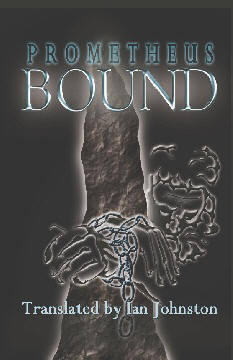
In Prometheus Bound, the central character remains chained to a remote rock throughout the drama. Instead of developing through changes of location or physical action, the plot advances through a succession of visitors, revelations, and confrontations. Each encounter adds new information about Prometheus' punishment, his relationship with Zeus, and the future he claims to foresee.
Opening: The Binding of Prometheus
The play begins with Power, Force, and Hephaestus bringing Prometheus to a desolate place where he is fastened to the rock. Power insists upon strict obedience to Zeus, while Hephaestus reluctantly performs the punishment.
This opening establishes the central conflict between divine authority and resistance. It also creates an unusual dramatic situation: the protagonist is physically immobilized, yet remains intellectually and morally defiant.
The Arrival of the Chorus
The daughters of Oceanus arrive after hearing Prometheus' cries. Their sympathy encourages him to explain his conflict with Zeus and the assistance he has given humanity.
Through this conversation, the audience learns that Prometheus helped Zeus gain power but later opposed his treatment of mortals. The Chorus provides a sympathetic audience for his account while expressing concern about the dangers of continued defiance.
Oceanus and the Possibility of Compromise
Oceanus visits and advises Prometheus to moderate his language and seek reconciliation with Zeus. Prometheus rejects this counsel.
The encounter introduces an alternative response to overwhelming authority. Rather than advancing the plot through physical action, Sophocles' fellow tragedian—traditionally identified as Aeschylus—develops the conflict through opposing arguments about prudence, loyalty, and principle.
Prometheus and the Gifts of Civilization
Prometheus describes the knowledge and skills he has given humanity, including practical arts that make civilized life possible.
This account expands the significance of his punishment. His conflict with Zeus is not merely a private quarrel among gods; it concerns the development and future of human beings.
Io and the Expansion of the Tragedy
Io arrives in distress, driven by the suffering associated with Zeus and Hera. Unlike Prometheus, who cannot move, Io is condemned to continual wandering.
Prometheus foretells aspects of her journey and the future of her descendants. Their meeting links individual suffering to a larger mythological history and introduces the possibility that Zeus' power may not remain secure forever.
Hermes and the Final Confrontation
Hermes arrives to demand that Prometheus reveal the secret concerning a threat to Zeus' future. Prometheus refuses, despite warnings of further punishment.
This confrontation brings the conflict between authority and resistance to its highest intensity. Prometheus has no physical means of escape, but his knowledge gives him a form of power that Zeus cannot simply seize.
The Unresolved Ending
The play concludes amid a violent upheaval as Prometheus faces the threatened consequences of his refusal. The Chorus remains with him rather than abandoning him.
There is no reconciliation or release within the surviving drama. The ending preserves the conflict and leaves the audience considering whether Prometheus' resistance will ultimately lead to justice, greater suffering, or both.
An Unusual Dramatic Structure
The action of Prometheus Bound depends less on external events than on the gradual disclosure of information. Its visitors offer contrasting responses to Zeus' authority, while references to the past and prophecies about the future extend the drama beyond its single location.
The physical stillness of Prometheus contrasts with the movement of other characters and the increasing intensity of the dialogue. This combination allows the playwright to create dramatic tension without conventional changes of scene.
Questions for Discussion
- How does the opening punishment establish the play's central conflict?
- Why is the Chorus important to the development of the drama?
- How does Oceanus' advice contrast with Prometheus' position?
- What does Io's arrival contribute to the play's structure and meaning?
- Why does Hermes' appearance create a dramatic climax?
- How does the unresolved ending affect the audience's interpretation of Prometheus?
Note to the Educator
Encourage students to examine how the play creates dramatic movement despite its stationary protagonist. Have them trace the order of Prometheus' visitors and consider how each encounter changes the audience's knowledge, expectations, and judgment. Particular attention should be given to the contrast between physical confinement and the power of speech and prophecy.
The play is traditionally attributed to Aeschylus, although its authorship remains disputed. This guide accompanies the Richer Resources Publications edition translated by Ian Johnston.
A printable PDF version of this resource is available by email.