Essential Vocabulary and Glossary for Sophocles’ Oedipus the King
Sophocles’ Oedipus the King introduces readers to the religious beliefs, political responsibilities, and dramatic traditions of ancient Greece. Understanding these concepts helps students appreciate the play's exploration of fate, knowledge, identity, and human responsibility.
This free educational glossary accompanies Ian Johnston's English translation and provides 22 essential terms, explanations of their significance, and exercises for developing literary understanding.
Religious and Cultural Concepts
The glossary introduces important concepts from the world of ancient Greek tragedy, including:
- Oracle and prophecy: Divine messages and predictions that influence the characters' decisions.
- Delphi: The sanctuary associated with Apollo's oracle.
- Pollution (miasma): Religious or communal defilement associated with wrongdoing.
- Suppliant: Someone seeking help or protection through a formal appeal.
- Exile: Separation from one's homeland, an important consequence in the tragedy.
Characters, Places, and Mythology
Students review the significance of Thebes, Corinth, Tiresias, the Sphinx, the messenger, and the shepherd. Each entry explains how the person, place, or mythological figure contributes to the unfolding investigation.
Literary and Dramatic Terminology
The guide also explains important concepts for analyzing Greek tragedy:
- Dramatic irony: The difference between what the audience understands and what a character knows.
- Recognition (anagnorisis): A decisive discovery of identity or truth.
- Reversal (peripeteia): A major change in a character's circumstances.
- Hubris: Excessive pride or overconfidence.
- Motif: A recurring image or idea that develops meaning.
- Catharsis: A concept associated with Aristotle's account of tragedy and its emotional effects.
Vocabulary in Context
Six student exercises encourage readers to apply the terminology to particular events and characters. Students consider how prophecy shapes the plot, how blindness relates to insight, and how recognition and reversal operate in the tragedy.
The guide also includes teacher notes to support classroom discussion and evidence-based interpretation.
Download the Vocabulary and Glossary
Download the free Essential Vocabulary and Glossary for Sophocles’ Oedipus the King for classroom instruction, independent study, or review.
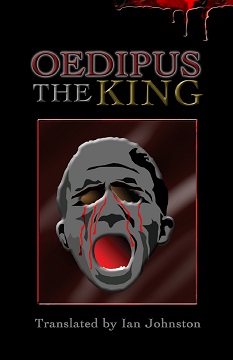
This resource complements Ian Johnston's English translation of Sophocles’ tragedy, published by Richer Resources Publications.