The Heroic Code in the Iliad: Honor, Glory, and Shame
The Iliad becomes easier to understand when we recognize the values that shape its heroes' decisions. Three ideas are especially important: honor, glory, and shame.
Understanding them helps explain why Achilles reacts so strongly to Agamemnon, why Hector returns to battle despite Andromache's pleas, and why the pursuit of glory can be both admirable and destructive.
The Heroic Code
The warriors of the Iliad live in a society where a person's standing is public. Courage, achievement, loyalty, reputation, and the judgment of other people matter enormously.
This helps explain why characters sometimes make choices that can seem extreme to modern readers.
Honor
Honor is a hero's recognized standing among other people. It is not simply private self-respect. A warrior expects his achievements and position to be acknowledged publicly.
Gifts and prizes can serve as visible signs of that honor. This helps explain why Achilles sees Agamemnon's taking of Briseis as more than the loss of a possession: he understands it as a public insult to his status.
Glory
A warrior may seek lasting glory through extraordinary deeds. Life is short, but reputation can outlive the individual.
Achilles' choices bring this tension into sharp focus: safety and a long life stand against the possibility of great fame won at terrible personal cost.
Shame
Shame is closely tied to the judgment of others. A hero may fear being seen as cowardly, dishonorable, or unworthy of his position.
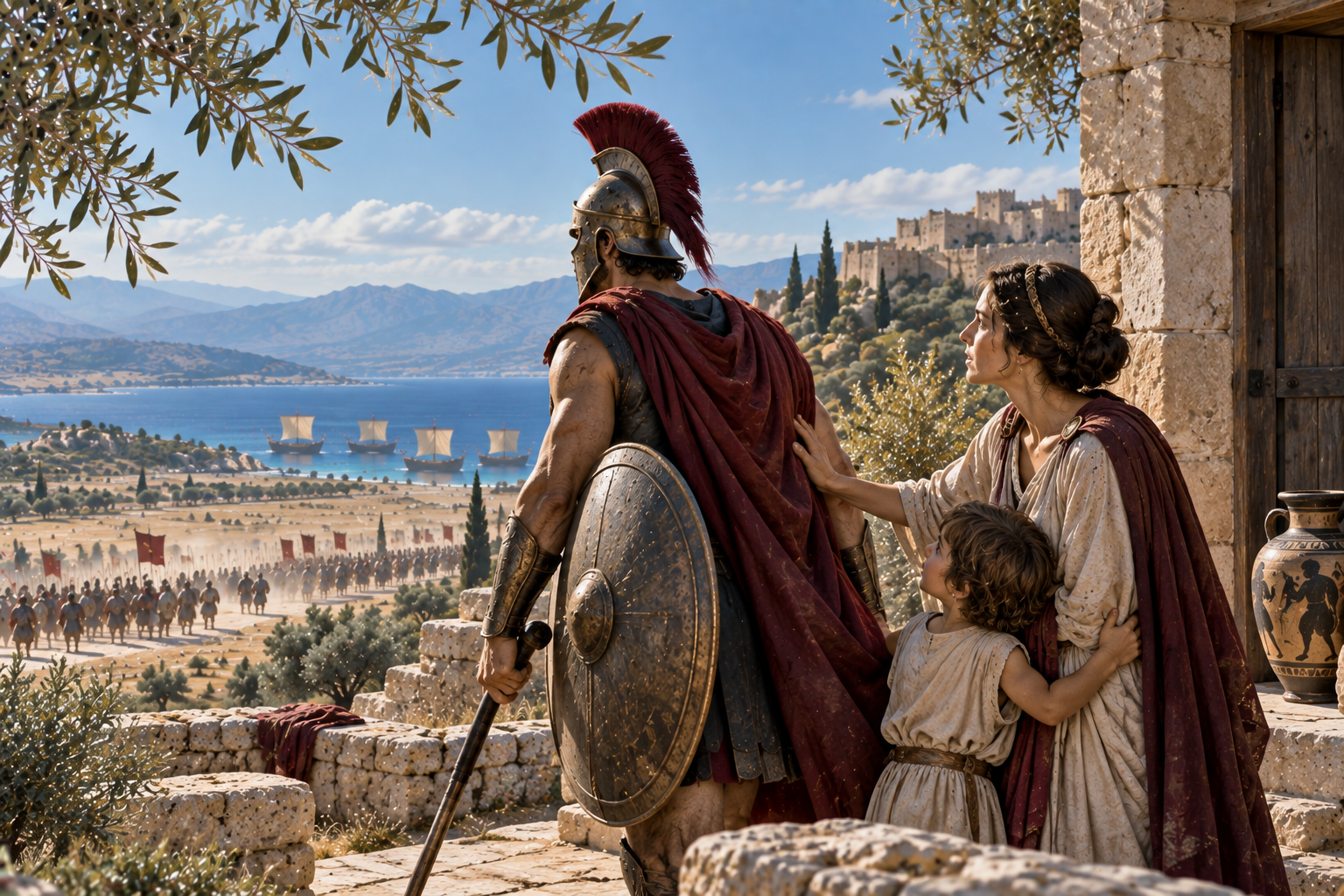
Hector expresses this pressure especially clearly. His responsibilities to Andromache and his family pull him toward safety, while his role as Troy's leading defender and his fear of disgrace pull him back toward battle.
Achilles and Agamemnon
The quarrel in Book 1 is easier to understand when viewed through the heroic code.
Agamemnon believes his authority and standing must be recognized. Achilles believes his own achievements deserve honor. When Agamemnon takes Briseis, the conflict becomes a public struggle over status as well as a personal dispute.
Hector
Hector's situation shows both the strength and the cost of the heroic code.
He values his wife, child, city, and family, yet he also believes he must meet the expectations placed upon him as Troy's defender. His choices reveal how honor and shame can become inseparable from duty.
Patroclus
Patroclus enters battle partly because he cannot remain apart while the Greeks suffer. Wearing Achilles' armor gives him the appearance and authority of Achilles, but his success draws him farther into the fighting than Achilles had instructed.
His death changes Achilles' understanding of what his anger and withdrawal have cost.
Does the Iliad Simply Celebrate the Heroic Code?
Not entirely.
The poem presents courage and glory as powerful ideals, but it repeatedly shows their human cost. Warriors win honor while families lose husbands, sons, and fathers.
By the time Priam comes to Achilles to ask for Hector's body, shared grief briefly becomes more important than victory or status.
The Iliad therefore invites readers both to understand the heroic code and to examine what it demands from the people who live by it.
Questions to Keep in Mind
- When does a character act because of personal desire, and when because of public expectations?
- What does a character fear losing: life, honor, reputation, family, or something else?
- When do honor and duty support one another, and when do they conflict?
- What price does each character pay for the pursuit of glory?
- Does a character's understanding of honor change during the poem?
Heroic Code Character Analysis
The printable guide includes a worksheet students can use with Achilles, Hector, Agamemnon, Patroclus, or another character. It asks students to examine how honor, glory, shame, duty, and personal relationships influence that character's decisions—and what the character gains, loses, or risks as a result.
Free Printable Student Guide and Character Analysis
Students and teachers may request a free printable version of this guide. The PDF includes the complete guide and a Heroic Code Character Analysis worksheet for classroom use.
Enter your email address below and we'll send the guide directly to you.