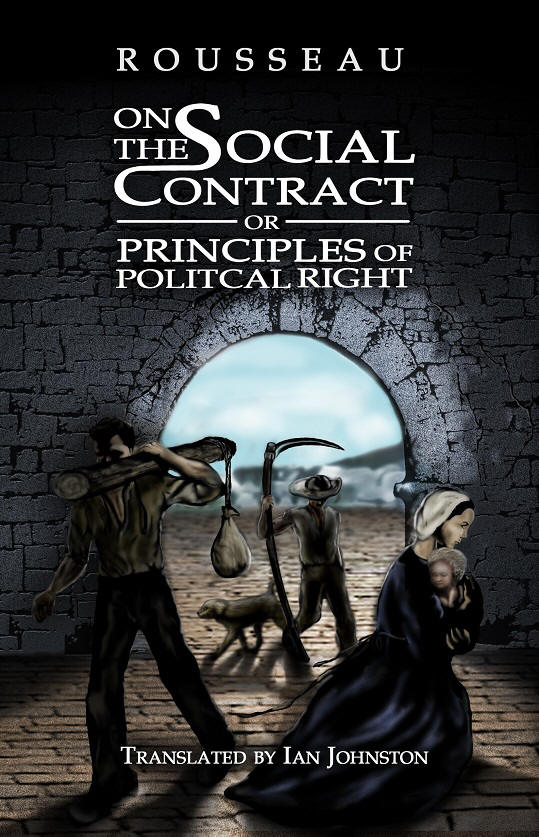
Introduction: Why Teach On the Social Contract?
Jean-Jacques Rousseau’s On the Social Contract (1762) asks a fundamental question: what could make political authority legitimate among people who are born free? Rousseau rejects the idea that force alone creates a right to rule. Instead, he investigates how a political association might preserve freedom while establishing binding laws.
The work is especially useful for teaching students to distinguish consent from coercion, individual preference from public judgment, and sovereignty from government. Its arguments are influential, difficult, and open to serious disagreement. A productive classroom should examine both Rousseau’s aspirations and the dangers that may arise when a state claims to speak for the general will.
Historical and Intellectual Context
Published in 1762, the work belongs to the European Enlightenment and to debates about monarchy, natural freedom, civic equality, and the source of political obligation. Rousseau writes against theories that justify rule merely through conquest, inherited mastery, or superior strength.
Students may benefit from comparing Rousseau’s conception of a political community with other social-contract traditions, while recognizing that the texts do not use terms such as “liberty,” “consent,” and “representation” in identical ways. Rousseau’s argument is not a straightforward description of modern representative democracy.
Overview of the Four Books
Book I: The Foundations of Political Authority
Book I asks why political authority requires justification, rejects slavery and the right of the strongest, and introduces the social pact. Focus on chapters 1, 3–4, and 6–8.
Book II: Sovereignty and the General Will
Book II develops sovereignty and the general will, distinguishes general from particular interests, considers the lawgiver, and discusses the conditions appropriate to a people. Focus on chapters 1–4, 6–7, and 11–12.
Book III: Government and Political Institutions
Book III examines government as an intermediary body, different forms of administration, the tendency of governments to encroach upon sovereignty, and assemblies. Focus on chapters 1–3, 10–11, and 15.
Book IV: Citizenship and Civic Unity
Book IV considers voting, elections, civic institutions, and civil religion. Focus on chapters 1–2 and 8, with attention to the historical examples Rousseau uses.
Major Themes and Concepts
Political Legitimacy
Rousseau asks what can make obedience to law compatible with freedom. Students should identify his reasons for rejecting force and enslavement as foundations of legitimate authority (I.3–4).
The Social Pact
Individuals join together as a collective political body. Discuss what they give up, what they gain, and whether the agreement is genuinely voluntary (I.6–8).
Sovereignty
For Rousseau, sovereignty belongs to the people collectively and cannot simply be transferred to rulers. Distinguish sovereign lawmaking authority from the administration of government (II.1–2; III.1).
The General Will
The general will concerns the common interest, not merely the sum of private wishes. Explore the difference between the general will and the will of all, and ask how a community can identify a common good without suppressing dissent (II.3–4).
Freedom and Equality
Rousseau distinguishes natural freedom from civil and moral freedom. Examine how law might protect equal civic standing, while questioning whether his account gives adequate protection to minorities (I.8; II.11).
Law and the Lawgiver
Laws should have a general character, yet Rousseau also introduces an extraordinary lawgiver. Ask whether this creates tension with popular self-rule (II.6–7).
Government and Representation
Government executes laws but does not own sovereignty. Consider Rousseau’s criticism of representation and the practical challenges of participation in large states (III.1, III.15).
Civil Religion
Rousseau’s discussion raises questions about civic unity, toleration, and the limits of state authority over belief (IV.8).
Teaching Objectives
By the end of the unit, students should be able to:
- Explain Rousseau’s problem of legitimate political authority.
- Distinguish sovereignty from government.
- Compare the general will with private interests and majority preference.
- Analyze Rousseau’s competing claims about freedom and obedience.
- Cite specific books and chapters in support of an interpretation.
- Evaluate the strengths and risks of Rousseau’s political model.
Suggested Teaching Sequence
Session 1 — The Problem of Authority (Book I)
Begin with the difference between power and legitimate right. Have students reconstruct Rousseau’s argument against the “right of the strongest.”
Session 2 — The Social Pact and Freedom (Book I)
Map the exchange Rousseau proposes. Ask whether joining the political body can make a person more rather than less free.
Session 3 — Sovereignty and the General Will (Book II)
Compare a collection of private preferences with a judgment directed toward common interests. Test difficult cases involving disagreement.
Session 4 — Laws and Institutions (Books II–III)
Distinguish the sovereign people, the lawgiver, and the government. Discuss the limits of representation and problems of scale.
Session 5 — Citizenship, Civil Religion, and Critique (Book IV)
Debate civic unity, religious toleration, and whether Rousseau’s political ideal adequately protects dissent.
Passages for Close Reading
Book I, Chapter 1: Freedom and Political Subjection
Examine Rousseau’s opening problem of freedom and political subjection. Ask what sort of explanation would count as a justification rather than a description.
Book I, Chapter 6: The Social Pact
Identify the terms and purpose of the social pact. Who contracts with whom, and how does the collective political body come into being?
Book I, Chapter 8: Civil and Moral Freedom
Examine the distinction between natural, civil, and moral freedom. Ask whether Rousseau’s account of freedom is persuasive.
Book II, Chapter 3: The General Will and the Will of All
Consider the distinction between the general will and the will of all. What could cause public deliberation to fail?
Book II, Chapter 6: The Nature of Law
Examine Rousseau’s definition of law and its general character. What makes a rule genuinely general?
Book III, Chapter 15: Representation
Analyze Rousseau’s critique of representation. How does this claim apply—or fail to apply—to contemporary political institutions?
Book IV, Chapter 8: Civil Religion
Examine Rousseau’s discussion of civil religion. Can civic membership be separated from prescribed belief?
Discussion Questions
- Why does Rousseau think strength alone cannot create legitimate authority?
- What is the difference between obeying another person and obeying a law one has a share in making?
- Can the general will be mistaken? How does Rousseau distinguish it from the judgments of citizens?
- Does majority voting always reveal the common good? Why or why not?
- Why does Rousseau insist that sovereignty cannot be represented?
- How does Rousseau’s conception of equality relate to his conception of liberty?
- What risks arise when political leaders claim that their preferences embody the general will?
- Does the discussion of civil religion support or undermine freedom of conscience?
- Which of Rousseau’s arguments seems most applicable to political life today, and which seems least practical?
Classroom Activities and Writing Assignments
Concept Map
In small groups, diagram the relationships among individual citizens, the social pact, sovereign people, law, and government. Require students to justify each connection with a book-and-chapter reference.
Deliberation Exercise
Present a fictional town deciding how to allocate a shared public resource. Students first advocate private interests, then attempt to formulate a rule for the common good. Discuss whether the second result actually represents a general will.
Close-Reading Exercise
Assign Book I, Chapter 6 and Book II, Chapter 3. Have students write a paragraph explaining how a collective political body can be formed without reducing sovereignty to a tally of private interests.
Analytical Essay
“Does Rousseau successfully reconcile freedom with political obligation?”
Require a clear thesis, textual evidence, and at least one serious objection.
Comparative Essay
Compare Rousseau’s account of political legitimacy with another political thinker studied in the course. Define the shared terms before evaluating their differences.
Common Misunderstandings and Teaching Challenges
The General Will Is Not Simply Majority Opinion
The general will is not simply whatever a majority wants. Rousseau’s distinction turns on orientation toward the common interest, although determining that interest is itself difficult.
Sovereignty Is Not the Same as Government
Sovereignty and government are not interchangeable. The people are sovereign; government is an instrument charged with administration.
Freedom Does Not Mean Unlimited Personal Choice
Rousseau’s idea of freedom is not unlimited permission to pursue personal desires. Students should examine his distinction between natural and civil or moral freedom without assuming that the distinction settles every objection.
Rousseau Is Not Offering a Simple Blueprint for Modern Democracy
The text should not be treated as an uncomplicated blueprint for contemporary democracy. Its claims about representation, civic unity, and religion need historical explanation and critical examination.
Translation and Terminology Matter
Terminology and phrasing can vary by edition. Refer to books and chapters, and verify exact wording against the Richer Resources Publications edition before adding quotations.
Connections to Other Works
Rousseau’s Discourse on the Sciences and the Arts provides a useful point of comparison for his concerns about civilization and moral life.
Descartes’ Discourse on the Method offers a different Enlightenment approach to reason and judgment.
Students can also compare Rousseau’s account of authority with political arguments from other traditions studied in the course.
Concluding Teaching Perspective
The most fruitful way to teach On the Social Contract is as a sustained inquiry rather than a set of political slogans. Rousseau asks students to consider whether collective self-government can protect freedom, and his answers invite both admiration and rigorous criticism.
Encourage students to test each claim against the text and against difficult practical cases.
A printable PDF version of this resource is available by email.