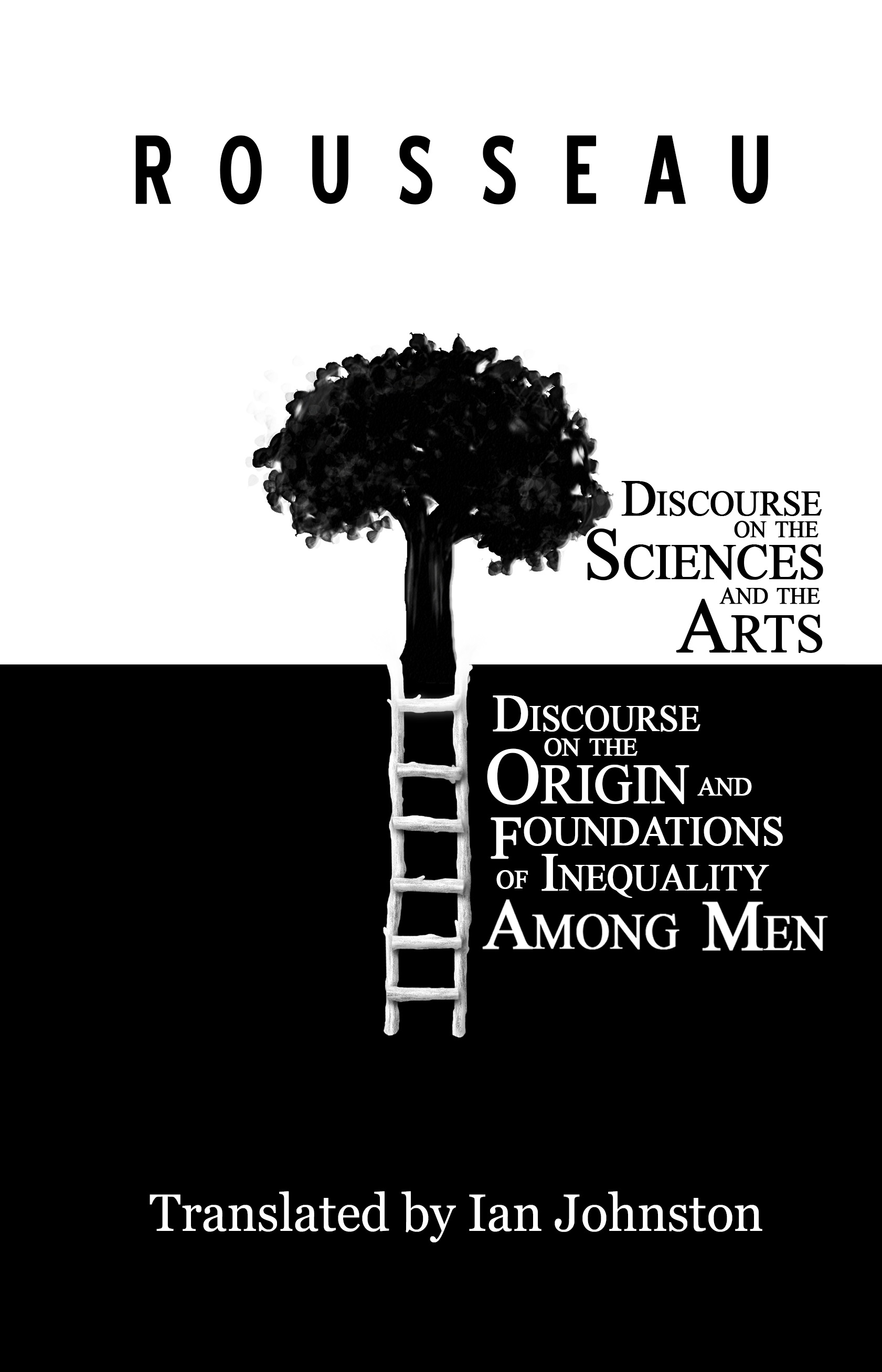
Jean-Jacques Rousseau — Discourse on the Sciences and the Arts
A Student’s Guide
About This Guide
Does learning more make us better people? In Discourse on the Sciences and the Arts, Jean-Jacques Rousseau questions the belief that advances in knowledge, literature, and artistic refinement necessarily improve our moral character. This guide will help you understand his challenge and decide how persuasive it is.
Before You Read
Rousseau wrote this essay in response to a question posed by the Academy of Dijon: Had the revival of the sciences and arts helped improve morals? His answer was largely no. The essay won a prize in 1750 and helped make him famous. Rousseau lived during the Enlightenment, an age often associated with confidence in reason and progress. His argument challenged that confidence from within the same intellectual world.
The Argument at a Glance
Rousseau argues that refined manners can conceal selfishness, that luxury can encourage competition for status, and that people may become more concerned with appearing virtuous than with acting virtuously. He contrasts societies he considers simpler with civilizations admired for their learning and elegance. His examples are meant to provoke debate, not to provide a complete or neutral history of those societies.
Important Ideas
Virtue — Good character expressed through honest and responsible actions, not just impressive appearances.
Manners — The outward rules of polite behavior; these may or may not reflect genuine goodness.
Luxury — Expensive comforts and displays of wealth that can encourage rivalry and dependence on others’ approval.
Vanity — A desire to be admired or regarded as superior.
Progress — Improvement in some area of life. Rousseau asks whether progress in learning must also mean progress in morality.
A Surprising Question About Progress
Imagine a society with remarkable inventions, beautiful buildings, celebrated writers, and excellent schools. Would those achievements prove that its citizens were honest, fair, and courageous? Rousseau thinks not. He asks readers to judge a civilization not only by what it produces but also by how people treat one another.
What to Notice While Reading
- Where does Rousseau distinguish outward politeness from genuine virtue?
- What does he believe happens when people care too much about reputation?
- How does he use examples from ancient history to support his argument?
- Does he demonstrate that the arts and sciences cause corruption, or that they sometimes exist alongside it?
- Does he leave room for knowledge and education to be used well?
Questions to Think About
- Why might someone behave politely without being a good person?
- What is the difference between being admired and deserving admiration?
- Why does Rousseau connect luxury with competition and inequality?
- What evidence would you need to show that education makes people more ethical?
- Can you think of a modern invention that has brought both benefits and moral problems?
- Which of Rousseau’s historical comparisons would you want to investigate further?
- Is his criticism directed at knowledge itself, or at the way society rewards its use?
Try This: Two Kinds of Progress
Choose one modern development, such as social media, medical technology, artificial intelligence, or public libraries. Write a paragraph explaining how it increases knowledge or human ability. Then write a second paragraph considering how it might help or harm honesty, fairness, generosity, or civic responsibility. Include one objection to your own conclusion. Would Rousseau see this development as progress? Would you?
A Final Thought
Rousseau asks a question that remains relevant: What should count as a truly better society? His answer may be too sweeping, and his examples may be selective, but his distinction between impressive achievements and good character is worth examining carefully.
Note to the Reader
This guide accompanies Ian Johnston’s translation of Discourse on the Sciences and the Arts, published by Richer Resources Publications. The RRP edition also includes Rousseau’s later Discourse on the Origins and Foundations of Inequality Among Men, a related but separate work.