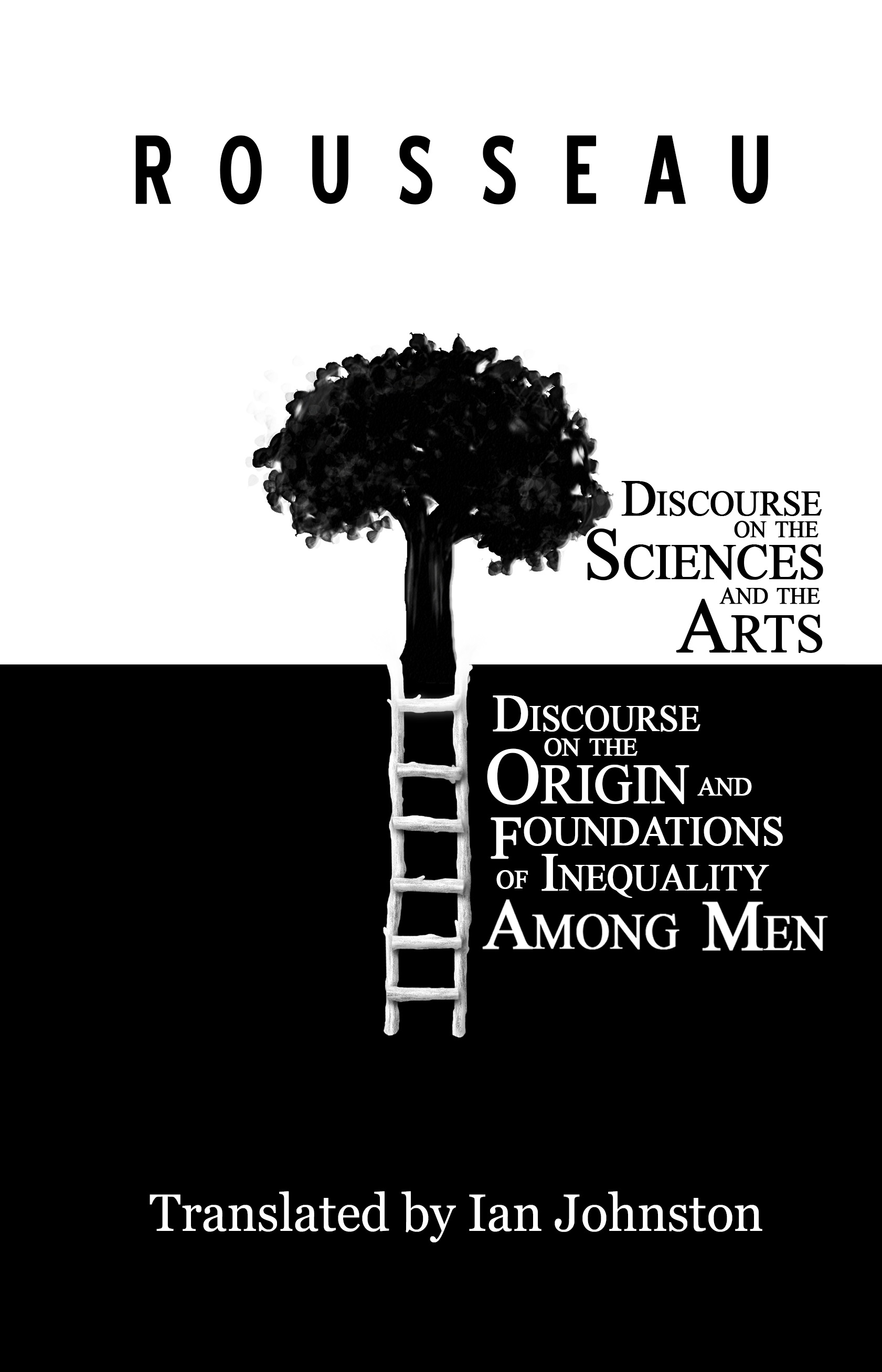
Jean-Jacques Rousseau — Discourse on the Sciences and the Arts
A Teacher’s Guide
Purpose of This Guide
This guide supports teaching Rousseau’s 1750 Discourse on the Sciences and the Arts (often called the First Discourse). Its central question is whether advances in learning, literature, and artistic refinement necessarily improve public morality. Students should examine Rousseau’s provocative argument, his historical examples, and the difference between criticizing the social uses of culture and rejecting all knowledge.
Historical and Intellectual Context
Rousseau wrote in response to an essay competition sponsored by the Academy of Dijon, which asked whether the restoration of the sciences and arts had helped purify morals. His answer was largely negative, and the prize-winning essay made him famous. It challenged the optimism often associated with the Enlightenment from within its own intellectual culture. RRP’s edition also contains the later Discourse on the Origins and Foundations of Inequality Among Men (1755); the two works are related but should not be treated as a single argument.
The Argument at a Glance
Rousseau contrasts polished civilizations with the virtues he associates with simpler ways of life. He argues that refinement may encourage vanity, dependence on approval, luxury, and the appearance of virtue without virtue itself. He traces the rise of various arts and sciences to human passions and social needs, and warns that learning and elegance can flourish alongside political weakness and moral corruption. His examples are selective and deliberately provocative: they invite critical testing rather than passive agreement.
Central Concepts
Virtue — Habits and actions reflecting moral integrity, courage, and concern for the common good.
Manners — Outwardly polished conduct, which may conceal rather than express virtue.
Luxury — Costly refinement that Rousseau connects with inequality, competition, and dependence.
Public opinion — The judgment of others, which can encourage people to seek admiration rather than goodness.
Progress — Improvement in a particular domain; Rousseau asks whether intellectual progress entails moral progress.
Major Themes
- Knowledge and moral character are not the same achievement.
- Social polish may hide selfish motives and make people less candid.
- Luxury and competition can redirect ambition toward status.
- Historical examples can illuminate a claim but may also distort it.
- Education should be judged partly by the character and citizenship it encourages.
Rhetoric and Structure
The discourse is a public argument designed to surprise its audience. Rousseau uses sharp contrasts, historical examples, rhetorical questions, and morally charged language. Have students distinguish his descriptive claims about societies from his evaluative judgments about virtue. Ask whether his admiration for certain ancient societies depends on an idealized picture of their lives.
Teaching Objectives
Students will explain Rousseau’s answer to the Dijon Academy’s question; distinguish intellectual, artistic, and moral progress; identify the role of luxury and public esteem in his argument; analyze the use and limitations of historical examples; and develop an evidence-based response to Rousseau’s critique.
A Flexible Teaching Sequence
- Begin with a contemporary question: Can a society become more technologically sophisticated without becoming more ethical?
- Introduce the Academy’s question and ask students to predict an Enlightenment-era answer.
- Read Rousseau’s opening claims, marking the contrast between manners and morals.
- Examine selected historical examples; have groups identify the lesson Rousseau draws and possible counterevidence.
- Discuss his criticism of luxury, vanity, and education.
- End with a structured debate about whether cultural achievement improves, weakens, or simply does not determine virtue.
Passages Worth Close Reading
The opening contrast between cultivated appearances and authentic character; the account of how sciences and arts arise from human passions; the examples drawn from ancient societies; the treatment of luxury and civic strength; and the concluding remarks about the place of learning and genuine virtue. For each passage, ask what the claim is, what evidence supports it, and what an informed opponent might say.
Core Discussion Questions
- What does Rousseau mean by the corruption of morals?
- Why might politeness and good manners fail to show good character?
- Does Rousseau establish that the arts and sciences cause moral decline, or only that they can accompany it?
- How persuasive are his comparisons among ancient societies?
- Can education cultivate virtue without encouraging vanity?
- What modern examples support or challenge his argument?
- Is Rousseau criticizing knowledge itself, or the social incentives surrounding its pursuit?
Classroom Activity: Two Kinds of Progress
Ask students to select a development such as social media, medical technology, public museums, or artificial intelligence. In two short paragraphs, explain one way it expands knowledge or capability and one way its social use might affect character or civic life. Require a concrete example and a fair counterargument. Conclude by revisiting Rousseau’s distinction between improvement in skills and improvement in morals.
Interpretive Cautions
Avoid summarizing Rousseau as simply “against science.” His essay attacks assumptions about the moral effects of cultural refinement, and its force depends on particular social and political concerns. Do not treat his portraits of Sparta, Athens, or other societies as neutral historical reports. Keep the First Discourse distinct from the later Discourse on Inequality, even though the two share concerns about social dependence and corruption.
Note to the Educator
Ian Johnston’s translation provides an opportunity to study Enlightenment self-criticism: a writer uses reasoned public argument to question the moral value of celebrated intellectual achievements. The best discussions let students recognize the strength of Rousseau’s challenge while rigorously testing his evidence and conclusions.