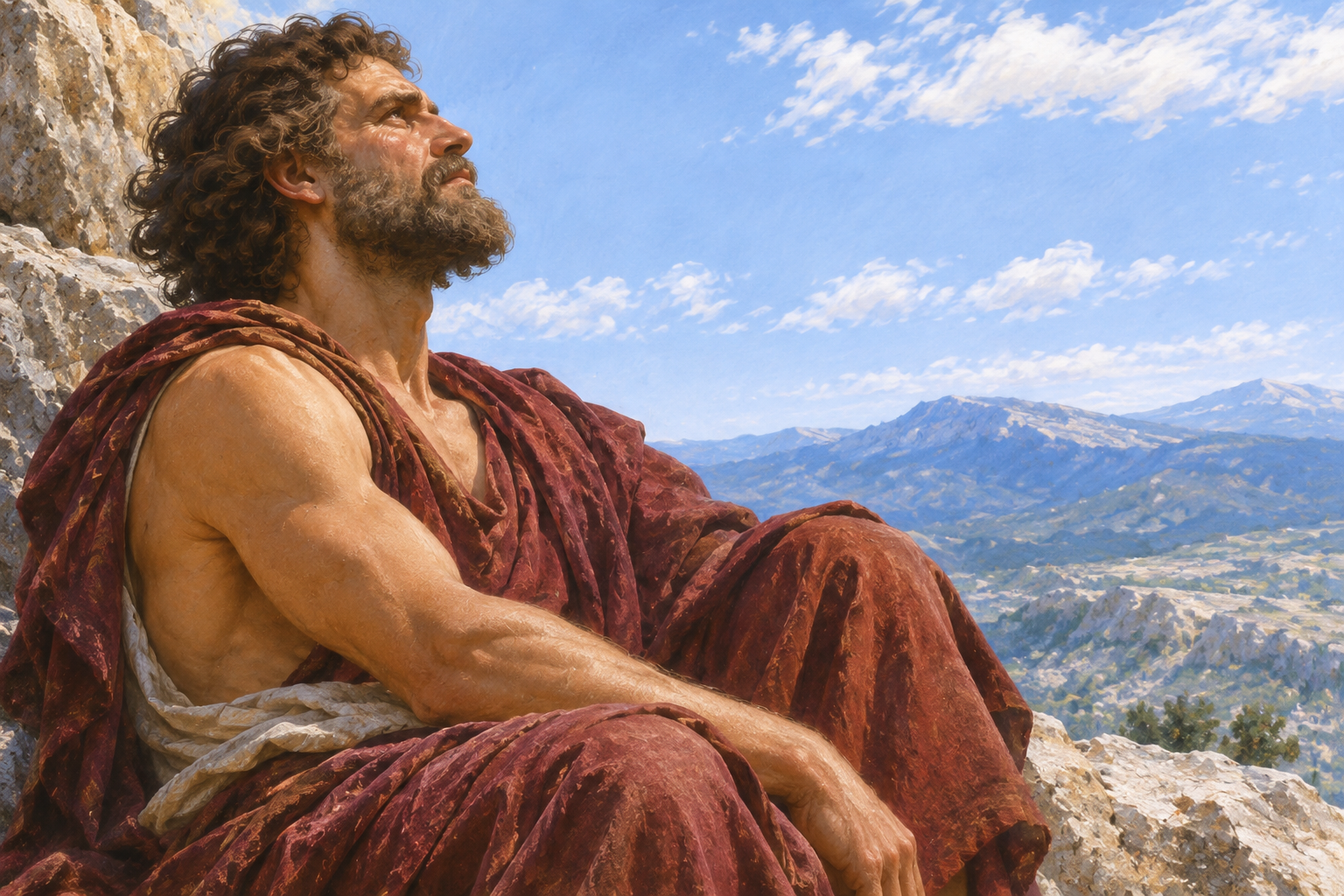
Questions of Justice, Conscience, and Divine Power
In Prometheus Bound, the imprisonment of a Titan raises questions about the nature of justice, the responsibilities of those who possess power, and the moral consequences of resistance. These discussion questions and essay prompts encourage students to consider competing interpretations of the characters' actions and support their arguments with evidence from the play.
Questions for Classroom Discussion
Power, Authority, and Justice
- Does Zeus' authority make his punishment of Prometheus just? How does the play distinguish between possessing power and using it responsibly?
- Why does Prometheus refuse to submit even when he knows that resistance will increase his suffering?
- How do Hephaestus, Power, and Hermes demonstrate different attitudes toward obedience and authority?
Conscience and Compromise
- Oceanus advises Prometheus to seek reconciliation with Zeus. Is his advice wise, cowardly, or something more complicated?
- Can Prometheus' determination be understood as both moral courage and excessive pride?
- What responsibilities do individuals have when they are ordered to participate in actions they believe are unjust?
Knowledge, Humanity, and Suffering
- Why are Prometheus' gifts to humanity important to the play's moral conflict?
- How does Io's suffering broaden the audience's understanding of divine power?
- Why does Prometheus' knowledge of Zeus' future give him power despite his physical imprisonment?
Analytical Essay Prompts
1. Authority and the Meaning of Justice
Examine the conflict between Zeus and Prometheus as a struggle between political authority and moral principle. Does the play suggest that power must be restrained by justice? Consider the words and actions of Prometheus and Zeus' representatives.
2. Prometheus: Hero or Proud Rebel?
Analyze Prometheus' character as both a defender of humanity and an uncompromising opponent of Zeus. Discuss whether his refusal to yield represents admirable courage, destructive pride, or a combination of the two.
3. Obedience and Moral Responsibility
Compare the responses of Hephaestus, Oceanus, and Hermes to Zeus' authority. What does each character suggest about the relationship between obedience, personal judgment, and responsibility?
4. Knowledge as a Form of Power
Explore the significance of Prometheus' gifts to humanity and his possession of prophetic knowledge. How does the play present knowledge as a source of freedom, influence, or conflict?
5. Two Forms of Suffering
Compare Prometheus' confinement with Io's continual wandering. How do their contrasting experiences contribute to the play's treatment of vulnerability and divine authority?
Developing an Analytical Argument
Students should begin with a clear interpretation rather than simply summarizing the plot. Each argument should refer to specific speeches, exchanges, or dramatic moments and explain how that evidence supports the central claim.
Encourage students to consider alternative interpretations. For example, an essay defending Prometheus' courage may also acknowledge the dangers of his uncompromising attitude.
Because translations differ, students should cite passages according to the edition used in their classrooms.
Note to the Educator
Encourage students to distinguish sympathy for Prometheus from unqualified approval of every decision he makes. The contrasting positions of Hephaestus, Oceanus, Hermes, and the Chorus allow students to examine the difficulties of moral judgment under powerful authority. These prompts can support classroom seminars, short written responses, or extended analytical essays.
The play is traditionally attributed to Aeschylus, although its authorship remains disputed. This resource accompanies the Richer Resources Publications edition translated by Ian Johnston.
A printable PDF version of this resource is available by email.