Reading Beneath the Words: Literary and Dramatic Techniques in Hippolytus
About This Guide
In Euripides’ Hippolytus, the audience often understands more than the characters themselves. The tragedy develops through carefully controlled revelations, persuasive speeches, conflicting obligations, and the terrible consequences of mistaken judgment.
This guide introduces six important techniques and offers questions that help students examine how dramatic form contributes to meaning.
1. Dramatic Irony: Knowledge and Misunderstanding
Aphrodite announces her plan to destroy Hippolytus at the beginning of the play. The audience therefore knows that Phaedra's suffering has a divine cause and that Hippolytus faces danger.
Theseus, however, knows nothing of this plan when he discovers Phaedra's accusation. His certainty about his son's guilt contrasts painfully with the audience's knowledge of Hippolytus' innocence.
Close-reading questions:
- What information does Aphrodite give the audience in the prologue?
- How does that knowledge affect our response to Theseus' accusation?
- Why might Euripides reveal the cause of the tragedy rather than preserve it as a mystery?
2. Persuasive Dialogue: The Language of Honor and Desire
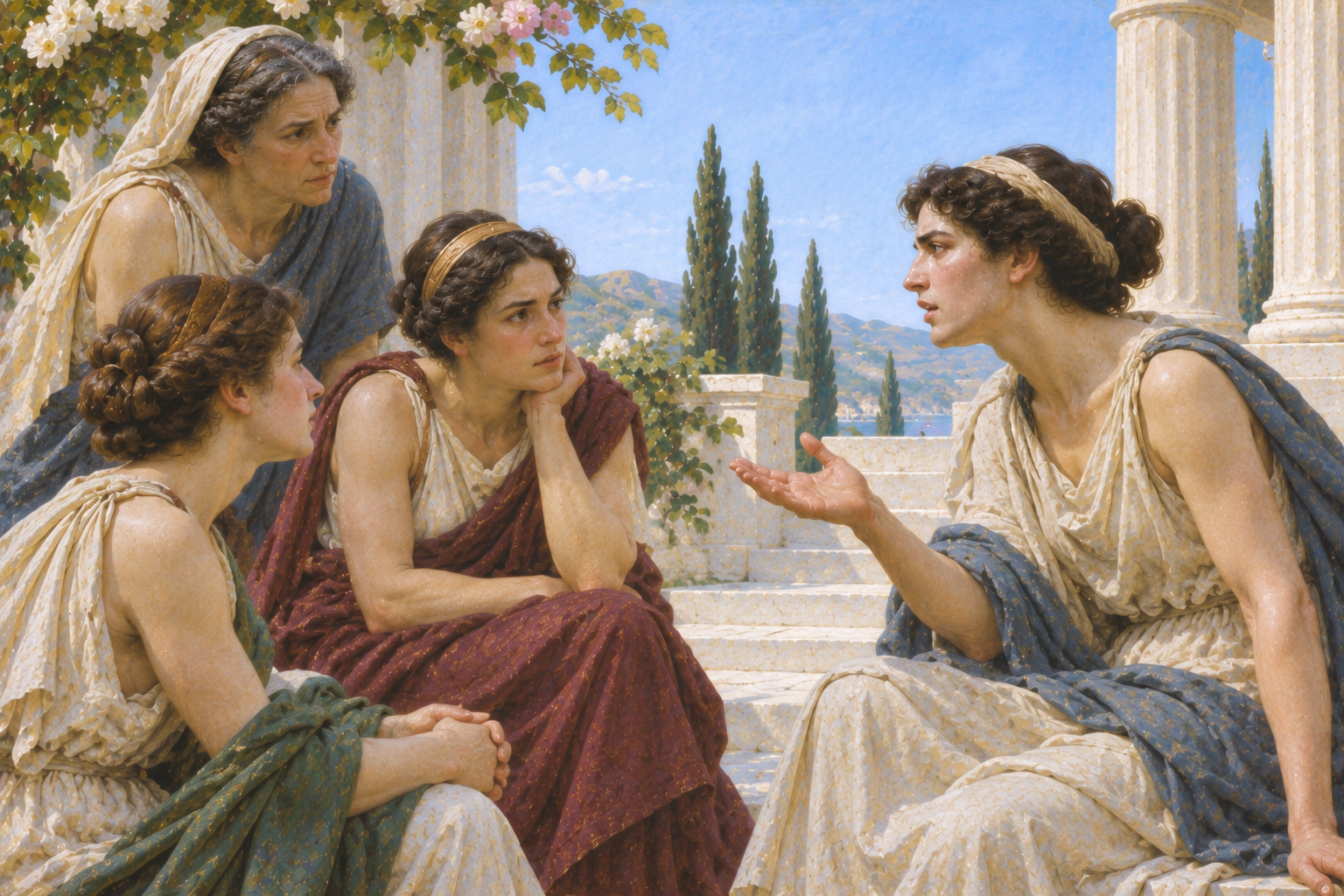
Phaedra and the Nurse discuss suffering, shame, and the possibility of resisting desire. Their conversation presents competing views of what a person should do when private feelings threaten public honor.
Later, Theseus and Hippolytus offer sharply different accounts of the accusation. Their speeches reveal how conviction and emotional distress can interfere with careful judgment.
Close-reading questions:
- How does the Nurse attempt to persuade Phaedra to change her position?
- What does Phaedra's language reveal about her understanding of honor?
- Why does Hippolytus' defense fail to persuade Theseus?
3. Imagery and Symbolism: Hunting, Purity, and the Sea
Hippolytus' devotion to Artemis is associated with hunting, the natural world, and the untouched meadow from which he gathers a wreath for the goddess.
The imagery of purity reflects his chosen identity, but his refusal to acknowledge Aphrodite's power reveals the limitations of his outlook.
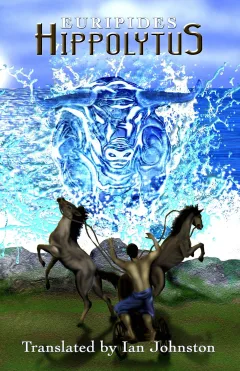
Near the end, the sea becomes the source of the monstrous bull that terrifies his horses. The natural landscape associated with freedom and hunting becomes the setting of his destruction.
Close-reading questions:
- What does the wreath offered to Artemis suggest about Hippolytus' values?
- How does the imagery of untouched nature contribute to his characterization?
- How does the sea monster transform the audience's understanding of the surrounding landscape?
4. Oaths, Speech, and Silence
Hippolytus swears an oath before the Nurse discloses Phaedra's secret. When Theseus later accuses him, Hippolytus refuses to break that oath, even though revealing the truth might save him.
Phaedra's written accusation, meanwhile, speaks on her behalf after her death.
Euripides places a binding silence beside a powerful but false written statement, exposing the dangers of treating words as proof without examining their circumstances.
Close-reading questions:
- Why does Hippolytus remain faithful to his oath?
- How does Phaedra's written accusation influence Theseus?
- Does the play present silence as honorable, dangerous, or both?
5. Messenger Speech: Making the Unseen Visible
The catastrophe involving Hippolytus' horses and chariot occurs away from the stage. A messenger describes the monstrous bull, the terrified horses, and the resulting injuries.
The detailed narration creates a vivid picture of the disaster while allowing the audience to experience the event through the messenger's words.
Close-reading questions:
- How does the messenger build suspense before describing the accident?
- Which details make the catastrophe especially vivid?
- What is gained by narrating the disaster rather than showing it directly?
6. Tragic Recognition and Reconciliation
Artemis appears near the conclusion and reveals Hippolytus' innocence. Theseus recognizes that he has condemned his son unjustly, but the truth arrives too late to prevent his death.
Hippolytus forgives his father before dying. This reconciliation offers emotional resolution without removing the tragedy's consequences.
Close-reading questions:
- How does Theseus' language change after Artemis reveals the truth?
- Why is the timing of the revelation important?
- Does forgiveness resolve the moral conflict, or does it make the suffering more poignant?
Literary Devices at a Glance
- Dramatic irony: The audience knows important facts that one or more characters do not.
- Persuasive dialogue: Characters use arguments, appeals, and emotional language to influence others.
- Imagery and symbolism: Descriptions and objects develop ideas beyond their immediate meaning.
- Oaths and silence: Promises and withheld information shape character choices and dramatic conflict.
- Messenger speech: A character narrates an important event that occurs offstage.
- Tragic recognition: A character discovers a crucial truth after the consequences of an error have become unavoidable.
Classroom Activity: Comparing Two Speeches
Ask students to compare Phaedra's explanation of her suffering with Hippolytus' defense before Theseus.
For each speech, identify:
- The speaker's principal claim.
- The values or obligations the speaker emphasizes.
- The emotional or persuasive techniques employed.
- What the audience knows that another character does not.
- How the speech influences the tragedy's development.
Conclude by discussing how Euripides uses speech to reveal character while also exposing the limitations of language and persuasion.
Short Analytical Writing Assignment
Choose one technique from this guide and explain how Euripides uses it to develop a central theme of Hippolytus.
Identify a specific scene, explain how the technique operates, and show how it influences the audience's understanding of honor, responsibility, or tragic suffering.
Note to the Educator
Students may use different translations of Hippolytus, so wording and line numbers may vary. Encourage them to identify passages by scene or dramatic situation and to support interpretations with evidence from the edition they are reading.
Reading the Play
A printable PDF version of this resource is available by email.