Euripides’ Hippolytus
Student’s Guide | Classical Reference Library
Richer Resources Editorial Team
About This Guide
In Euripides’ Hippolytus, a young man’s devotion to one goddess angers another, and a secret desire leads to a false accusation. The tragedy asks how people should respond when love, reputation, and the need for truth come into conflict. This guide will help you follow the story and consider the consequences of pride, silence, and hasty judgment.
Before You Read
Hippolytus is the son of Theseus, the king of Athens, and lives in Troezen. He honors Artemis, goddess of the hunt, and rejects Aphrodite, goddess of love. Aphrodite considers his refusal an insult and plans revenge. The play was first performed in Athens in 428 BCE. The audience learns the goddess’s plan at the very beginning, before the human characters understand what is happening.
The Story at a Glance
Aphrodite causes Phaedra, Theseus’ wife, to fall in love with her stepson Hippolytus. Phaedra is horrified by this unwanted feeling and tries to hide it. Her Nurse discovers the secret and tells Hippolytus, hoping to find a solution. Hippolytus reacts angrily but has sworn not to reveal what he hears.
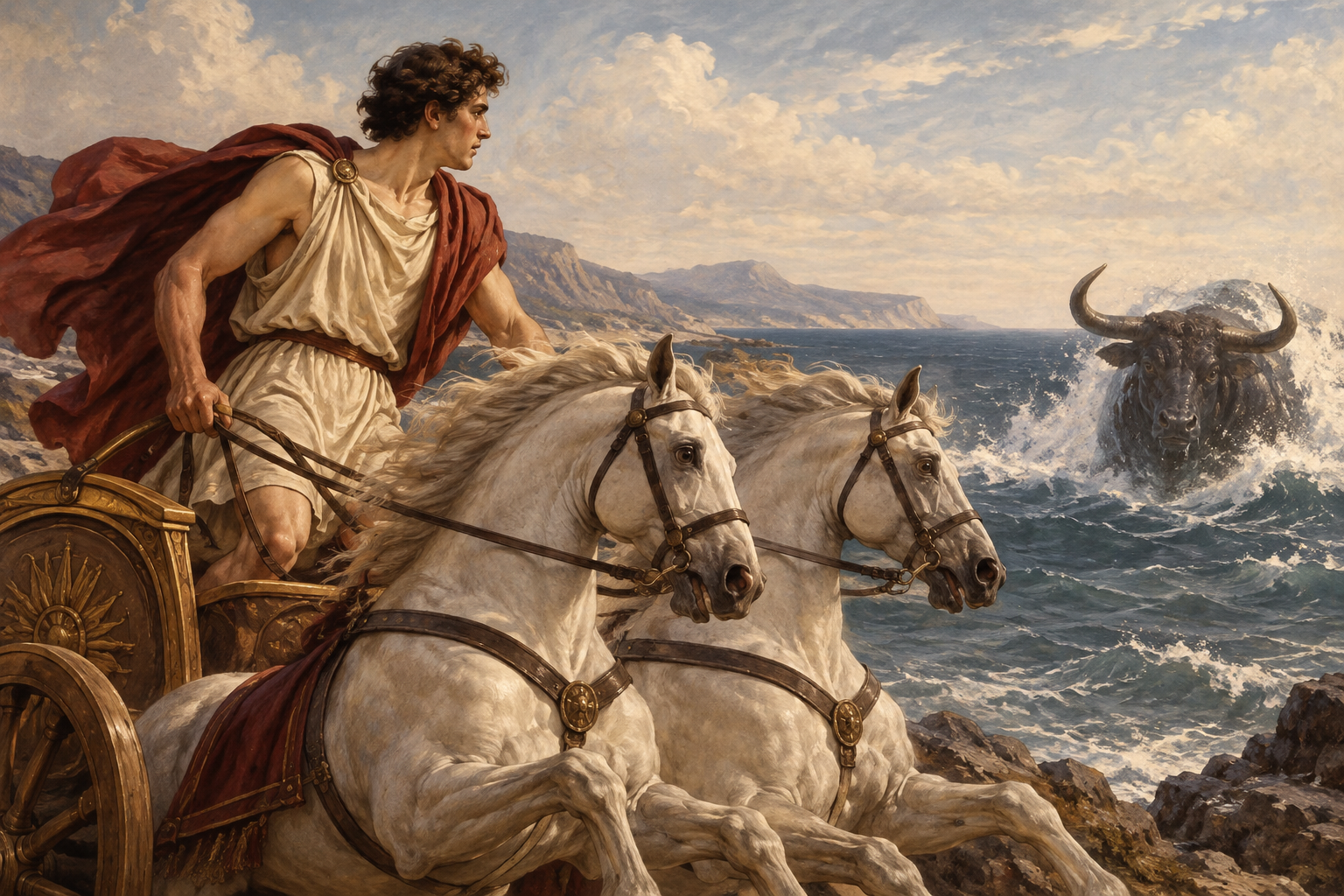
Afraid that her reputation will be ruined, Phaedra takes her own life and leaves a written accusation falsely claiming that Hippolytus assaulted her. Theseus believes the accusation and calls down a deadly curse on his son. Hippolytus is driven into exile, and a terrifying bull from the sea frightens his horses, causing a disastrous chariot crash.
Artemis appears and tells Theseus the truth. Father and son reconcile, but Hippolytus is dying. Their understanding comes too late to undo the harm.
Meet the Characters
Hippolytus — Theseus’ son, devoted to Artemis and proud of his rejection of love and marriage.
Phaedra — Theseus’ wife, struggling with a desire she did not choose and with fear of disgrace.
Theseus — Hippolytus’ father, whose anger leads him to accept an accusation without investigating it.
Aphrodite — Goddess of love, who sets the tragedy in motion.
Artemis — Goddess of the hunt, whom Hippolytus worships; she reveals the truth at the end.
The Nurse — Phaedra’s attendant, who tries to help but makes the situation worse.
The Chorus — Women of Troezen who respond to Phaedra’s suffering and the unfolding tragedy.
Important Themes
Desire and Choice — Phaedra cannot control the feeling Aphrodite has imposed on her, but she must decide how to respond.
Honor and Reputation — Fear of shame influences decisions with terrible consequences.
Truth and Evidence — Theseus mistakes an accusation for proof and refuses to hear his son fairly.
Pride and Extremes — Hippolytus’ devotion to Artemis is sincere, but his contempt for Aphrodite and love is severe.
Divine Power and Human Responsibility — The gods influence events, yet human choices also shape the tragedy.
What to Notice as You Read
Notice what Aphrodite tells the audience in the opening scene. How does this knowledge affect your view of later events?
Listen carefully to Phaedra’s explanation of her suffering. What is the difference between feeling something and acting on it?
Compare the Nurse’s intentions with the consequences of what she does.
Watch how Theseus reacts to the written accusation. What questions does he fail to ask?
Consider what Artemis’ final appearance explains—and what it cannot repair.
A Literary Feature: Dramatic Irony
Dramatic irony occurs when the audience knows something that a character does not. Aphrodite reveals her plan at the start, so the audience understands the cause of Phaedra’s suffering long before Theseus does. Later, we know that the accusation against Hippolytus is false while Theseus believes it. This gap between what we know and what he knows makes his decisions especially painful to watch.
Questions to Think About
- Why is Aphrodite angry with Hippolytus?
- How does Phaedra try to deal with her unwanted feelings?
- Why does the Nurse reveal Phaedra’s secret?
- How does Hippolytus respond, and what does his response reveal about him?
- Why does Theseus believe Phaedra’s accusation?
- What could Theseus have done before condemning his son?
- Does Artemis’ explanation bring justice, or does it only reveal the truth?
After You Finish
Choose a decision made by the Nurse, Phaedra, Hippolytus, or Theseus. Explain why the character makes that choice, what information the character has at the time, and how the decision affects others. Support your answer with two details from the play.
A Final Thought
Hippolytus shows how a tragedy can grow from both forces beyond human control and choices people make themselves. Knowing the truth matters—but the play also asks what happens when the truth is discovered too late.
Note to the Reader
This guide accompanies the Richer Resources Publications edition of Euripides’ Hippolytus, translated by Ian Johnston. A printable PDF version of this resource is available by email.