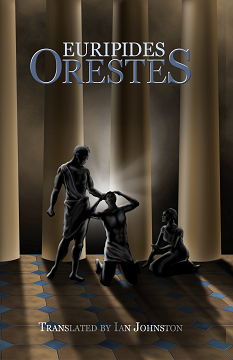
Debating Guilt, Loyalty, and Justice in Orestes
About This Resource
Euripides’ Orestes challenges readers to consider what happens when loyalty, revenge, and competing ideas of justice become impossible to reconcile. Orestes and Electra face punishment for killing their mother, yet their attempts to escape condemnation lead them toward further violence.
These questions and assignments encourage students to develop thoughtful interpretations supported by specific evidence from the play.
Part I — Character and Motivation
- How does Orestes explain his decision to kill Clytaemnestra?
- How does Electra's devotion to her brother influence her decisions?
- What does Pylades believe friendship requires, and where might his loyalty become dangerous?
- Why does Menelaus hesitate to help Orestes and Electra?
- Why does Tyndareus reject Orestes' defense of matricide?
Part II — Justice and Moral Responsibility
- Can a divine command remove responsibility for an individual's actions?
- How does the Argive assembly's judgment complicate the distinction between justice and public opinion?
- When does family loyalty become an excuse for further wrongdoing?
- How does the threat of execution influence the siblings' decisions?
- How should the audience judge the plan to attack Helen and take Hermione hostage?
Part III — Dramatic Interpretation
- How does Orestes' psychological suffering shape the opening of the play?
- Why does Euripides present the assembly's debate through a messenger rather than staging it directly?
- What effect does the Phrygian servant's account of the palace attack have on the play's tone?
- How does the threat against Hermione increase dramatic tension?
- Does Apollo's final intervention resolve the moral conflicts or merely end the immediate crisis?
Part IV — Structured Debates
Debate A: Does obedience to Apollo justify Orestes' actions?
One group should defend Orestes' claim that he acted under divine instruction. The other should argue that a command does not remove responsibility for killing his mother.
Debate B: Was Menelaus obligated to protect his nephew and niece?
Consider family obligations, political consequences, and the responsibility to oppose wrongdoing.
Debate C: Does Apollo restore justice at the conclusion?
Examine the difference between resolving a dangerous situation and providing a morally satisfying outcome.
For each debate, students should prepare textual evidence, acknowledge an opposing argument, and offer a reasoned response.
Part V — Analytical Essay Prompts
Essay 1: Guilt and Psychological Suffering
Analyze how Orestes' illness influences the audience's judgment of his actions. Does his suffering suggest remorse, punishment, or something more complicated?
Essay 2: Competing Definitions of Justice
Compare Orestes' defense of matricide with Tyndareus' argument for lawful punishment. Which position does the play present more persuasively?
Essay 3: Loyalty and Its Limits
Compare Electra, Pylades, and Menelaus. What does each character's response reveal about the obligations and dangers of loyalty?
Essay 4: Public Judgment and Political Power
Examine the Argive assembly's decision. How does Euripides portray the relationship between collective judgment, persuasion, and justice?
Essay 5: The Escalation of Violence
Trace how Orestes and his companions move from threatened victims to perpetrators of further violence. What does this reversal suggest about revenge?
Essay 6: Divine Intervention and the Ending
Evaluate Apollo's appearance at the conclusion. Does divine intervention resolve the moral questions raised by the tragedy?
Guidelines for Analytical Writing
A strong essay should:
- Present a clear, arguable interpretation.
- Support its claims with specific speeches, actions, or events.
- Explain how the evidence supports the argument.
- Consider at least one reasonable alternative interpretation.
- Distinguish a character's motives from the consequences of their actions.
Classroom Activity: A Council of Argos
Assign students the roles of Orestes, Electra, Pylades, Tyndareus, Menelaus, and a citizen of Argos.
Each participant prepares a brief statement explaining the character's position on responsibility and punishment. Other students ask questions and evaluate the arguments.
Conclude by discussing whether a fair judgment is possible when the participants are bound by competing family and political loyalties.
Note to the Educator
Encourage students to distinguish explanations of behavior from moral justifications. The play offers opportunities for substantial disagreement, particularly concerning Orestes' responsibility and Apollo's final intervention.
Students should be encouraged to recognize competing interpretations without assuming that every action is equally defensible.
Reading the Play
A printable PDF version of this resource is available by email.