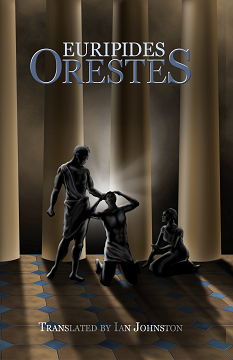
From Matricide to Divine Intervention: The Structure of Orestes
About This Guide
Euripides’ Orestes begins after Orestes and Electra have killed their mother, Clytaemnestra. The play follows their suffering, condemnation by the citizens of Argos, and increasingly desperate attempts to escape death.
This guide traces the major stages of the tragedy and examines how Euripides develops tension through psychological suffering, argument, reported action, and sudden reversals.
1. Electra Introduces the Crisis
Electra explains the family murders and describes Orestes' illness and anguish. The audience encounters the consequences of revenge before witnessing the siblings' next decisions.
Dramatic purpose: The opening establishes the family history while encouraging both sympathy for Orestes and concern about his actions.
2. Helen Returns and the Chorus Arrives
Helen asks Electra to make an offering at Clytaemnestra's tomb. Electra refuses, and Helen sends Hermione instead.
The Chorus arrives and is urged to avoid disturbing the exhausted Orestes.
Dramatic purpose: The scene introduces additional family relationships and contrasts the siblings' suffering with the return of Menelaus' household.
3. Orestes Awakens and Suffers
Orestes speaks of his torment and experiences an episode of terror in which he believes the Furies are pursuing him.
Dramatic purpose: His suffering makes the psychological consequences of violence visible and complicates the audience's judgment of him.
4. Menelaus and Tyndareus Challenge Orestes
Menelaus returns from Troy and hears Orestes' appeal for assistance.
Tyndareus condemns the killing of Clytaemnestra and argues that lawful punishment, rather than private vengeance, should determine justice.
Dramatic purpose: Their arguments expose conflicting obligations and competing definitions of justice.
5. The Argive Assembly Condemns the Siblings
A messenger reports the assembly's debate and its decision that Orestes and Electra must die.
Dramatic purpose: The assembly's judgment is conveyed through a messenger speech, emphasizing political conflict while increasing the urgency of the siblings' situation.
6. Pylades Joins a Desperate Plan
Pylades refuses to abandon Orestes. Together with Electra, they plan to kill Helen and use Hermione as a hostage to pressure Menelaus.
Dramatic purpose: The condemned siblings become aggressors, creating a disturbing reversal in the audience's understanding of their predicament.
7. The Palace Crisis
The attack on Helen takes place inside the palace. A frightened Phrygian servant emerges and describes the confusion and violence.
Helen's fate remains uncertain until Apollo's later explanation.
Dramatic purpose: The servant's report conveys action occurring offstage while introducing a striking mixture of terror and theatrical intensity.
8. Hermione Is Seized
The conspirators hold Hermione hostage and threaten to set fire to the palace.
Dramatic purpose: The conflict reaches its greatest danger as the siblings' attempt to save themselves threatens people who were not responsible for their original suffering.
9. Apollo Intervenes
Apollo appears and declares that Helen has been taken to divine immortality. He directs Orestes toward a trial in Athens and announces future marriages.
Dramatic purpose: Divine intervention ends the immediate crisis, but it does not erase the moral questions raised by the characters' actions.
Important Dramatic Techniques
Opening exposition: Electra establishes the events preceding the play.
Psychological suffering: Orestes' condition makes the consequences of violence visible.
Persuasive argument: Orestes, Tyndareus, and Menelaus offer conflicting accounts of justice and obligation.
Messenger speech: The assembly's decision and events within the palace are described rather than directly staged.
Reversal: The siblings move from threatened victims to perpetrators of further violence.
Divine intervention: Apollo imposes a resolution that challenges ordinary expectations of justice.
Questions for Discussion
- Why does Euripides begin after Clytaemnestra's murder rather than show the murder itself?
- How does Orestes' illness influence the audience's response to him?
- How do Menelaus and Tyndareus differ in their responses to the siblings?
- What is the dramatic effect of reporting the assembly's debate?
- How does the hostage plot change our judgment of Orestes, Electra, and Pylades?
- Does Apollo's appearance resolve the tragedy's moral conflicts?
Classroom Activity: Tracking the Escalation
Ask students to construct a timeline of the nine major stages.
For each stage, identify:
- The event or decision.
- The character's immediate goal.
- The consequences for other characters.
- Whether the event occurs onstage or is reported.
Conclude by discussing the point at which the siblings' attempt to survive becomes a serious threat to others.
Note to the Educator
Encourage students to distinguish the sequence of events from the way Euripides presents them. The messenger reports, Orestes' psychological suffering, and the abrupt divine ending all shape the audience's experience of the tragedy.
Students should also consider how sympathy for the siblings can coexist with criticism of their increasingly dangerous choices.
Reading the Play
A printable PDF version of this resource is available by email.