The Myths Behind the Tragedy
Sophocles’ Women of Trachis draws on stories that Greek audiences would already have associated with Heracles, one of their most celebrated heroes. Understanding these myths helps students recognize the contrast between Heracles’ extraordinary achievements and the suffering that brings his life toward its end.
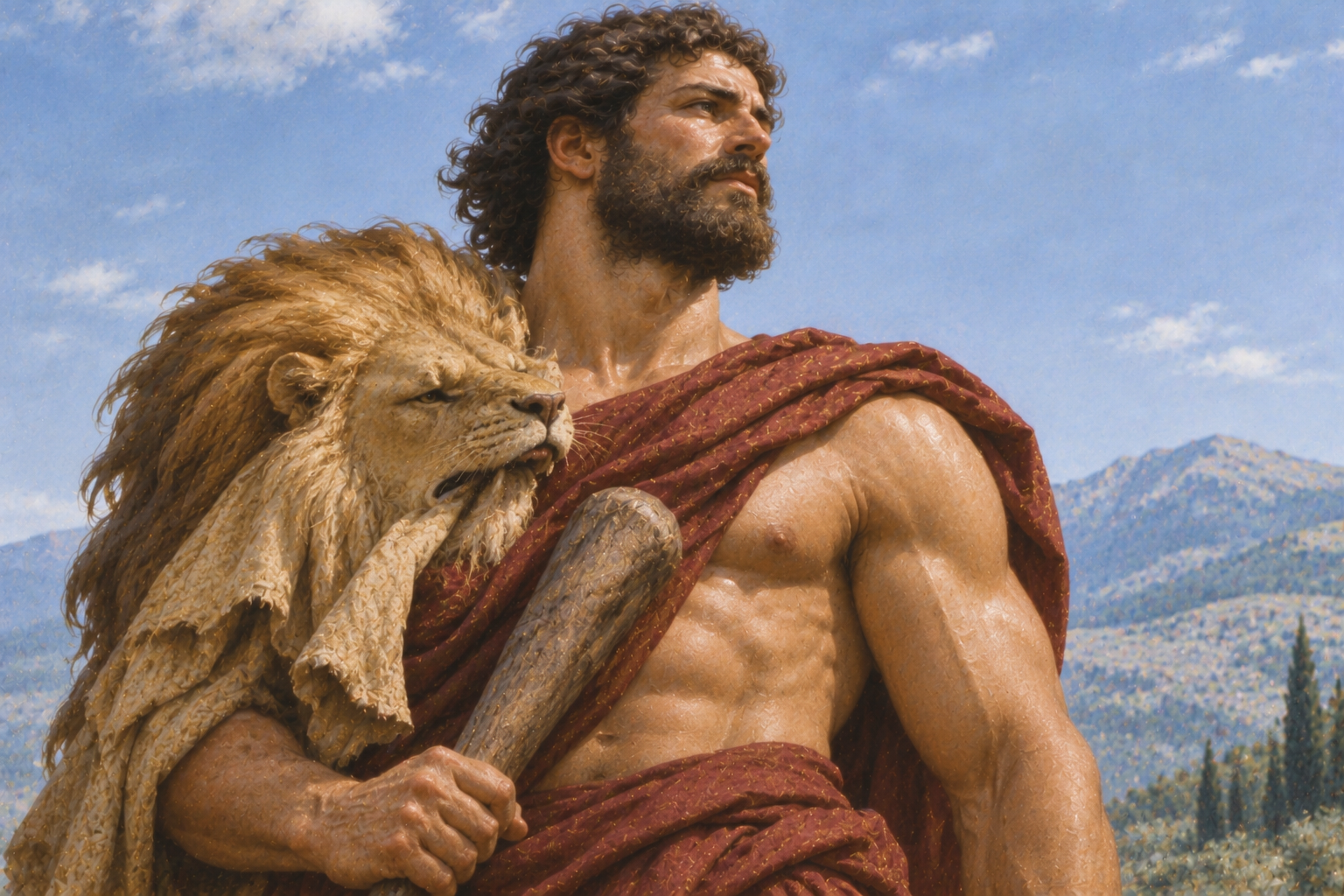
Heracles and His Heroic Reputation
Heracles, known as Hercules in Roman mythology, was famous for his exceptional strength and the dangerous labors he performed. His victories over monsters and other formidable opponents established him as a symbol of heroic endurance.
Sophocles presents a less familiar side of this powerful figure. Heracles remains a celebrated warrior, but his victories have consequences for his household, and his strength cannot protect him from betrayal or pain.
Deianeira and the River Crossing
Before the events of the play, Deianeira and Heracles encountered the centaur Nessus while crossing a river. Nessus attempted to assault Deianeira, and Heracles fatally wounded him with an arrow poisoned by the Hydra’s venom.
As he died, Nessus persuaded Deianeira to preserve some of his blood, claiming it could restore Heracles’ love if his affection ever wandered. The supposed charm was actually a means of revenge.
This earlier episode becomes crucial when Deianeira later fears that Heracles loves another woman.
Iole and the Fall of Oechalia
Iole is the daughter of Eurytus, ruler of Oechalia. Heracles’ campaign against Oechalia ends with its destruction and Iole’s capture. When she is brought to Deianeira’s household, the truth about Heracles’ attachment to her gradually emerges.
Iole’s arrival connects Heracles’ public actions as a conqueror with the private suffering of his family.
The Hydra’s Poison and the Fatal Garment
The poison associated with the Hydra links Heracles’ earlier heroic exploits to his eventual destruction. Deianeira applies Nessus’ supposed love charm to a garment intended for Heracles, not knowing that the substance will cause terrible suffering.
An object meant to express affection becomes the instrument of catastrophe. Sophocles thus transforms familiar heroic mythology into a tragedy about deception, uncertainty, and unintended consequences.
Heracles’ Death and the Wider Myth
In the wider mythological tradition, Heracles’ death is associated with a funeral pyre on Mount Oeta and, in some accounts, his subsequent elevation among the gods.
Sophocles’ play ends before any such divine transformation is shown. Its emphasis remains on suffering, family obligations, and the difficult instructions Heracles leaves to Hyllus.
Questions for Discussion
- How does knowing Heracles’ heroic reputation change our response to his suffering?
- Why is the earlier encounter with Nessus essential to the tragedy?
- How do Heracles’ military victories affect Deianeira and Iole?
- What is ironic about the poison that ultimately harms Heracles?
- Why might Sophocles leave the hero’s possible divine future outside the action of the play?
The mythological background gives students a fuller understanding of Sophocles’ choices while encouraging them to distinguish the events presented in the tragedy from other versions of the Heracles legend.