From Uncertainty to Tragic Recognition
Sophocles’ Women of Trachis unfolds through a series of reports, discoveries, and irreversible decisions. Its unusual structure moves from Deianeira’s anxiety about her absent husband to the suffering of Heracles himself. Although the two characters occupy different portions of the play, their stories are joined by a single fatal action.
Opening: Deianeira’s Uncertainty
The play begins with Deianeira recalling her troubled marriage and expressing concern for Heracles, who has been absent for an extended period. She sends their son Hyllus to seek news of him. Her uncertainty establishes the emotional tension that drives the opening scenes.
The Return of the Captives
A messenger announces Heracles’ success, and Lichas arrives with captive women, including Iole. Deianeira initially welcomes them compassionately. When she learns that Heracles desires Iole, however, her anxiety about losing his affection deepens.
This revelation is a major turning point: Deianeira begins to consider how she might recover her husband’s love.
The Fatal Gift
Remembering a substance given to her by the dying centaur Nessus, Deianeira believes she possesses a means of restoring Heracles’ affection. She applies it to a garment and sends the garment to him through Lichas.
The audience is invited to recognize the danger of trusting a promise whose true nature Deianeira does not understand.
Discovery and Recognition
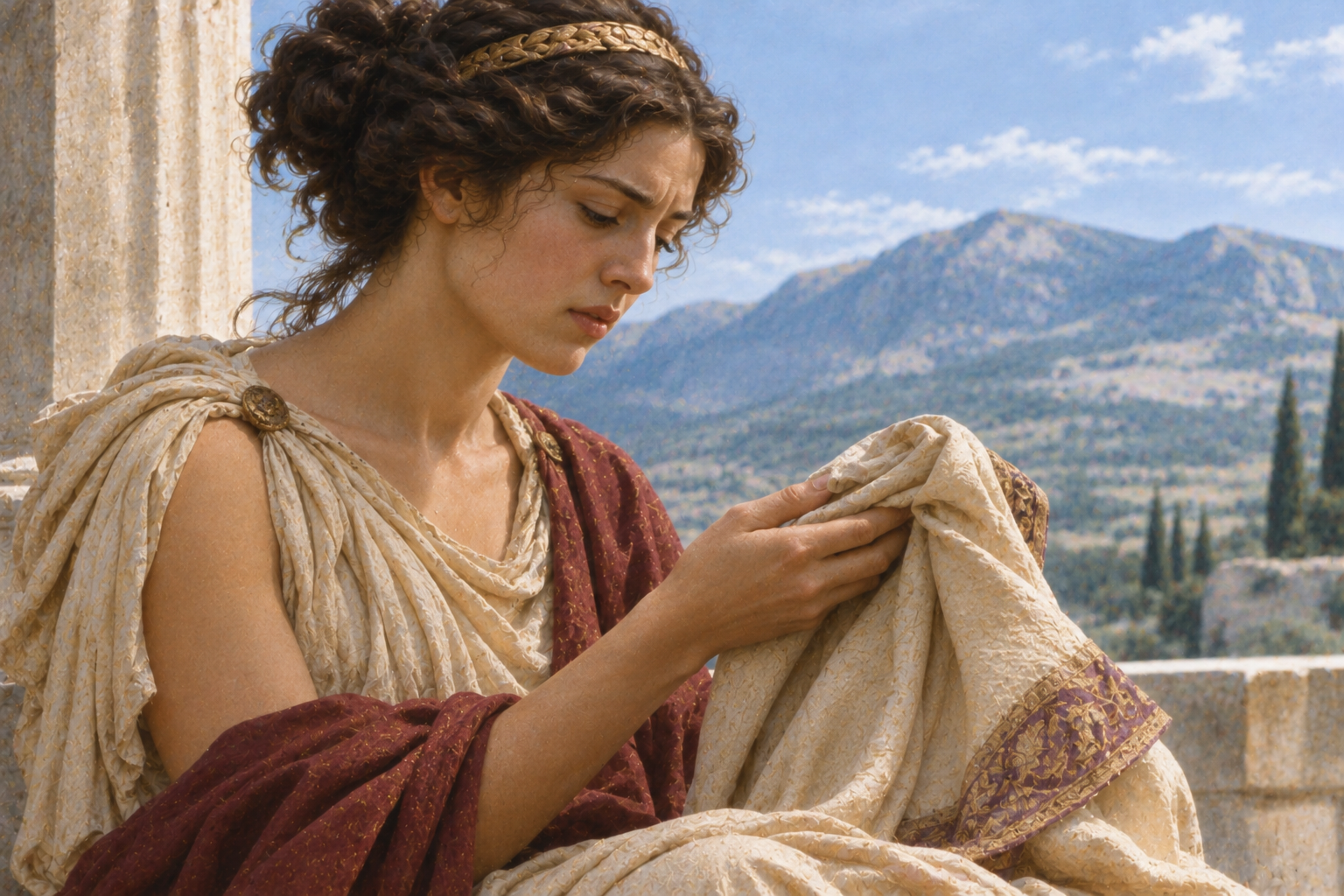
When Deianeira notices the strange effects of the substance on a piece of wool exposed to sunlight, she begins to fear that she has been deceived. Hyllus subsequently reports Heracles’ terrible suffering after putting on the garment.
Deianeira recognizes the consequences of her action, though the discovery comes too late to prevent catastrophe. Her silence and withdrawal precede the report of her death.
The Suffering of Heracles
The final portion of the play shifts attention to Heracles. The celebrated hero is brought home in extreme pain, and his physical suffering exposes the limits of his legendary strength. Hyllus eventually explains that Deianeira acted without intending harm.
Heracles gives instructions concerning his death and asks Hyllus to marry Iole. These demands introduce further questions about obedience, family duty, and the burdens inherited by the next generation.
An Unusual Tragic Structure
Unlike tragedies centered on a single protagonist throughout, Women of Trachis gives substantial dramatic attention first to Deianeira and then to Heracles. The audience must reconsider both characters as new information emerges.
The play's tragic force depends on the separation between intention and outcome: Deianeira hopes to preserve love but causes suffering, while Heracles returns victorious only to confront his own vulnerability.
Questions for Discussion
- How does Sophocles use delayed information to build tension?
- At what point does Deianeira begin to understand the danger of Nessus’ gift?
- Why might Sophocles have structured the play around two central figures?
- How does the audience's knowledge differ from that of the characters?
- What changes when Heracles becomes the focus of the final scenes?
Following these turning points helps students understand how Sophocles develops dramatic irony, recognition, and the consequences of decisions made without complete knowledge.