The House of Atreus: A Legacy of Violence
The tragedies of Aeschylus’ Oresteia begin after the Trojan War, but their conflicts reach back several generations. The family history of Agamemnon and Orestes helps explain why each new act of violence is presented as an answer to an earlier wrong. Aeschylus draws on inherited myths while reshaping them into a dramatic argument about justice.
Tantalus and Pelops
In one prominent tradition, Tantalus offended the gods by serving them the flesh of his son Pelops. The gods restored Pelops to life. Pelops later won Hippodamia as his bride through a chariot contest, a victory associated in some accounts with treachery and a curse. These stories establish a family history marked by broken trust and violence, though their details vary across ancient sources.
Atreus and Thyestes
Pelops’ sons Atreus and Thyestes struggled for power. In the most notorious version of their feud, Atreus murdered the children of Thyestes and served them to their father at a feast. Thyestes’ surviving son Aegisthus later sought vengeance against Atreus’ family. This older conflict helps explain Aegisthus’ role in the murder of Agamemnon, the son of Atreus.
Agamemnon, Menelaus, and the Trojan War
Agamemnon and his brother Menelaus belong to the next generation. When Paris took Helen, Menelaus’ wife, to Troy, Agamemnon led the Greek expedition against the city. The war’s public purpose and heroic reputation stand in tension with the suffering that follows the returning victors.
The Sacrifice of Iphigenia
Before the Greek fleet could sail, Agamemnon sacrificed his daughter Iphigenia at Aulis, according to the version recalled in the trilogy. Her death is central to Clytemnestra’s anger. Other ancient versions of Iphigenia’s story differ; students should follow the account that Aeschylus’ Chorus invokes in Agamemnon.
Clytemnestra, Orestes, and Electra
When Agamemnon returns from Troy, Clytemnestra kills him, assisted in the wider conspiracy by Aegisthus. Their son Orestes later returns to avenge his father, with his sister Electra supporting him. Yet killing Clytemnestra makes Orestes guilty of matricide and brings the Furies against him. The family’s history makes it increasingly difficult to separate punishment from renewed wrongdoing.
The Furies and the New Court
The Furies represent the demand that bloodshed within a family be punished. In The Eumenides, their claim conflicts with Apollo’s defense of Orestes. Athena establishes a court in Athens to hear the dispute and then persuades the Furies to accept an honored place in the city. The conclusion does not deny the past; it offers an alternative to endless retaliation.
Myth and Dramatic Adaptation
Aeschylus did not invent the House of Atreus, and the ancient myths did not have a single fixed version. His distinctive achievement is to arrange familiar family conflicts across three connected tragedies, moving from the palace and tomb to the civic court. Readers should distinguish details dramatized in the surviving trilogy from alternative stories told by other authors.
Questions for Discussion
- How does the feud between Atreus and Thyestes shape Aegisthus’ motives?
- Why is Iphigenia’s sacrifice essential to understanding Clytemnestra?
- How does each generation justify violence by referring to the previous one?
- Why does Orestes’ revenge create a new moral problem?
- What changes when Athena establishes a court?
- Why is it important to distinguish Aeschylus’ version from other mythological traditions?
Note to the Educator
Have students construct a family tree beginning with Pelops, then mark the acts of violence connecting successive generations. This makes the inherited conflict visible without implying that every character is powerless to choose. Compare the different justifications offered by Aegisthus, Clytemnestra, and Orestes, and ask how Athena’s court changes the pattern.
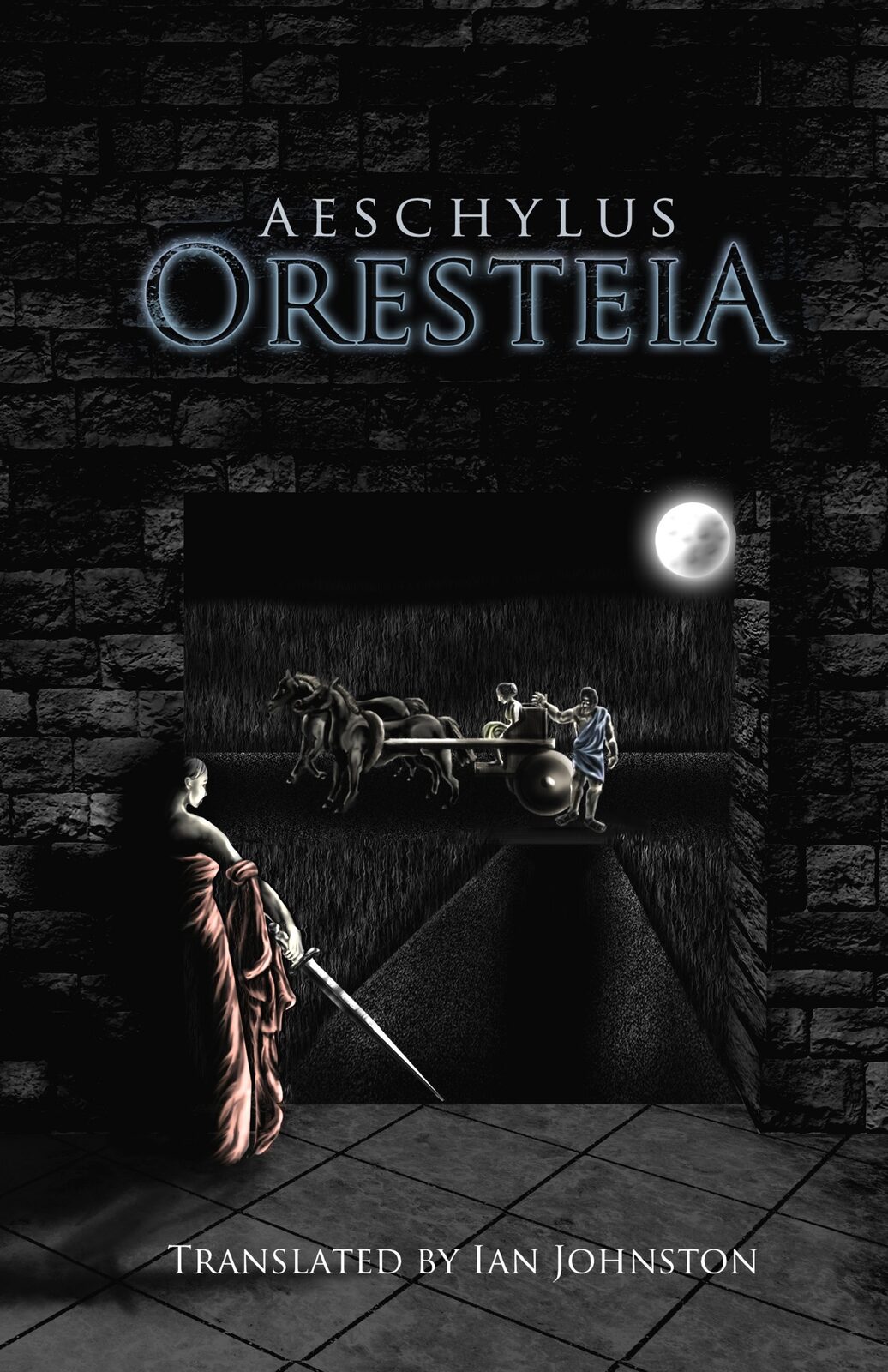
This guide accompanies the Richer Resources Publications edition of The Oresteia, translated by Ian Johnston.
A printable PDF version of this resource is available by email.