From the Palace to the Courtroom
Aeschylus’ Oresteia is a connected trilogy in which each play changes the meaning of the events before it. Agamemnon presents a murder justified as revenge; The Libation Bearers answers that murder with another; and The Eumenides asks whether judgment can replace retaliation. The structure moves from the royal palace, through a family tomb, to a public court.
Agamemnon: The Return and the Murder
A watchman announces the long-awaited signal that Troy has fallen. The Chorus recalls the expedition and the sacrifice of Iphigenia, establishing the troubled history behind Agamemnon’s victory.
Clytemnestra welcomes her returning husband, persuading him to enter the palace across costly fabrics. Cassandra, brought from Troy as a captive, foresees the murders but cannot prevent them.
Agamemnon and Cassandra are killed inside the palace. Clytemnestra emerges to defend her actions, and Aegisthus invokes his own inherited grievance. The play ends with authority contested rather than justice settled.
The Libation Bearers: Revenge Creates Another Crime
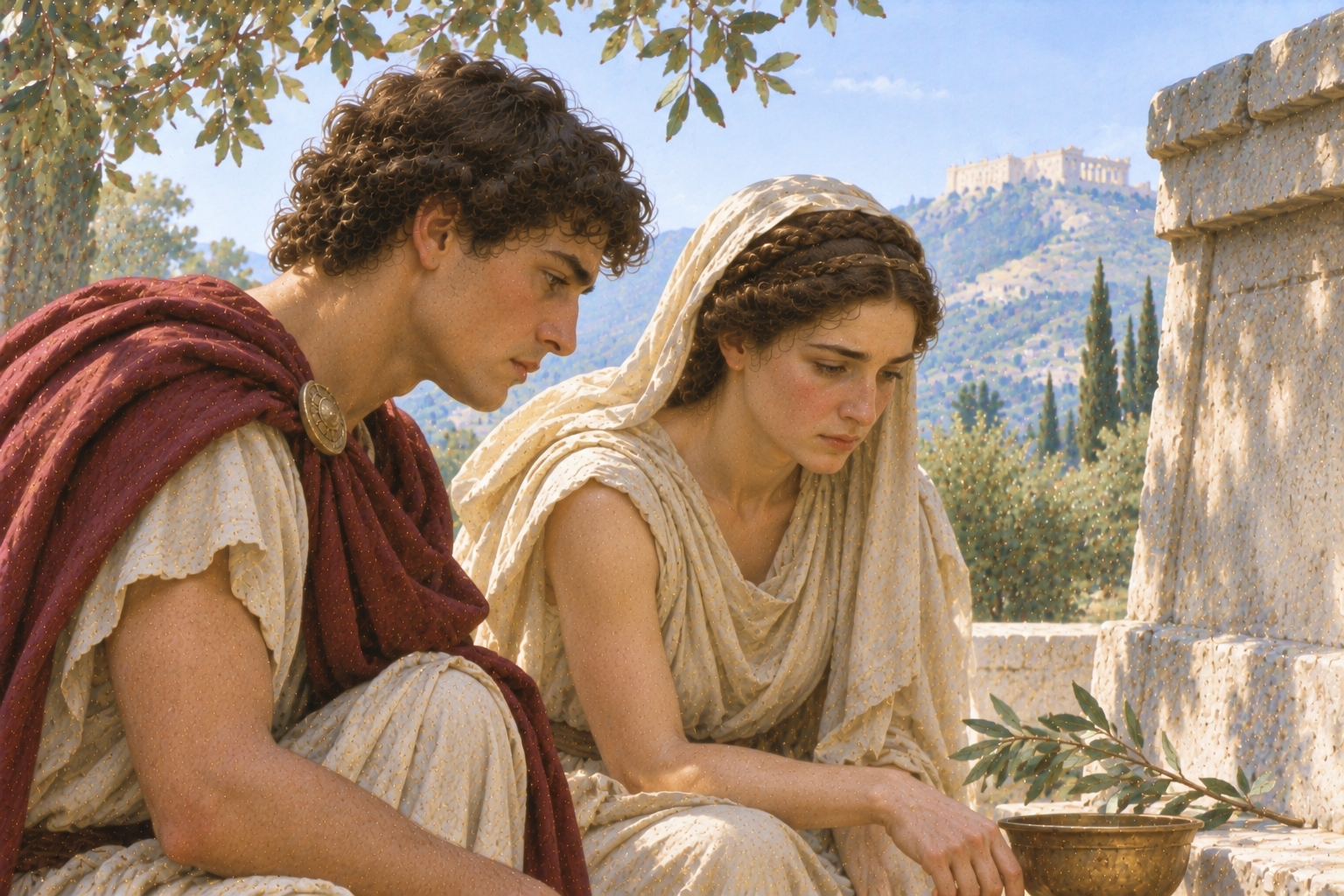
Orestes returns to his father’s tomb and reunites with Electra. Together they mourn Agamemnon and seek vengeance.
Orestes enters the palace in disguise, kills Aegisthus, and then confronts Clytemnestra. He hesitates before killing his mother but follows Apollo’s command.
The apparent completion of revenge immediately becomes a new crisis when Orestes sees the Furies pursuing him. The murdered father has been avenged, but the avenger now bears blood guilt.
The Eumenides: From Pursuit to Judgment
Orestes seeks purification and protection, first at Delphi and then in Athens.
The Furies insist that matricide demands punishment; Apollo defends Orestes and his obedience to divine instruction. Athena establishes a court of Athenian citizens to hear the competing claims.
When the jurors’ votes are tied, Athena’s vote acquits Orestes. The Furies protest, but Athena persuades them to accept honor and a protective role in the city.
The trilogy closes not with another killing but with a civic settlement.
The Trilogy’s Larger Dramatic Movement
The three plays form a sequence of changing responses to wrongdoing:
- Agamemnon — private revenge within the royal household.
- The Libation Bearers — retaliatory revenge that produces another crime.
- The Eumenides — public judgment and the accommodation of competing claims.
The setting widens from household to city. The central conflict shifts from who deserves punishment to how conflicting claims should be judged.
The final settlement does not erase earlier suffering. It proposes a way to prevent the cycle from continuing.
The Changing Role of the Chorus
Each play uses a different Chorus.
In Agamemnon, the elders of Argos recall the past and fear the future. In The Libation Bearers, the women carrying offerings to Agamemnon’s tomb express grief and support the children’s revenge.
In The Eumenides, the Furies become active pursuers and disputants whose own place in the new order must be negotiated.
This progression moves the Chorus from witnesses, to allies, to participants in the resolution.
Questions for Discussion
- How does the opening of Agamemnon create suspense before the king arrives?
- Why does the end of the first play fail to resolve the family conflict?
- How does Orestes’ hesitation complicate the revenge plot?
- What changes when the action moves from the palace to the court?
- How do the three Choruses shape the audience’s judgments?
- Why does Athena seek agreement with the Furies after the verdict?
Note to the Educator
Ask students to construct a three-part timeline marking each play’s initial problem, decisive action, and unresolved consequence. This makes clear why the trilogy should be studied as a continuous dramatic argument rather than three separate revenge stories.
Encourage students to distinguish Orestes’ acquittal from the broader reconciliation achieved when Athena gives the Furies an honored place in Athens.
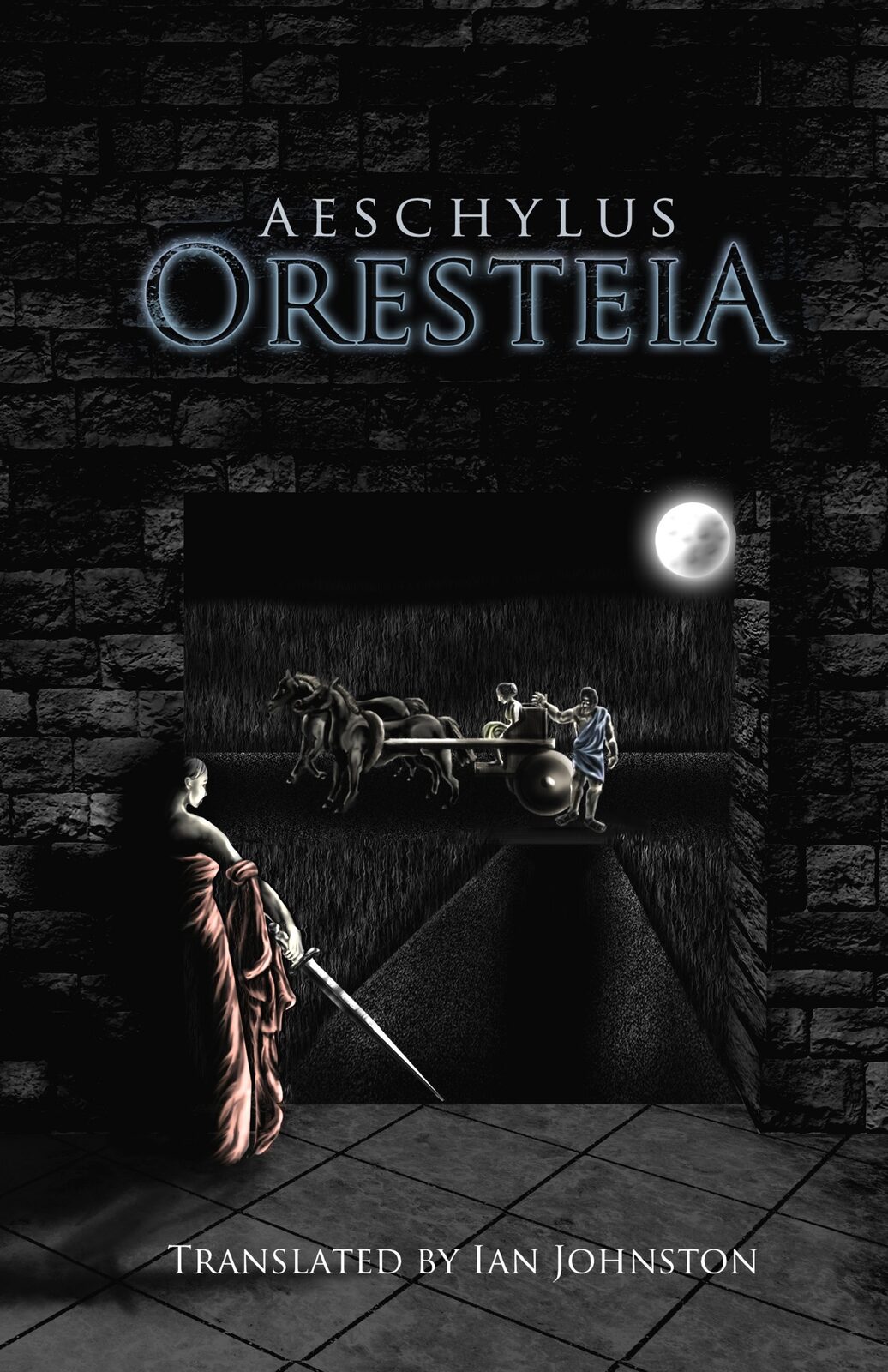
This guide accompanies the Richer Resources Publications edition of The Oresteia, translated by Ian Johnston.
A printable PDF version of this resource is available by email.