From Foreboding to Public Lament
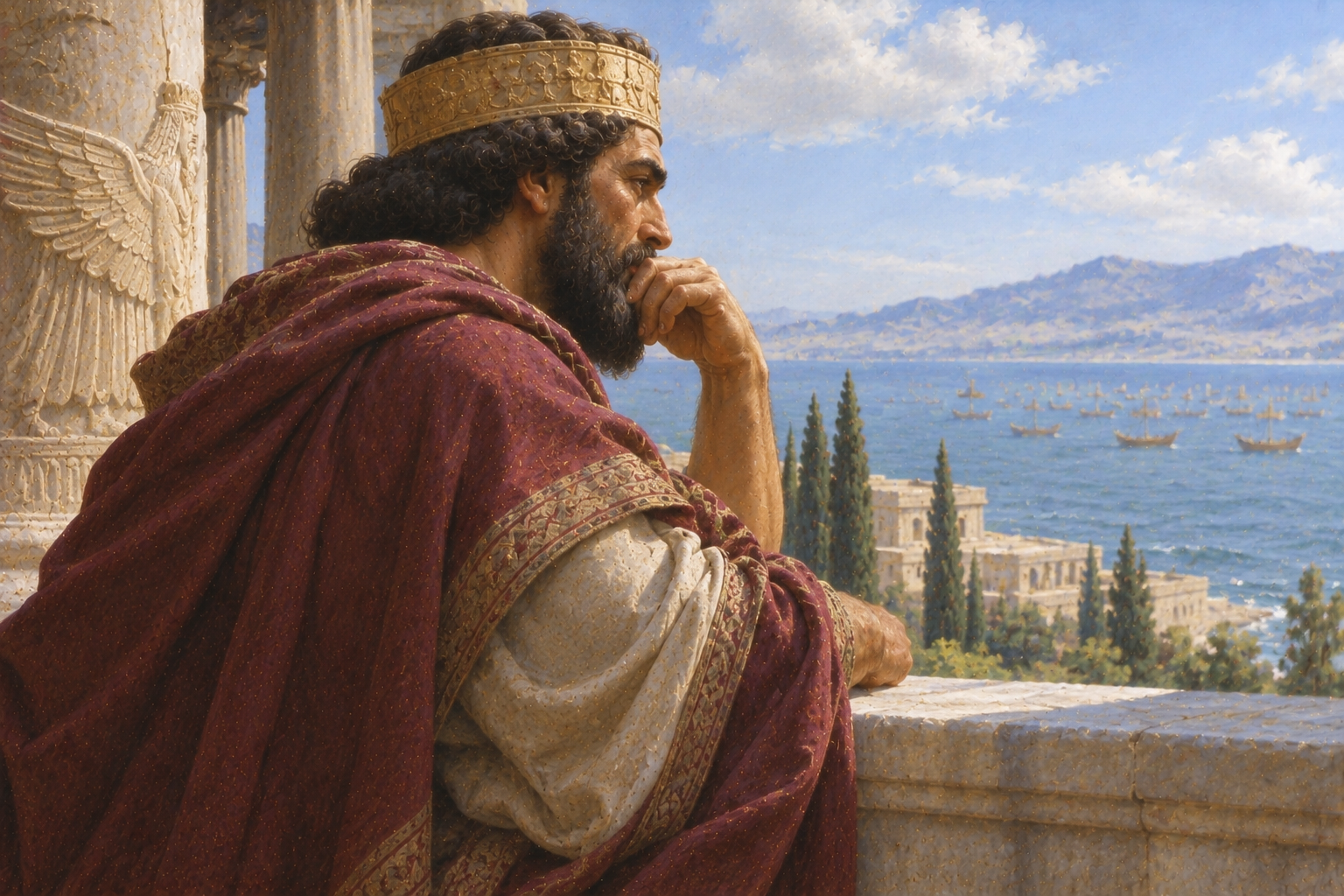
Aeschylus’ The Persians unfolds at the Persian royal court after Xerxes has led his army against Greece. The battle itself is never enacted onstage. Instead, the audience learns about the disaster through anxious anticipation, a messenger’s account, the judgment of Darius’ ghost, and the arrival of the defeated king. This sequence transforms a military event into a tragedy of leadership and communal loss.
Opening: The Chorus Awaits News
The play begins with Persian elders entrusted with the kingdom during Xerxes’ absence. Their catalogue of commanders and military strength establishes the scale of the expedition, but their unease hints that the empire’s apparent power may be vulnerable. Suspense arises from the gap between the court’s hopes and the audience’s knowledge of the historical defeat.
Atossa’s Dream and the First Signs of Disaster
Queen Atossa describes her dream of two women, one Persian and one Greek, whom Xerxes attempts to harness. The Greek woman resists and breaks the yoke. Atossa also reports a disturbing omen involving birds. These signs prepare the audience for catastrophe before any confirmed news arrives. The elders advise religious offerings and prayers.
The Messenger: Battle Told Rather Than Shown
A messenger arrives with the news that the Persian fleet has been destroyed at Salamis. His detailed account of the ships, confusion, and losses gives the absent battle dramatic force. The speech shifts the play from uncertainty to knowledge. Atossa’s questions and the elders’ responses keep attention on the consequences for the Persian people rather than on Greek victory celebrations.
The Ghost of Darius: Explaining the Defeat
Atossa and the Chorus summon the spirit of Darius. His appearance changes the dramatic question from “What happened?” to “Why did it happen?” Darius condemns Xerxes’ overconfidence, particularly his attempt to bridge the Hellespont, and warns against violating divine limits. The scene offers a moral interpretation of the catastrophe, not simply a repetition of the messenger’s report.
Xerxes’ Entrance: Grief Without Resolution
Xerxes finally appears near the end of the tragedy, stripped of the confidence associated with his expedition. His exchange of laments with the Chorus names the losses and gives the defeated ruler a voice. Unlike tragedies that end with a decisive action, The Persians concludes in shared mourning. The consequences of the campaign cannot be undone.
How the Dramatic Structure Works
- Expectation: The Chorus and Atossa await news of a powerful expedition.
- Warning: Dreams and omens suggest the danger of imperial overreach.
- Revelation: The messenger recounts the defeat at Salamis.
- Interpretation: Darius explains the disaster through pride and divine limits.
- Lament: Xerxes and the Chorus confront the human cost of defeat.
The sequence moves from uncertainty to knowledge, then from explanation to grief. The absence of staged combat directs attention toward testimony, responsibility, and the suffering of those who survive.
Questions for Discussion
- How does the opening catalogue of Persian forces contribute to suspense?
- What is the dramatic purpose of Atossa’s dream before the messenger arrives?
- Why might Aeschylus choose to report the battle rather than stage it?
- How do the messenger and Darius serve different purposes?
- What is gained by delaying Xerxes’ appearance until the end?
- How does the final lament change the audience’s understanding of victory and defeat?
Note to the Educator
Have students make a five-stage plot outline using the headings expectation, warning, revelation, interpretation, and lament. Ask them to identify what the audience learns at each stage and how its emotional response changes. Emphasize that The Persians is a dramatic representation of recent history, not an impartial chronicle of the Persian Wars.
This guide accompanies the Richer Resources Publications edition of The Persians, translated by Ian Johnston.
A printable PDF version of this resource is available by email.