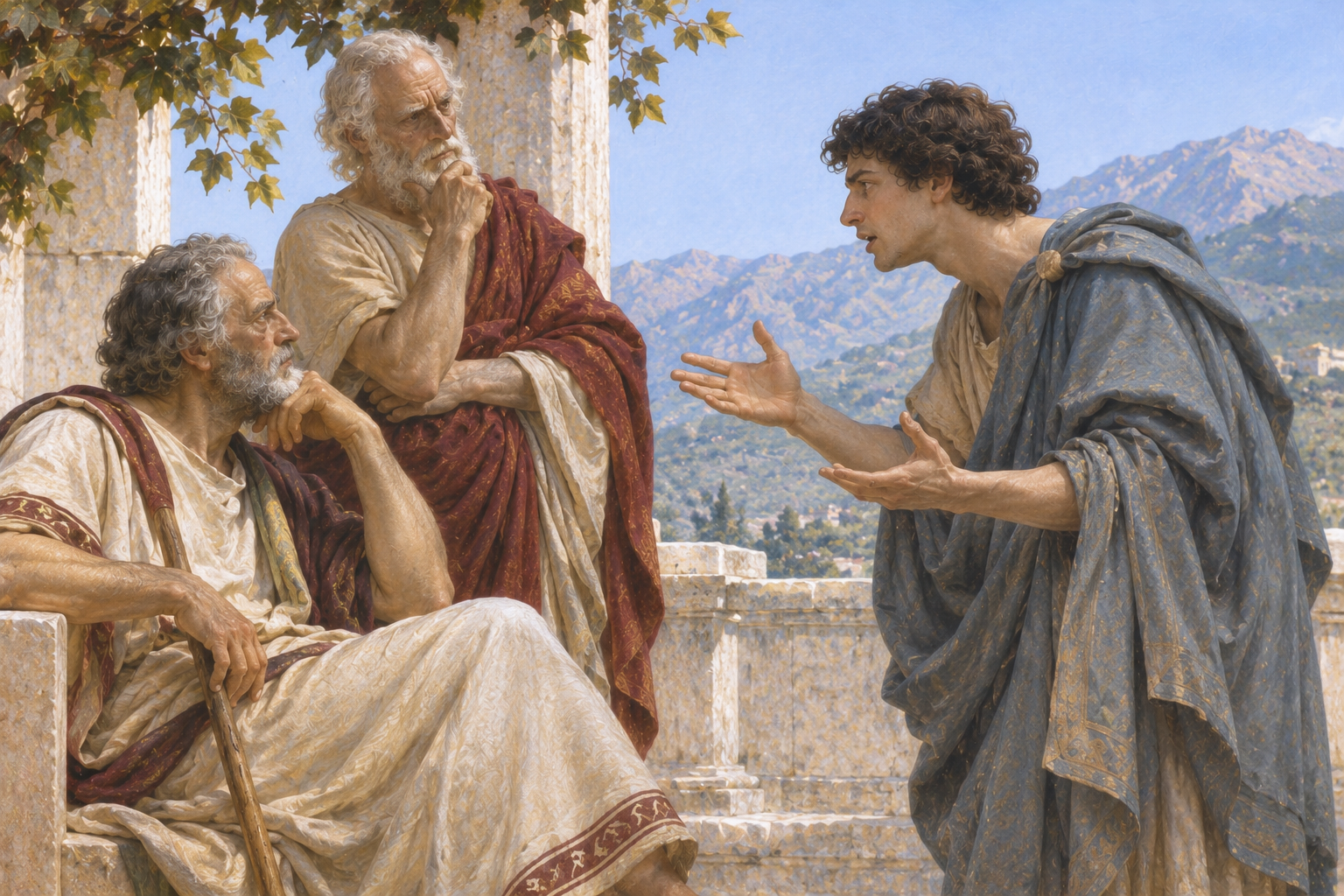
Testing Understanding of Plot, Character, and Tragic Meaning
This classroom quiz assesses students’ comprehension of Euripides’ Bacchae and their ability to interpret its central conflicts. Eight multiple-choice questions establish understanding of the plot and characters, while three written responses invite closer analysis of dramatic irony, reversal, and divine punishment.
Learning Objectives
Students will demonstrate their ability to:
- Identify major characters, relationships, and events.
- Explain Dionysus’ motives and Pentheus’ decisions.
- Recognize dramatic irony and important turning points.
- Interpret the consequences of Agave’s recognition.
- Support literary judgments with evidence from the play.
Part I: Multiple-Choice Questions
1. Why does Dionysus return to Thebes?
A. To claim the throne
B. To secure recognition of his divinity and defend Semele’s reputation
C. To negotiate peace with Athens
D. To rescue Pentheus from exile
2. Who is Pentheus’ mother?
A. Semele
B. Agave
C. Ariadne
D. Ino
3. Which two older men advise Pentheus to honor Dionysus?
A. Cadmus and Tiresias
B. Zeus and Hermes
C. Two messengers
D. Creon and Oedipus
4. What is the dramatic irony of Dionysus’ appearance as a stranger?
A. The audience knows his divine identity while Pentheus does not
B. Pentheus knows the god’s plans before the audience
C. Agave recognizes him immediately
D. The Chorus believes he is Pentheus
5. What does the first messenger describe on Mount Cithaeron?
A. A battle between Greek armies
B. The women’s extraordinary behavior, including peaceful and violent episodes
C. Pentheus’ coronation
D. Cadmus’ death
6. How does Dionysus persuade Pentheus to go to the mountain?
A. He offers him a throne
B. He urges him to disguise himself and observe the women
C. He promises a military alliance
D. He tells him to seek Tiresias
7. How is Pentheus’ death presented to the audience?
A. In a messenger’s report
B. As an onstage duel
C. Through a letter
D. Only in the Chorus’s final song
8. What transforms Agave’s celebration into grief?
A. A prophecy about Athens
B. Recognition that the victim is her son
C. The arrival of a foreign army
D. The loss of her crown
Part II: Short-Answer Analysis
9. Explain how the audience’s knowledge of Dionysus’ identity creates dramatic irony. Refer to one interaction with Pentheus.
10. Identify a major turning point in Pentheus’ story. Explain how Euripides prepares the audience for it.
11. Does the ending encourage the audience to question Dionysus’ punishment? Support your interpretation with two details from the play.
Assessment and Classroom Use
The multiple-choice section may be used for independent reading checks or a brief review. The written responses are better suited to discussion or assessment after students have completed the play. Encourage students to refer to specific scenes rather than rely on general impressions.
Note to the Educator
The final question allows more than one defensible interpretation. Evaluate students on the accuracy of their reading, the relevance of their evidence, and the clarity of their explanation. The play contains graphic familial violence, which may warrant advance notice before assigning the concluding scenes.
This resource accompanies the Richer Resources Publications edition of Bacchae, translated by Ian Johnston.
Separate printable PDF versions of the student quiz and teacher answer key are available by email.