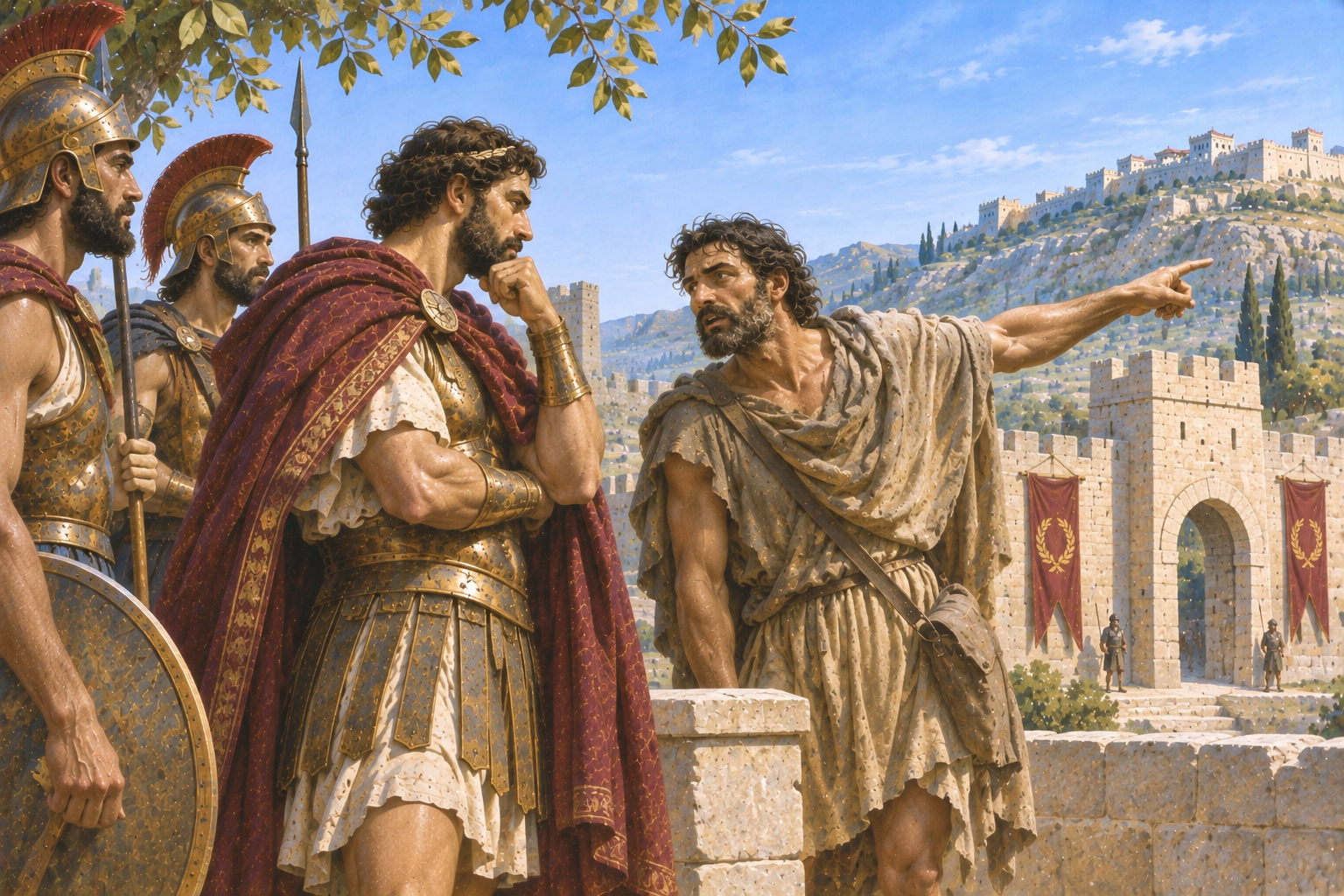
Understanding the Siege and Its Tragic Outcome
This reading comprehension and analysis quiz helps students assess their understanding of Aeschylus’ Seven Against Thebes. The questions focus on the play's principal characters, the defense of the seven gates, the conflict between Eteocles and Polynices, and the relationship between inherited fate and individual choice.
Reading Comprehension
The printable quiz contains eight multiple-choice questions covering the play's central events and dramatic organization.
Students will be asked to identify the roles of Eteocles, Polynices, the Scout, and the Chorus; explain the importance of the seven-gate sequence; and recognize the outcome of the brothers' confrontation.
Literary Analysis
Three short-answer questions invite students to move beyond factual recall and develop interpretations supported by the play.
The questions address Eteocles' responsibilities as a leader, the dramatic function of the Scout's reports, and the relationship between the curse of Oedipus and the brothers' decisions.
Classroom Use
The quiz may be assigned after students finish reading the play or used as a review before a broader discussion of Greek tragedy.
The student version contains no answers. A separate teacher answer key provides correct responses, suggested points for the analytical questions, and scoring guidance.
Note to the Educator
Encourage students to distinguish the survival of Thebes from the destruction of its ruling family. This contrast is central to understanding the tragedy. For written responses, reward clear reasoning and relevant evidence rather than requiring students to adopt a single interpretation of fate or responsibility.
This resource accompanies the Richer Resources Publications edition of Seven Against Thebes, translated by Ian Johnston.
Printable PDF versions of the student quiz and separate teacher answer key are available by email.