Understanding Revenge, Responsibility, and Justice
Aeschylus’ Oresteia follows three generations of conflict within the House of Atreus. This classroom quiz assesses students’ understanding of the trilogy’s principal events and its movement from family vengeance to public judgment.
Reading Comprehension
The student quiz contains eight multiple-choice questions covering Agamemnon’s return from Troy, Clytemnestra’s motives, the reunion of Orestes and Electra, Apollo’s command, and the pursuit of Orestes by the Furies.
Questions also address Athena’s court and the settlement that concludes The Eumenides.
Literary Analysis
Three written-response questions invite students to explain the competing claims of justice made by Clytemnestra and Orestes, examine the role of the Furies, and analyze the importance of Athena’s decision to establish a court.
Students should support their answers with specific events or speeches from the trilogy.
Classroom Use
The assessment can be assigned after students have read all three tragedies or used as a review before a discussion of inherited guilt, religious authority, and civic justice.
The student PDF contains no answers. A separate teacher answer key provides correct choices, suggested analytical responses, and scoring guidance.
Note to the Educator
Encourage students to distinguish a character’s justification for revenge from the consequences of that revenge. In the written responses, ask them to compare competing obligations rather than treating the trilogy as a simple division between innocent and guilty characters.
The final question is particularly useful for discussing why Athena’s resolution requires both a verdict for Orestes and an honored place for the Furies.
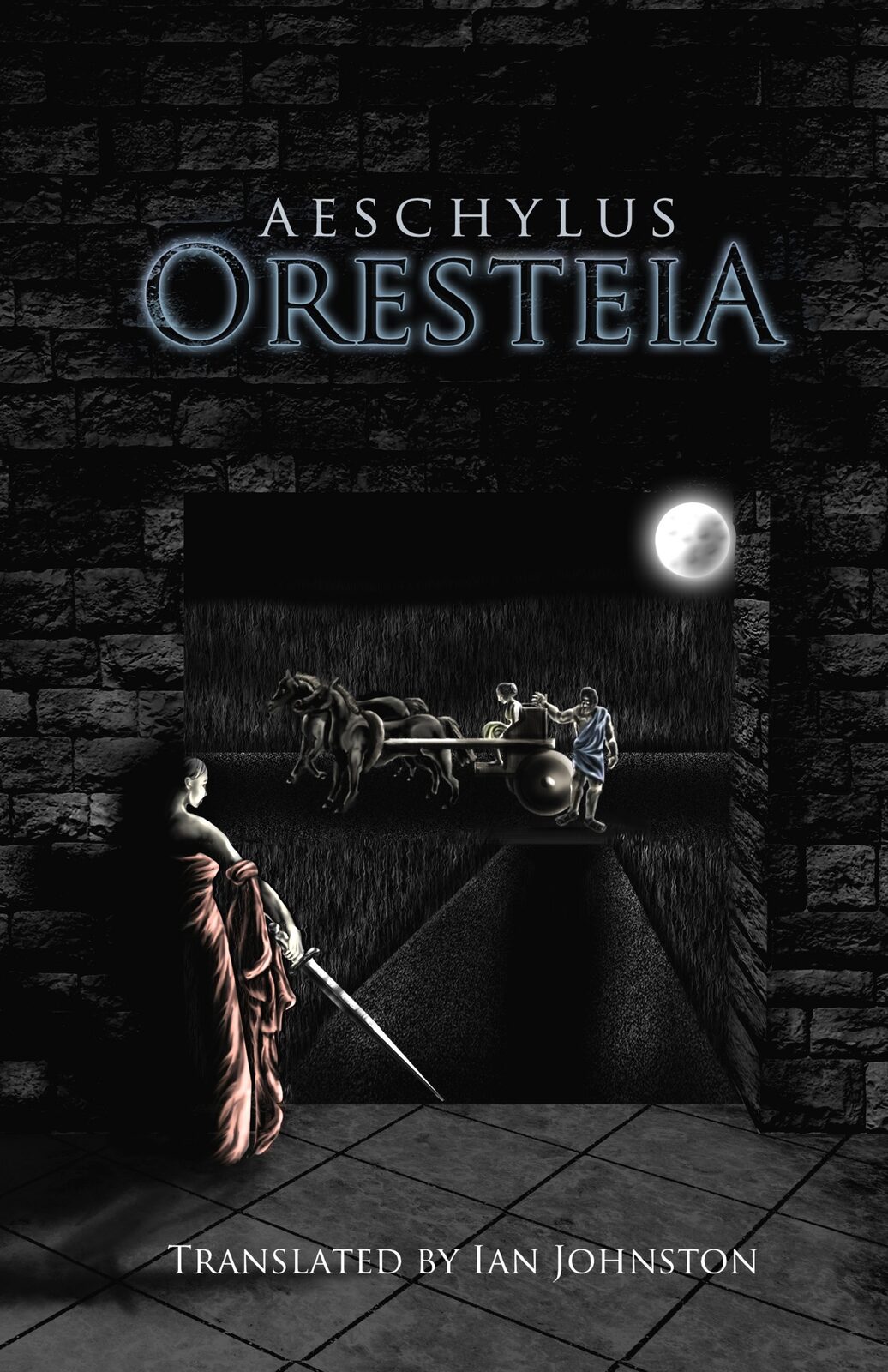
This resource accompanies the Richer Resources Publications edition of The Oresteia, translated by Ian Johnston.
Printable PDF versions of the student quiz and separate teacher answer key are available by email.