Prophecy, Imagery, and the Language of Justice
Aeschylus’ trilogy develops its central conflict through prophetic speech, repeated images, choral performance, and sharply contrasting arguments. Close reading reveals how language makes the movement from household revenge to civic judgment both dramatic and morally difficult.
Cassandra’s Prophecy and Dramatic Irony
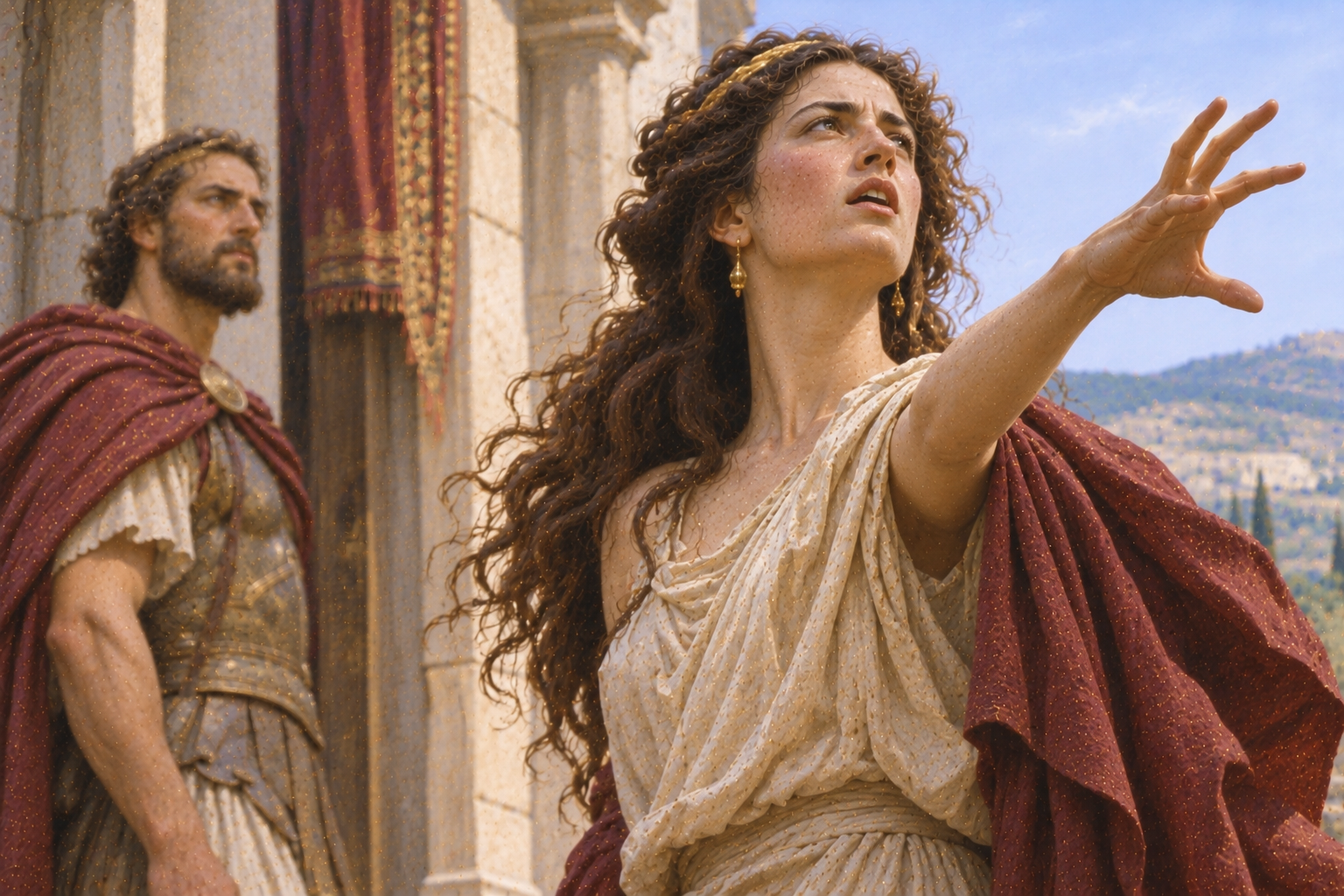
In Agamemnon, Cassandra foresees the murders awaiting her and the king. The audience can recognize the danger even as her warnings fail to prevent it. Her visions connect the present moment with the family’s violent past, giving her speeches a tragic urgency.
Close-reading task: Identify an image in Cassandra’s prophecy. What does it suggest before the murder is revealed? How does the Chorus respond?
Nets, Traps, and Entanglement
The language of nets and entrapment surrounds Agamemnon’s death. Clytemnestra’s description of her method turns a physical trap into an image of a family caught in revenge. Notice how a recurring image can carry both literal and moral meaning.
Close-reading task: Compare two references to trapping or binding. How does the meaning change according to the speaker?
Blood Imagery and Inherited Violence
References to blood connect successive killings and the obligations they create. Blood can signify kinship, guilt, sacrifice, and the demand for punishment. These meanings collide most sharply when Orestes avenges his father by killing his mother.
Dreams and the Serpent
In The Libation Bearers, Clytemnestra dreams that she gives birth to and nurses a serpent. Orestes interprets the dream in relation to his return. The image makes maternal intimacy threatening and anticipates the conflict between mother and son.
Close-reading task: How does the dream foreshadow the action without directly narrating what will happen?
Choral Voices Across Three Plays
The elders of Argos in Agamemnon recall events and question authority; the offering-bearing women in The Libation Bearers participate in mourning and revenge; and the Furies in The Eumenides become active claimants in a public dispute. The changing Choruses help reshape the trilogy’s moral perspective.
Argument and Contrasting Language in The Eumenides
Apollo and the Furies defend different obligations in Orestes’ trial. Their arguments make the problem of justice audible rather than merely visible. Athena’s language of persuasion then becomes essential to the final settlement: a verdict alone does not reconcile the Furies to the city.
Questions for Literary Analysis
- How does Cassandra’s prophetic language create dramatic irony?
- What do nets and traps suggest beyond the physical murder of Agamemnon?
- How does blood imagery connect family loyalty with guilt?
- Why is Clytemnestra’s serpent dream disturbing?
- How do the three Choruses shape the audience’s response?
- How does persuasion become a dramatic force in The Eumenides?
Note to the Educator
Ask students to select one recurring image or technique and trace its use across at least two scenes. Encourage them to explain how language shapes interpretation, not simply identify a device. Translation wording varies, so students should cite the edition used in class.
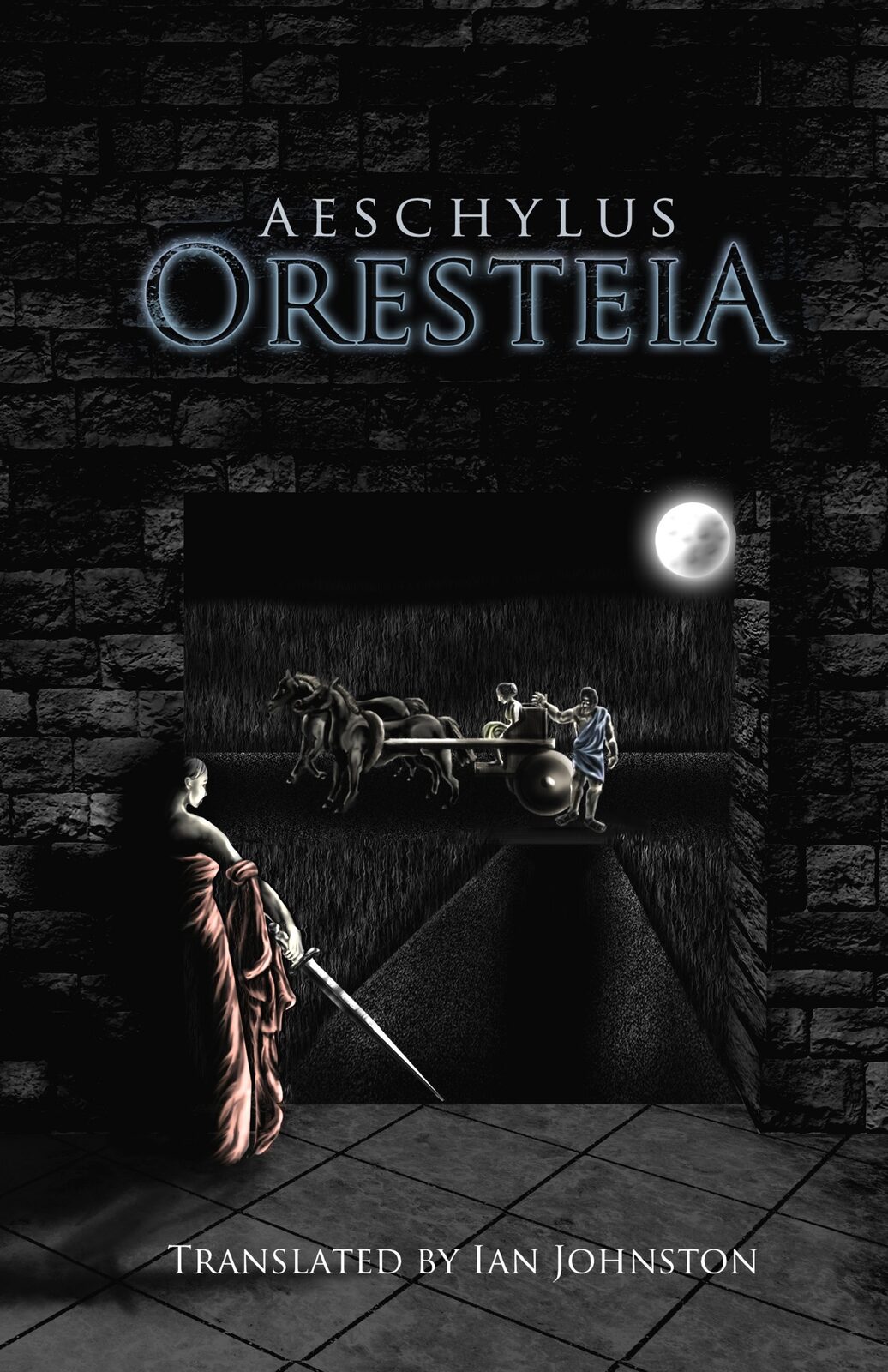
This guide accompanies the Richer Resources Publications edition of The Oresteia, translated by Ian Johnston.
A printable PDF version of this resource is available by email.