Skip to content

GREEK TRAGEDY · READING COMPREHENSION & ANALYSIS

Reading Comprehension and Analysis Quiz for Aeschylus’ The Persians

Assessing understanding of the Battle of Salamis, imperial ambition, and the consequences of defeat

By Richer Resources Editorial Team


Understanding Defeat, Leadership, and Tragic Perspective

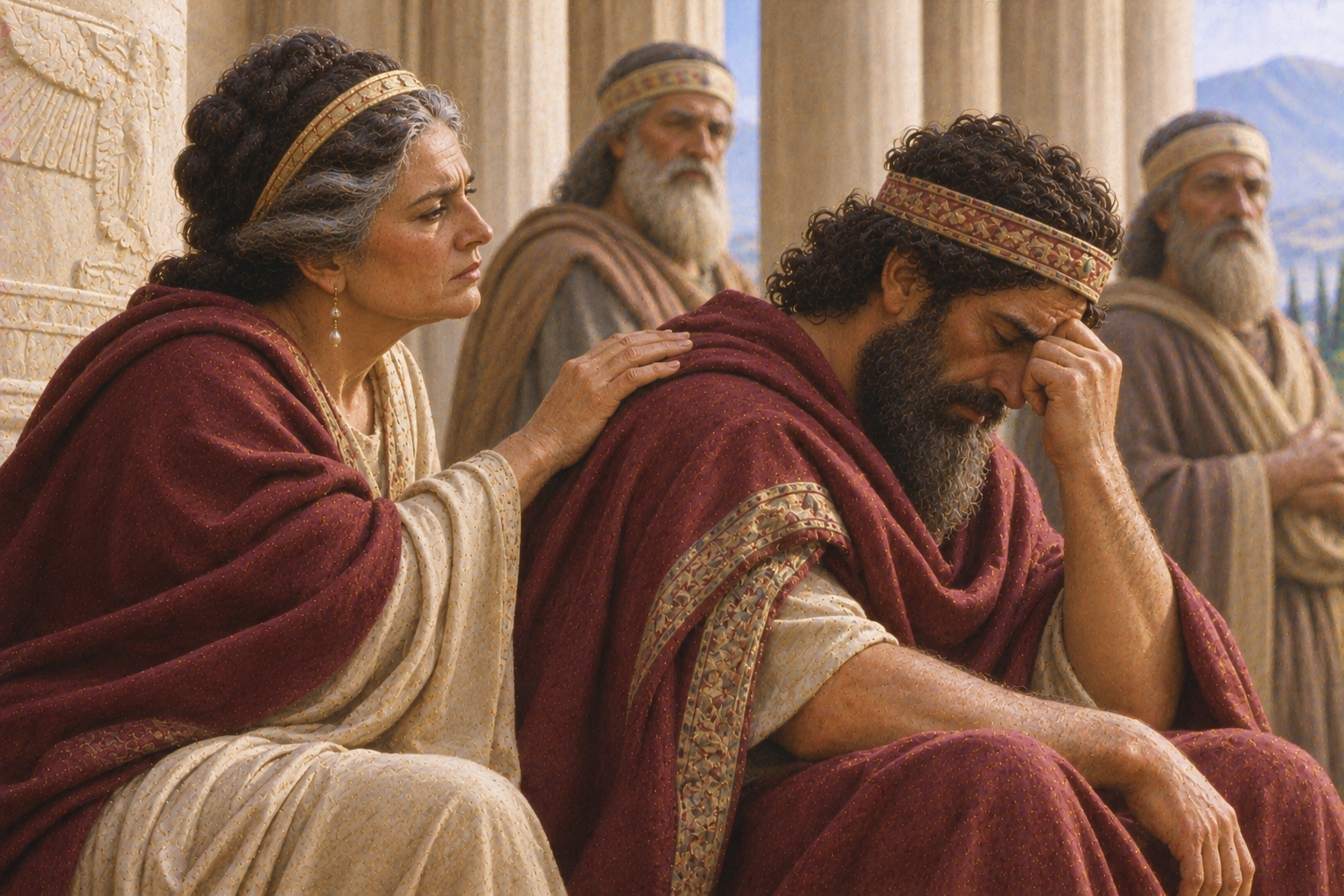
Aeschylus’ The Persians presents the consequences of the Persian defeat at Salamis through the fears and mourning of the royal court. This assessment asks students to identify the play’s major events and explain how its dramatic structure explores leadership, excessive ambition, and collective suffering.

Reading Comprehension

Eight multiple-choice questions examine the Persian elders’ concerns, Atossa’s symbolic dream, the messenger’s account of the naval defeat, the appearance of Darius’ ghost, and Xerxes’ return.
The questions assess both knowledge of the plot and understanding of the play’s principal characters and symbols.

Literary Analysis

Three written-response questions invite students to interpret Atossa’s dream, compare the roles of the messenger and Darius, and explain the dramatic importance of Xerxes’ final lament.
Students should support their interpretations with specific events or speeches from the play.

Classroom Use

The quiz is suitable after a complete reading of the tragedy or as preparation for a discussion of historical drama and the responsibilities of political leadership.
The student PDF contains no answers. The separate teacher answer key includes correct choices, suggested written responses, and scoring guidance.

Note to the Educator

Encourage students to distinguish the historical defeat at Salamis from Aeschylus’ dramatic interpretation of that event. Written responses should explain how the playwright presents the experiences of the defeated Persians rather than simply recounting the battle.
This resource accompanies the Richer Resources Publications edition of The Persians, translated by Ian Johnston.
Printable PDF versions of the student quiz and separate teacher answer key are available by email. 

Free PDF by Email

Available free to educators by email.

The Persians cover

The Persians

The Persians by Aeschylus is a Greek tragedy portraying defeat and hubris, reflecting on war’s human cost from the perspective of the conquered.

Explore The Persians

More from the Reference Library

You may also be interested in…

GREEK TRAGEDY • BACKGROUND GUIDE

Aeschylus, Sophocles, and Euripides: Three Greek Tragedians

A comparative introduction to Aeschylus, Sophocles, and Euripides, exploring their surviving tragedies, dramatic approaches, treatment of justice, knowledge, suffering, and the Chorus. Includes examples from the Oresteia, The Persians, Antigone, Oedipus the King, Medea, and The Bacchae, together with discussion questions and a comparative classroom activity.

Read resource →

GREEK TRAGEDY • BACKGROUND GUIDE

A Student’s Guide to Greek Tragedy

An accessible introduction to ancient Greek tragedy, explaining its origins, major playwrights, theatrical conventions, Chorus, dramatic structure, religious context, and central conflicts. Includes essential literary terms, reading strategies, and questions students can apply to tragedies by Aeschylus, Sophocles, and Euripides.

Read resource →

Greek Tragedy · Student’s Guide

Aeschylus’ The Persians: Student’s Guide

A student-friendly guide to Aeschylus’ The Persians, introducing the Persian royal court, the defeat at Salamis, and the play’s exploration of leadership, pride, grief, and the consequences of war. Includes characters, reading guidance, and discussion questions.

Read resource →