Discussion Questions and Critical-Thinking Activities for Oedipus the King
Sophocles’ Oedipus the King, translated by Ian Johnston, explores the consequences of a determined search for truth. Through the unfolding investigation into the death of King Laius, the play raises enduring questions about fate, personal responsibility, political authority, and the limits of human understanding.
This resource provides discussion questions and classroom activities designed to help students examine the play closely and develop evidence-based interpretations.
Topics for Discussion
The questions encourage students to consider:
- Oedipus’s strengths and weaknesses as a ruler.
- The suffering of Thebes and the responsibilities of political leadership.
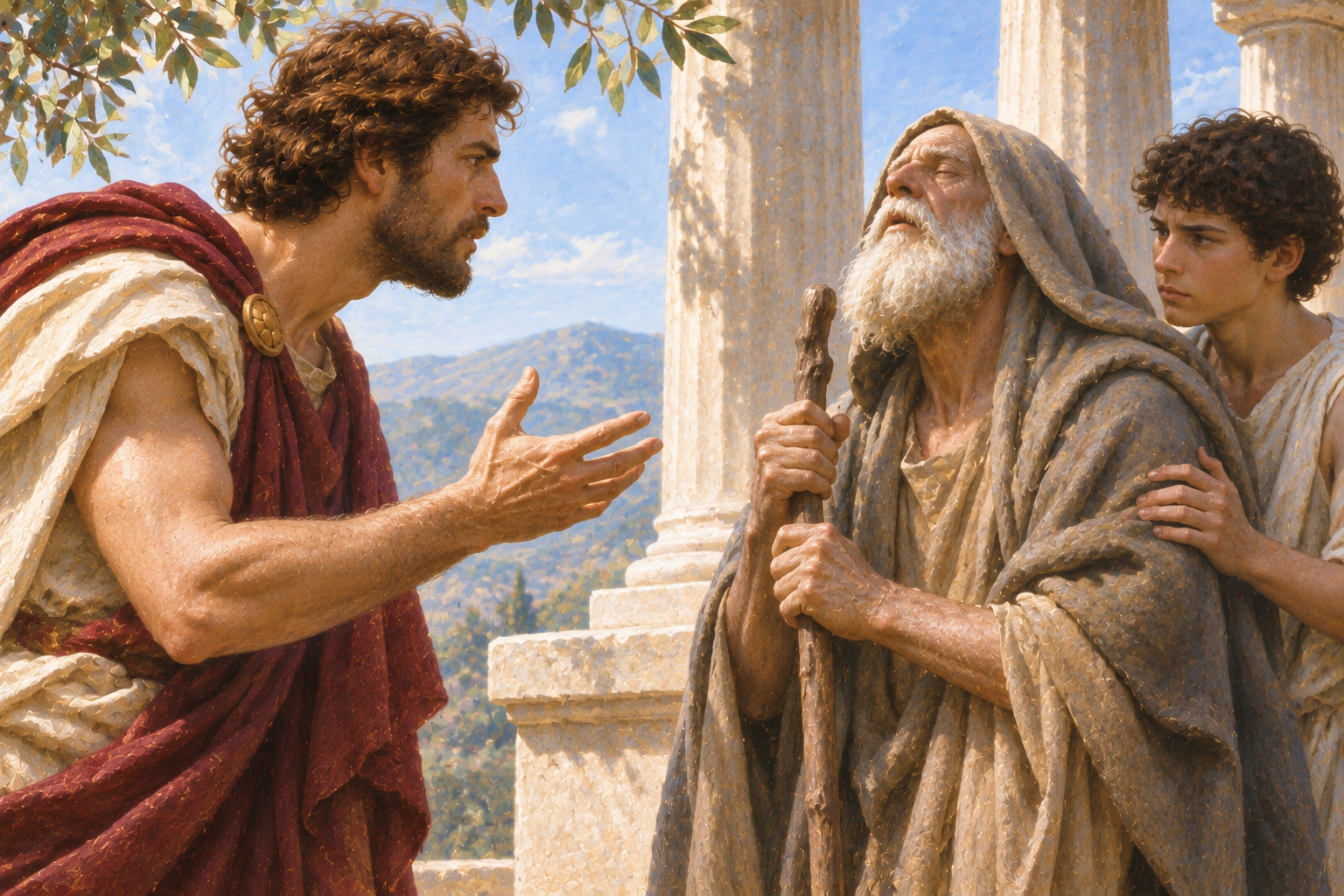
- The confrontation between Oedipus and Tiresias.
- The significance of Jocasta’s testimony, the Corinthian messenger, and the shepherd.
- The relationship between prophecy, human choice, and responsibility.
- Dramatic irony and the difference between appearance and knowledge.
- The meaning of the play’s tragic conclusion.
Classroom Activities
Four activities extend the discussion beyond individual questions.
Students can construct an evidence map tracing Oedipus’s discoveries, participate in a structured debate about his determination to uncover the truth, write from another character’s perspective, and complete a brief reflective exercise.
These activities encourage careful reading, collaboration, and thoughtful interpretation.
Supporting Critical Thinking
The resource emphasizes that literary interpretation requires both reasoning and evidence. Students are encouraged to distinguish what the play establishes from what its characters assume, and to consider alternative interpretations respectfully.
Facilitator notes provide suggestions for guiding discussions and evaluating student responses.
Download the Discussion Questions
The free downloadable PDF includes 17 discussion questions, four classroom activities, and facilitator notes.
It is suitable for high school and college courses studying Greek tragedy, classical literature, and dramatic interpretation.