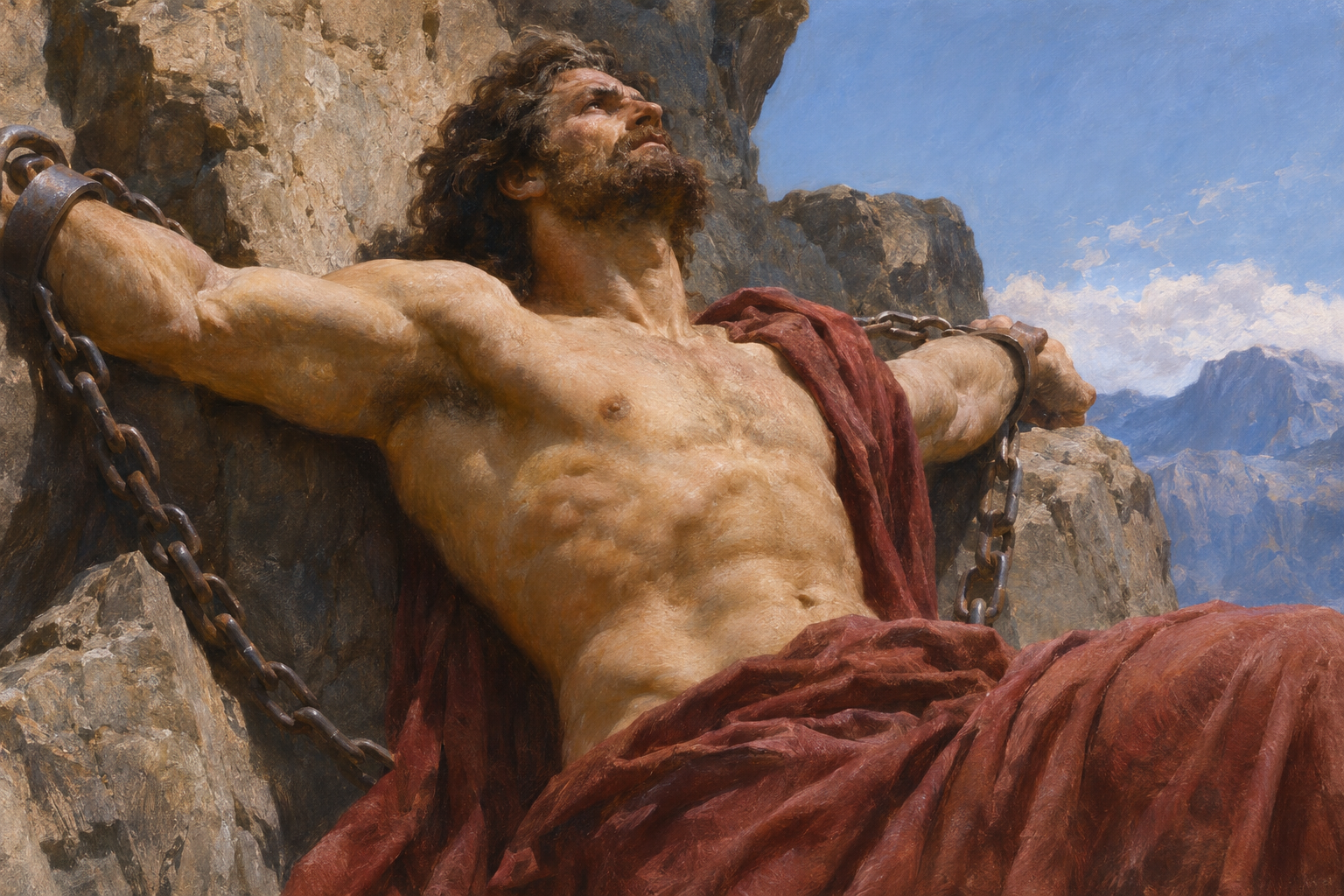
Power, Justice, and the Price of Defiance
In Prometheus Bound, the punishment of a Titan becomes a dramatic examination of authority, conscience, suffering, and the advancement of humanity. Although Prometheus remains chained to a rock throughout the play, his conversations with gods and mortals reveal conflicts that extend far beyond his imprisonment.
Power and Justice
Zeus rules through commands enforced by other divine figures. Prometheus challenges the justice of his punishment, insisting that his assistance to humanity deserves recognition rather than condemnation.
The play invites students to distinguish between possessing authority and exercising it justly. Is Zeus' rule legitimate simply because he has the power to enforce it? Does Prometheus' resistance make him heroic, or does his pride complicate that judgment?
Resistance and Moral Responsibility
Prometheus refuses to submit, even when threatened with greater suffering. Hephaestus, by contrast, reluctantly carries out Zeus' orders, while Oceanus recommends compromise.
These contrasting responses raise questions about individual conscience. The characters must decide whether obedience, resistance, or accommodation offers the most responsible response to overwhelming power.
Fire as a Symbol of Civilization
Prometheus' gift of fire represents more than warmth or physical survival. It is associated with the development of practical knowledge, craftsmanship, and the ability of human beings to transform their circumstances.
Fire therefore symbolizes both human progress and the conflict between divine control and human independence. Students can consider why such a valuable gift provokes punishment.
Knowledge, Foresight, and Secrecy
Prometheus possesses knowledge of a prophecy that could threaten Zeus' future rule. His refusal to reveal it becomes one of the few forms of power available to him.
The contrast is striking: Zeus controls Prometheus' body, but cannot force him to surrender what he knows. Knowledge becomes both a source of resistance and a cause of continued suffering.
Chains and the Rocky Landscape
The chains that bind Prometheus symbolize coercion and the attempt to silence opposition. The remote, exposed landscape emphasizes his isolation and vulnerability.
Yet the physical restraints cannot eliminate his voice or convictions. The setting makes visible the difference between bodily confinement and intellectual independence.
Suffering and Solidarity
Prometheus' pain is central to the drama, but he is not the only sufferer. Io's wanderings reveal another victim of divine power, while the Chorus expresses sympathy and ultimately refuses to abandon Prometheus.
These encounters broaden the tragedy from one individual's punishment into a consideration of shared suffering and the moral importance of compassion.
Questions for Discussion
- How does the play distinguish power from justice?
- Why is fire an effective symbol of humanity's development?
- Does Prometheus' refusal to compromise demonstrate courage, pride, or both?
- How do his chains contrast with the power of his knowledge?
- What does Io's suffering add to the play's treatment of divine authority?
- How does the Chorus' loyalty contribute to the meaning of the ending?
Note to the Educator
Encourage students to consider the play's central conflicts without assuming that every character represents a simple moral position. Prometheus' courage may coexist with pride, while Hephaestus' sympathy does not prevent his participation in punishment. Ask students to connect individual symbols, particularly fire and chains, to the larger questions of authority, knowledge, and justice.
The play is traditionally attributed to Aeschylus, although its authorship remains disputed. This guide accompanies the Richer Resources Publications edition translated by Ian Johnston.
A printable PDF version of this resource is available by email.