Family, Fate, and the Symbols of War
In Seven Against Thebes, Aeschylus presents the defense of a city threatened by an invading army and by the destructive conflict within its ruling family. The play connects the fate of Thebes with the rivalry between Eteocles and Polynices, the sons of Oedipus. Its powerful images of gates, shields, and opposing warriors reveal the tensions between public responsibility, personal ambition, and inherited misfortune.
Family Loyalty and Civic Duty
Eteocles must defend Thebes against an army led by his own brother, Polynices. Their conflict places family obligations in direct opposition to the welfare of the city.
Eteocles presents himself as a responsible ruler, yet his decision to confront Polynices personally suggests that private hostility may influence his judgment. Students can consider whether his final choice serves Thebes or fulfills the destructive rivalry between the brothers.
Fate and the Curse of Oedipus
The brothers' conflict is associated with the curse pronounced by their father, Oedipus. This inherited burden creates an atmosphere of approaching catastrophe.
Yet the play also portrays characters making decisions. Eteocles chooses the defenders of the gates and ultimately decides to face Polynices himself. The tragedy invites readers to ask whether the brothers are helpless before fate or contribute to their own destruction.
Leadership, Courage, and Responsibility
Eteocles' leadership is tested by the danger surrounding Thebes. He must organize its defense, respond to frightening reports, and maintain confidence among the inhabitants.
His exchanges with the Chorus reveal a tension between military discipline and the fear experienced by civilians. The play suggests that leadership involves more than courage: it also requires judgment about the consequences of one's actions.
The Seven Gates as a Symbol
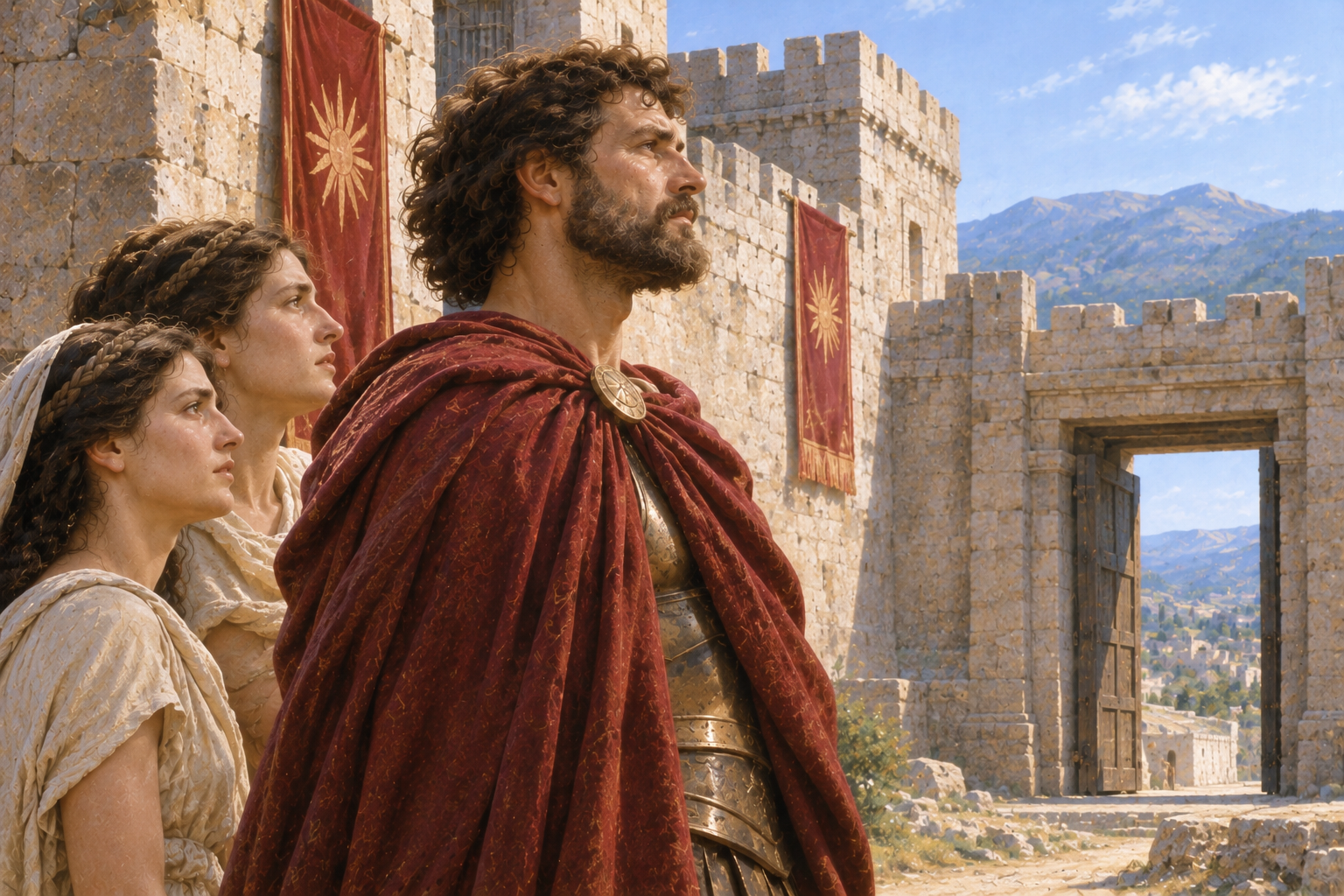
The seven gates of Thebes organize the play's central military confrontation. Each gate represents a point at which the city's security may fail.
As the Scout describes the attacking champions, the gates become stages in an increasingly threatening sequence. The seventh gate carries special significance because Eteocles chooses to face Polynices there, bringing the conflict between the city and the royal family to its climax.
Shields and the Language of Threat
The attacking warriors' shields display images and inscriptions that communicate their ambitions, confidence, and attitudes toward the gods.
Capaneus' boastful imagery, for example, expresses contempt for divine resistance, while other shield devices suggest violence, conquest, or personal glory.
These descriptions allow Aeschylus to characterize warriors who are not directly present onstage. The shields also raise questions about the difference between outward displays of strength and genuine courage.
The City as a Shared Responsibility
Thebes is more than a military setting. It represents the community whose survival depends upon the decisions of its leaders and defenders.
The Chorus of Theban women gives voice to those who fear the destruction of their homes and families. Their anxiety reminds the audience that war threatens civilians as well as warriors.
Brotherhood and Mutual Destruction
The confrontation between Eteocles and Polynices transforms a military struggle into a family catastrophe. The brothers' opposition is especially tragic because their shared ancestry should connect them rather than divide them.
Their deaths suggest that victory in a family conflict may become indistinguishable from defeat. Even if Thebes survives, the ruling household suffers an irreversible loss.
Questions for Discussion
- How does the conflict between Eteocles and Polynices connect family loyalty with civic duty?
- Does the curse of Oedipus determine the brothers' fate, or do their decisions contribute to the outcome?
- What do the seven gates symbolize beyond their practical military importance?
- How do the shield descriptions reveal the personalities and ambitions of the attacking champions?
- What does the Chorus contribute to the play's treatment of war and leadership?
- How does the brothers' mutual destruction complicate the meaning of victory?
Note to the Educator
Encourage students to connect the play's symbols with its central conflict rather than treating the seven gates and shield devices merely as military details. The descriptions of the attacking champions can be used to explore characterization through imagery, while the confrontation between Eteocles and Polynices provides a starting point for discussing inherited fate and individual responsibility.
This guide accompanies the Richer Resources Publications edition of Seven Against Thebes, translated by Ian Johnston.
A printable PDF version of this resource is available by email.