Skip to content
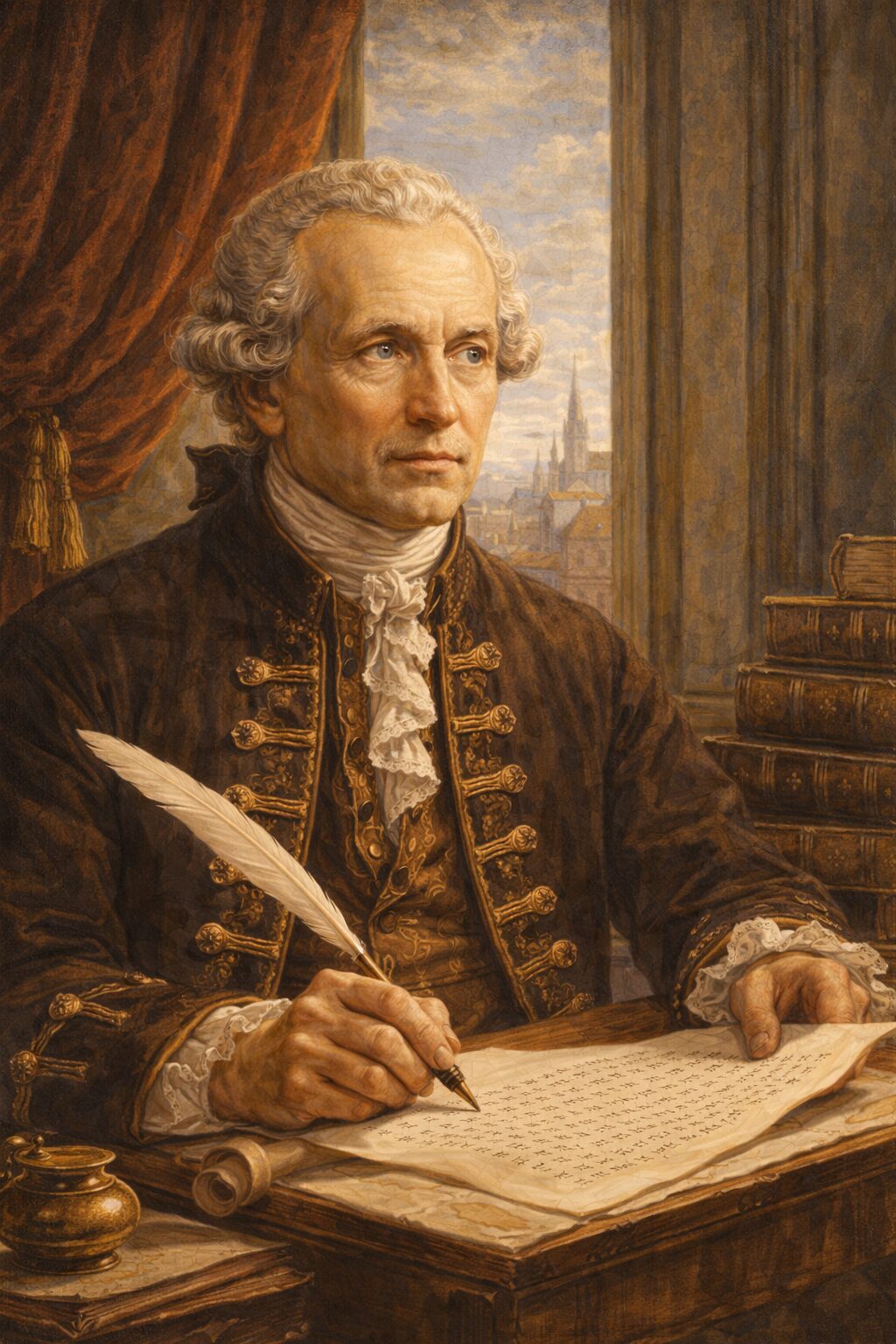
Portrait of Immanuel Kant

Author

Immanuel Kant

Immanuel Kant (1724–1804) was a German philosopher and one of the central figures of modern Western thought. Born and educated in Königsberg (now Kaliningrad), Kant spent nearly his entire life there, working as a professor and living with famously strict personal discipline. His quiet, methodical life contrasted sharply with the revolutionary impact of his ideas.

Kant is best known for reshaping philosophy through his critical project, most notably in Critique of Pure Reason (1781). In this work, he argued that human knowledge arises from an interaction between sensory experience and the mind’s innate structures. Rather than the mind passively receiving reality, Kant claimed it actively organizes experience—setting limits on what we can know while securing the foundations of science.

In ethics, Kant developed a powerful account of moral duty grounded in reason, articulated in the Critique of Practical Reason and Groundwork of the Metaphysics of Morals. He argued that moral actions are those performed out of duty, according to universal principles he called the categorical imperative. For Kant, human dignity rests on rational autonomy—the capacity to legislate moral law for oneself.

Kant’s influence extends across philosophy, theology, political theory, and aesthetics, especially through his Critique of Judgment. His work marked a turning point between Enlightenment rationalism and modern philosophy, shaping thinkers from Hegel and Schopenhauer to contemporary ethics and epistemology.

Resources

HISTORY OF SCIENCE

Ancient and Modern Science: Some Observations

Ian Johnston traces the changing understanding of science from ancient Greek natural philosophy through medieval cosmology to modern experimental science, exploring how the pursuit of knowledge shifted from contemplation of nature and its purposes toward prediction, control, and power.

Read resource →

STUDENT’S GUIDE · PEACE, GOVERNMENT & INTERNATIONAL JUSTICE

On Perpetual Peace — A Student’s Guide

An accessible guide to Kant’s On Perpetual Peace, explaining the six preliminary articles, three definitive articles, republican constitutions, a federation of free states, and cosmopolitan hospitality. Includes reading prompts, discussion questions, and an activity designing a peace agreement.

Read resource →

TEACHER’S GUIDE · POLITICAL PHILOSOPHY & INTERNATIONAL PEACE

On Perpetual Peace — A Teacher’s Guide

A guide to teaching Kant’s On Perpetual Peace, examining the preliminary and definitive articles, republican constitutions, a federation of free states, cosmopolitan hospitality, and the relationship between morality and political expediency. Includes discussion questions, close-reading suggestions, and a classroom activity.

Read resource →

TEACHER’S GUIDE · ENLIGHTENMENT SCIENCE & COSMIC ORIGINS

Universal Natural History and Theory of the Heavens — A Teacher’s Guide

A guide to teaching Immanuel Kant’s Universal Natural History and Theory of the Heavens, exploring the nebular hypothesis, Newtonian physics, cosmic development, and the relationship between scientific explanation and religious belief. Includes close-reading passages, discussion questions, and classroom activities.

Read resource →

Refine these resources