Introduction: Reading a Scientific Revolution
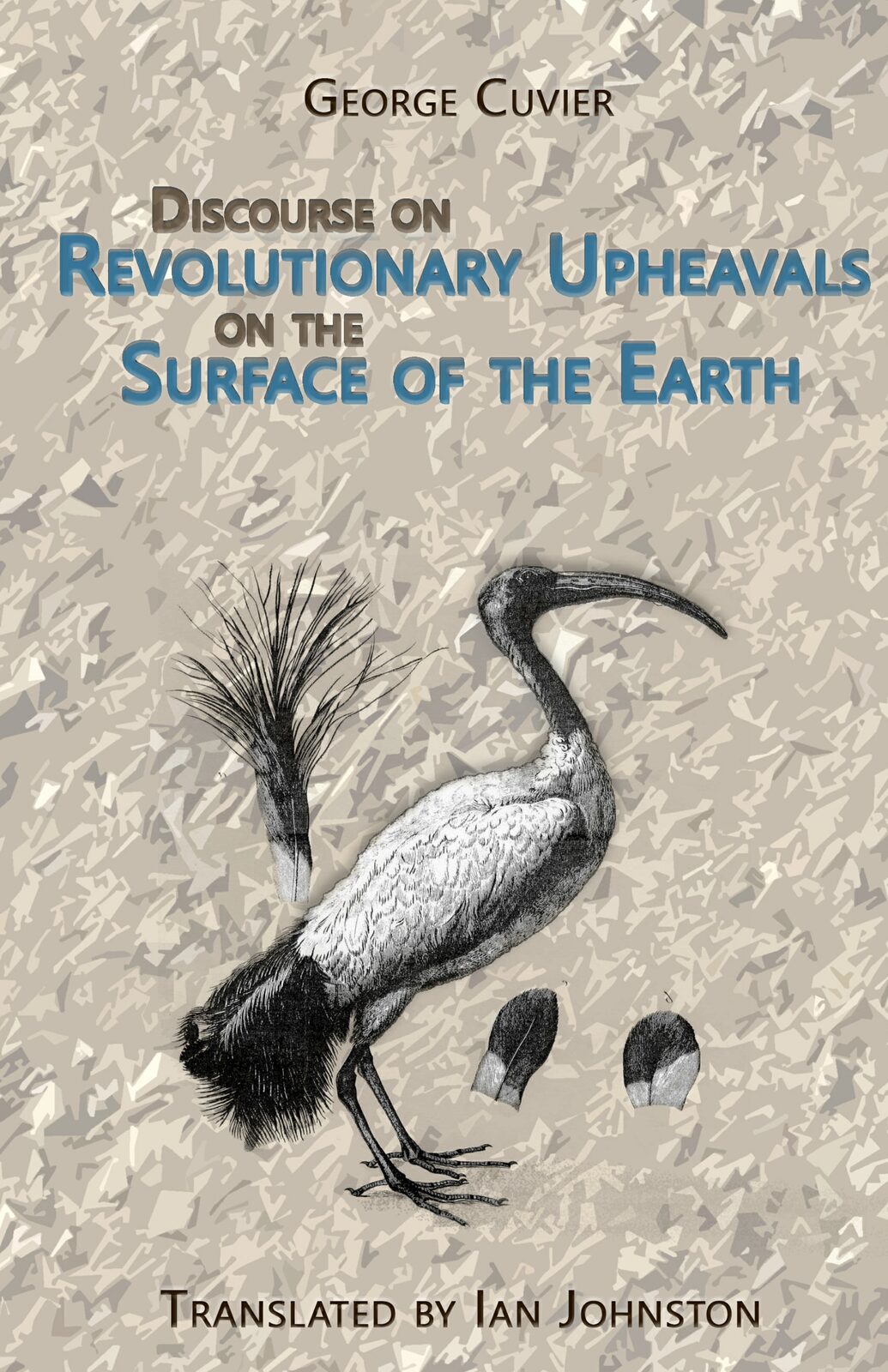
Georges Cuvier (1769–1832) helped establish comparative anatomy and the scientific study of extinct animals. His Discourse on the Revolutionary Upheavals of the Earth presents a wide-ranging case that the Earth’s surface and its living inhabitants have changed through major disruptions. The text gives students an opportunity to examine how scientists build arguments from physical evidence—and how sound observations can coexist with interpretations that later research revises.
Historical Context
Cuvier wrote in the early nineteenth century, before Darwin’s theory of evolution by natural selection and before modern radiometric dating or plate tectonics. Originally associated with his research on fossil quadrupeds, the Discourse surveys competing explanations of the Earth’s history. Cuvier opposed the transformation of species proposed by contemporaries such as Lamarck, while making powerful arguments that some species had become extinct.
Core Ideas and Scientific Questions
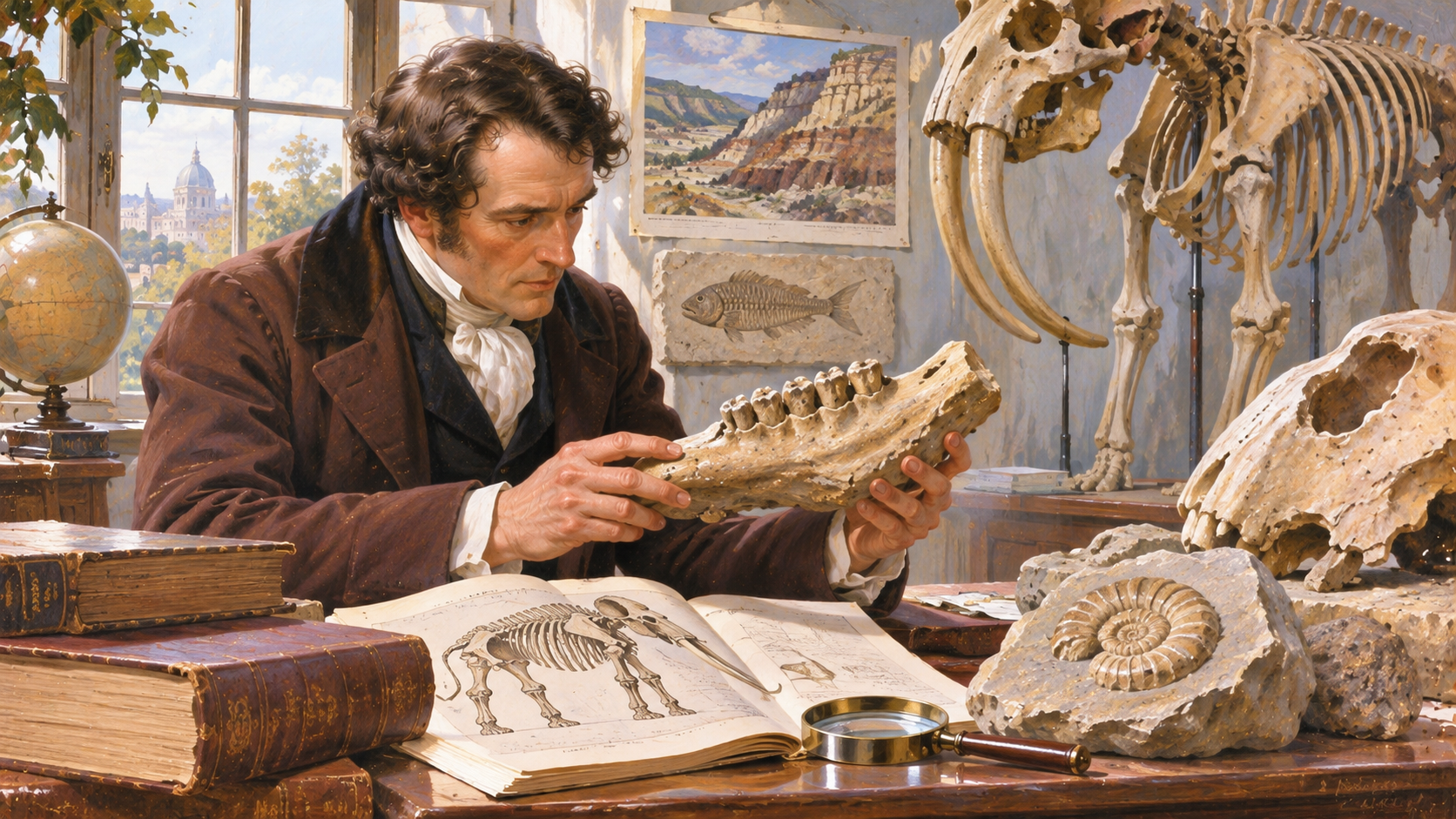
Comparative anatomy and fossils. Cuvier compared structures in living and fossil animals, reasoning from relationships among anatomical parts to reconstruct extinct creatures.
Extinction. Fossils of animals unlike any living species helped demonstrate that extinction was real, challenging the belief that all species persisted unchanged.
Catastrophes. Cuvier argued that successive upheavals had altered the Earth’s surface and its fauna. Modern geology recognizes major catastrophic events, but not his proposed chronology or a universal sequence of sudden revolutions.
Species and change. Cuvier’s rejection of species transformation differs from modern evolutionary biology, which explains common ancestry and change over deep time.
Historical sources. He also weighs ancient texts, monuments, and Egyptian evidence when arguing about the recency of human history; these inferences require especially careful scrutiny.
Learning Objectives
Students should be able to distinguish observation from inference; explain how comparative anatomy supports fossil identification; describe Cuvier’s evidence for extinction; compare his catastrophism with modern geological explanations; and evaluate the limits of scientific knowledge in its historical setting.
Suggested Four-Session Plan
Session 1 — Fossils as evidence: Introduce Cuvier and have students distinguish a fossil observation from an explanation of its origin.
Session 2 — Anatomy and extinction: Examine how comparisons of living and fossil animals support claims about extinct species.
Session 3 — Earth history: Reconstruct Cuvier’s argument for upheavals, then contrast it with modern evidence for gradual processes and catastrophic events.
Session 4 — Scientific revision: Discuss his arguments about species fixity, human antiquity, and the role of ancient records; ask what counts as a productive scientific mistake.
Close-Reading Guidance
Ask students to locate a passage in which Cuvier describes physical evidence, then identify the conclusion he draws. In a second passage, look for an appeal to historical testimony or a broader theory. Because editions and translations vary, assign passages by topic or section heading and verify quotations against Ian Johnston’s translation.
Discussion Questions
- What makes a fossil persuasive evidence of an extinct species rather than an unfamiliar living animal?
- Can a scientist be correct about extinction but mistaken about its causes?
- How are a sudden catastrophe and a slow geological process distinguished by evidence?
- What kinds of evidence could Cuvier not have accessed in his own time?
- When should historical documents contribute to scientific reasoning, and when should physical evidence take priority?
Classroom Activities
Evidence ledger: Make two columns, “Observed or documented” and “Inferred or proposed.” Classify five claims from a selected passage.
Fossil reconstruction: Compare illustrations of a fossil animal and a living relative. Identify which anatomical inferences are justified and which remain uncertain.
Then and now: Students write a short analysis of one Cuvier conclusion that remains influential and one that modern evidence has overturned, explaining why.
Teaching Considerations
Avoid treating catastrophism and uniformitarianism as mutually exclusive modern options: present-day Earth science recognizes both long-term processes and abrupt events.
Cuvier’s opposition to evolution should be discussed historically without implying that modern evolutionary theory is scientifically unsettled. His use of ancient chronology and Egyptian materials is a particularly useful case study in the limits of available evidence.
Concluding Perspective
Cuvier’s work shows science developing through a combination of meticulous observation, ambitious explanation, disagreement, and revision. The best classroom outcome is an appreciation of his contributions to extinction and anatomy alongside a rigorous evaluation of the claims that did not withstand later evidence.
A printable PDF version of this resource is available by email.