From Escape to Empire: The Comic Architecture of Birds
A Comedy That Changes Direction
Aristophanes’ Birds begins with two men seeking relief from the troubles of Athens. Pisthetairos and Euelpides want somewhere quieter to live, away from lawsuits, disputes, and civic obligations. Yet their search leads to an extraordinary political scheme: the birds will establish a city in the sky, gaining control over human beings and the gods.
The comedy develops through a striking reversal. What begins as a desire to escape political life becomes an attempt to dominate it. The play’s structure allows audiences to enjoy the fantasy while questioning the ambitions it reveals.
1. The Opening: A Search for Peace
The two Athenians arrive in the wilderness guided by birds. Their journey establishes dissatisfaction with Athens and creates the expectation that they will discover a simpler, freer existence.
They seek Tereus, a former human king transformed into a hoopoe, because he knows both the human and avian worlds.
Dramatic function: The opening establishes the original goal against which the ending can be judged. It also prepares the audience for a world where ordinary rules no longer apply.
2. The Great Proposal: A City in the Sky
Instead of merely finding a peaceful settlement, Pisthetairos proposes that the birds build a city between earth and Olympus. By controlling the air, they can interrupt the offerings sent from human beings to the gods.
At first, the birds regard the newcomers with hostility. Pisthetairos wins them over through an elaborate argument about their ancient importance and future power.
Dramatic function: Persuasion changes the direction of the story. The travelers become political organizers, and an apparently absurd idea becomes the central action of the play.
3. The Bird Chorus: Resistance and Celebration
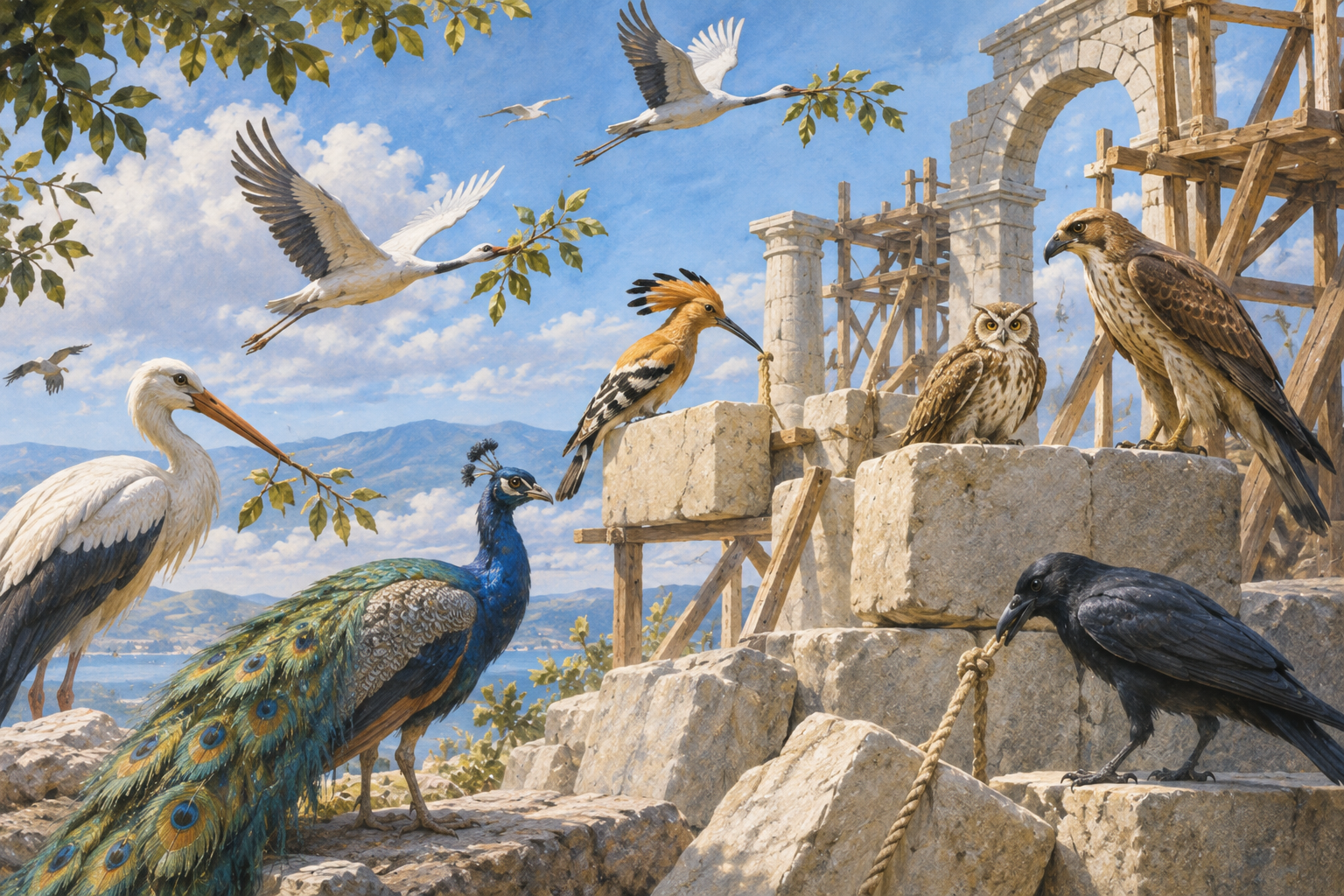
The Chorus of Birds is more than a decorative spectacle. Its initial suspicion creates conflict, while its eventual support makes the new political order possible. The birds’ songs also celebrate the natural world, giving the fantasy beauty and energy beyond its political argument.
Dramatic function: The chorus transforms the proposed city from one man's invention into a collective undertaking. Yet its support raises a question: will the birds govern their own creation?
4. Cloudcuckooland: The Dream Becomes a State
The city begins to take shape. Its construction marks the moment when imaginative speculation becomes an organized political project.
A succession of visitors arrives, including a poet, a prophet, a surveyor, and figures associated with laws and official business. Pisthetairos dismisses these intruders, resisting the importation of familiar Athenian institutions.
Dramatic function: These encounters form a comic sequence of interruptions. They also reveal a contradiction: the founder of a supposedly freer society increasingly decides who may enter and what authority they may exercise.
5. Confronting the Gods: Power Reverses Direction
When Iris crosses the new city’s territory, Pisthetairos challenges her authority. Prometheus later reveals that the gods are suffering because sacrifices no longer reach them.
The divine embassy arrives to negotiate. Pisthetairos now has the advantage and demands Sovereignty as his bride.
Dramatic function: The power relationship established at the beginning of the play is reversed. A mortal who wanted to escape Athens has become powerful enough to dictate terms to Olympus.
6. The Finale: Triumph or Irony?
The comedy ends with a wedding celebration and Pisthetairos’ elevation to extraordinary power. On the surface, the ending is exuberant: his impossible scheme has succeeded.
Yet the conclusion invites a second reading. The desire for peace has given way to conquest, and the birds’ promised greatness has become inseparable from the ambitions of their human leader.
Dramatic function: The celebratory ending resolves the action while leaving its moral meaning open to debate.
How the Structure Creates Comedy and Satire
- Escalation: Each stage makes the original idea more extravagant, from finding a home to challenging the gods.
- Reversal: The outsiders become rulers, while the gods must negotiate.
- Repetition and interruption: Visitors repeatedly expose the persistence of familiar human habits in the imagined new world.
- Fantasy: Talking birds and a city in the clouds allow Aristophanes to exaggerate recognizable political behavior.
- Irony: The apparent achievement of freedom culminates in the concentration of power.
Questions for Reading and Discussion
- At what point does the travelers’ original goal begin to change?
- How does Pisthetairos turn the birds’ suspicion into support?
- Why does Aristophanes introduce so many visitors after the city is founded?
- How do the encounters with Iris and the divine embassy change the balance of power?
- Does the final celebration fulfill the opening promise of a better life?
- How might the play differ if the birds, rather than Pisthetairos, controlled the final negotiations?
Classroom Activity: Map the Reversal
Ask students to draw a two-column chart comparing the beginning and ending of the play. In one column, record what Pisthetairos and Euelpides initially seek; in the other, record what Pisthetairos ultimately gains. Then identify three scenes that help explain the transformation. Discuss whether the change is presented as comic success, political criticism, or both.
Note to the Educator
The play was first performed in 414 BCE during the Peloponnesian War. Its political context is important, but its satire should not be reduced to a direct allegory of a single event. Encourage students to distinguish between the pleasure of the comic fantasy and the questions it raises about persuasion, empire, and power.
Reading the Play
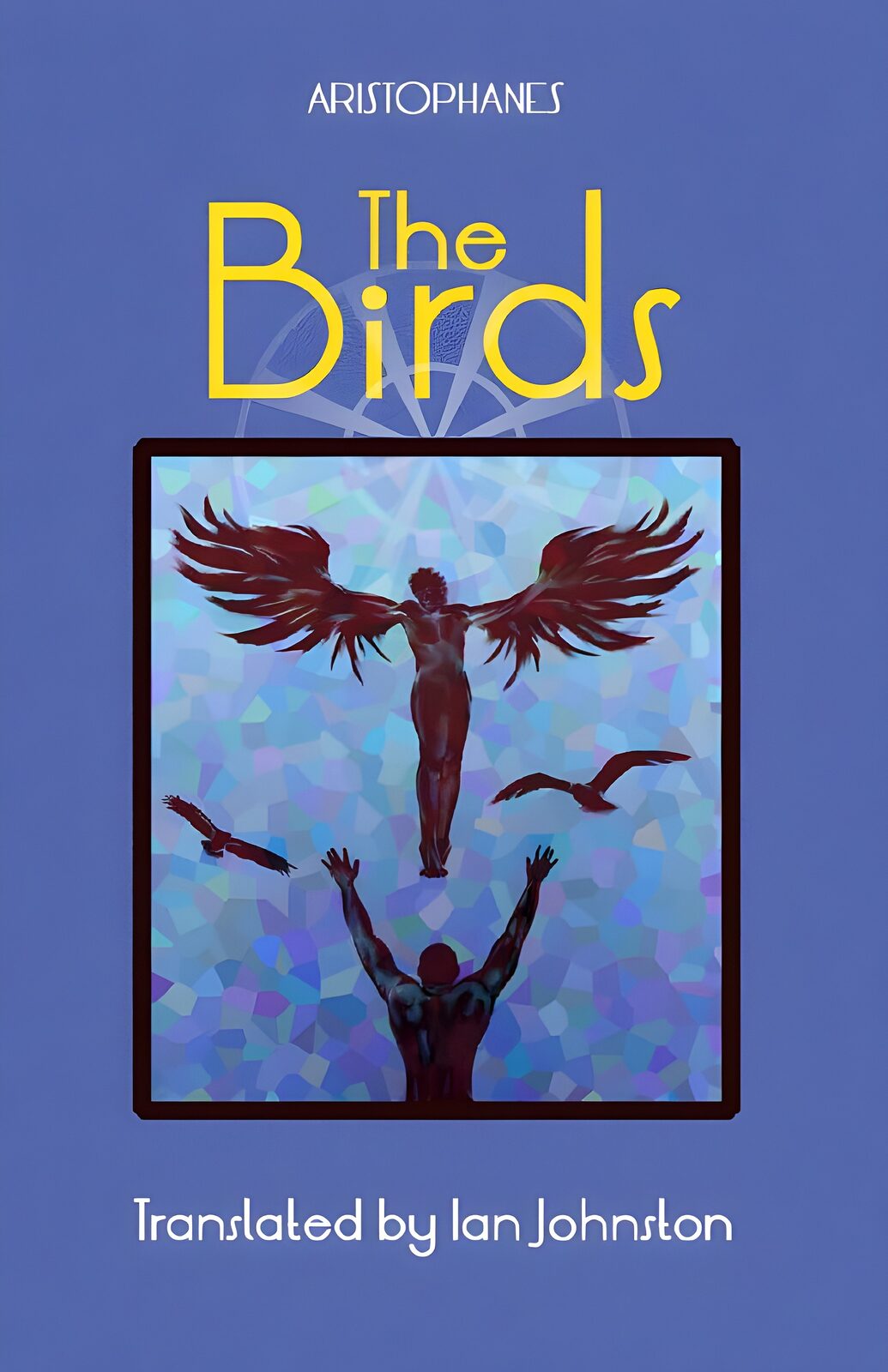
This resource may be used alongside Ian Johnston’s translation of
Aristophanes’ Birds, available from Richer Resources Publications.
A printable PDF version of this resource is available by email.