When Winning an Argument Is Not Enough
Questions at the Heart of the Comedy
In Aristophanes’ Clouds, Strepsiades seeks the power of persuasive speech because he hopes to escape his debts. His scheme eventually turns against him when his son, Pheidippides, learns to defend conduct that threatens the family's authority and stability.
The following questions and essay prompts invite students to explore the play's satire, its treatment of education, and the relationship between intellectual ability and moral responsibility.
Part I: Questions for Classroom Discussion
Education and the Pursuit of Knowledge
1. What does Strepsiades hope to gain from education? How do his motives influence the way he approaches the Thinkery?
2. What different ideals of education are represented by Better Argument and Worse Argument? Does Aristophanes make either position entirely convincing?
3. Does the play suggest that knowledge itself is dangerous, or that danger arises from the purposes for which knowledge is used?
Persuasion, Truth, and Responsibility
4. What is the difference between proving that an argument is persuasive and showing that an action is right?
5. How does Strepsiades justify his attempts to avoid paying his creditors? What does his behavior reveal about his character?
6. Why is Pheidippides’ defense of striking his father such an important turning point? How does it expose the weakness of Strepsiades’ original plan?
Family and Generational Conflict
7. How does the relationship between Strepsiades and Pheidippides change during the play? Which character bears greater responsibility for their conflict?
8. Does Pheidippides reject his father's values, or does he carry his father's willingness to manipulate arguments to its logical conclusion?
Satire and Dramatic Technique
9. What makes the comic Socrates amusing or ridiculous? Why should his portrayal not be treated as an accurate historical biography?
10. How do the Clouds contribute to the play's meaning? Consider their changing appearance, their comments on the action, and their relationship with Strepsiades.
11. What role does dramatic irony play in the audience's response to Strepsiades? At what point can the audience begin to anticipate the failure of his plan?
12. How should we interpret the destruction of the Thinkery? Is the ending an act of justice, a display of anger, or another example of Strepsiades’ failure to accept responsibility?
Part II: Extended Essay Prompts
Students should develop a clear argument, support it with specific passages or incidents, and consider at least one possible objection to their interpretation.
Essay 1: Education and Moral Character
Does Clouds argue that education must include moral instruction?
Examine the contrasting approaches of Better and Worse Argument, Strepsiades’ motives for seeking instruction, and the consequences of Pheidippides’ education.
Essay 2: The Irony of Strepsiades’ Scheme
Analyze how Aristophanes uses comic reversal to transform Strepsiades from a man hoping to manipulate others into a victim of the very reasoning he admires.
Consider how the play's structure reinforces its central concerns.
Essay 3: Socrates and the Satire of Intellectual Life
Discuss how Aristophanes uses his fictional Socrates to satirize intellectual fashions in fifth-century Athens.
Explain why it is important to distinguish theatrical caricature from historical evidence.
Essay 4: Fathers, Sons, and Authority
Is the conflict between Strepsiades and Pheidippides primarily a struggle between generations, or does it arise from the moral inconsistencies of the father?
Examine the actions and arguments of both characters.
Essay 5: The Limits of Persuasive Speech
In Clouds, does the ability to win an argument become a substitute for truth and justice?
Develop your answer through the creditors' scenes, the contest between Better and Worse Argument, and Pheidippides’ defense of his behavior.
Essay 6: Interpreting the Ending
Does Strepsiades achieve any genuine understanding by the conclusion of the play?
Evaluate his decision to attack the Thinkery and consider whether Aristophanes offers a clear moral resolution.
Part III: Classroom Debate
Resolution: "The principal target of Aristophanes’ Clouds is the misuse of education rather than education itself."
Divide students into two groups.
- Affirmative: Argue that the play chiefly condemns selfish motives and irresponsible uses of knowledge.
- Negative: Argue that the comedy also expresses a deeper suspicion of intellectual innovation and challenges to traditional authority.
Each group should prepare an opening argument, supporting examples from the play, a response to the opposing position, and a concluding statement.
After the debate, invite students to identify the strongest evidence offered by each side. They may then revise their own interpretations.
Part IV: Short Written Reflection
Ask students to respond in approximately 200–300 words:
Can someone be intellectually clever without being wise?
Students should use at least two examples from Clouds and explain how the comedy helps them distinguish intellectual skill from sound judgment.
Note to the Educator
These questions are designed to encourage interpretation rather than a single prescribed reading. Students should be free to argue that Aristophanes criticizes intellectual innovation, the misuse of education, traditional authority, or some combination of these.
Encourage close attention to the text, particularly the contest between Better and Worse Argument and the reversal involving Pheidippides.
Remind students that the Socrates presented in the play is a comic caricature, not a reliable portrait of the historical philosopher. For essay assessment, prioritize clear reasoning, textual evidence, and engagement with alternative interpretations.
Reading the Play
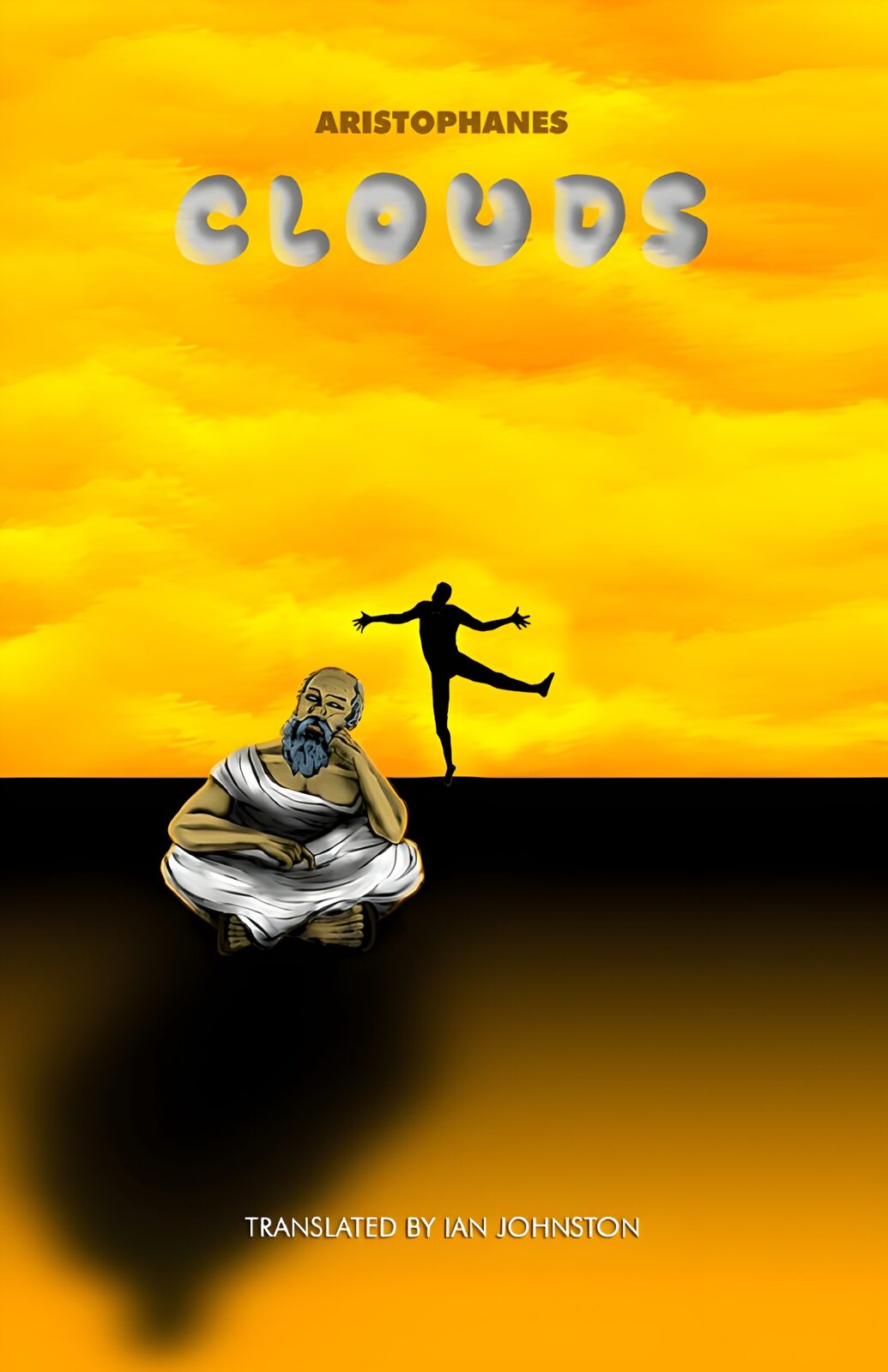
This resource may be used alongside Ian Johnston’s translation of Aristophanes’ Clouds, available from Richer Resources Publications.
A printable PDF version of this resource is available by email.