When Cleverness Loses Its Way
The Questions Behind the Comedy
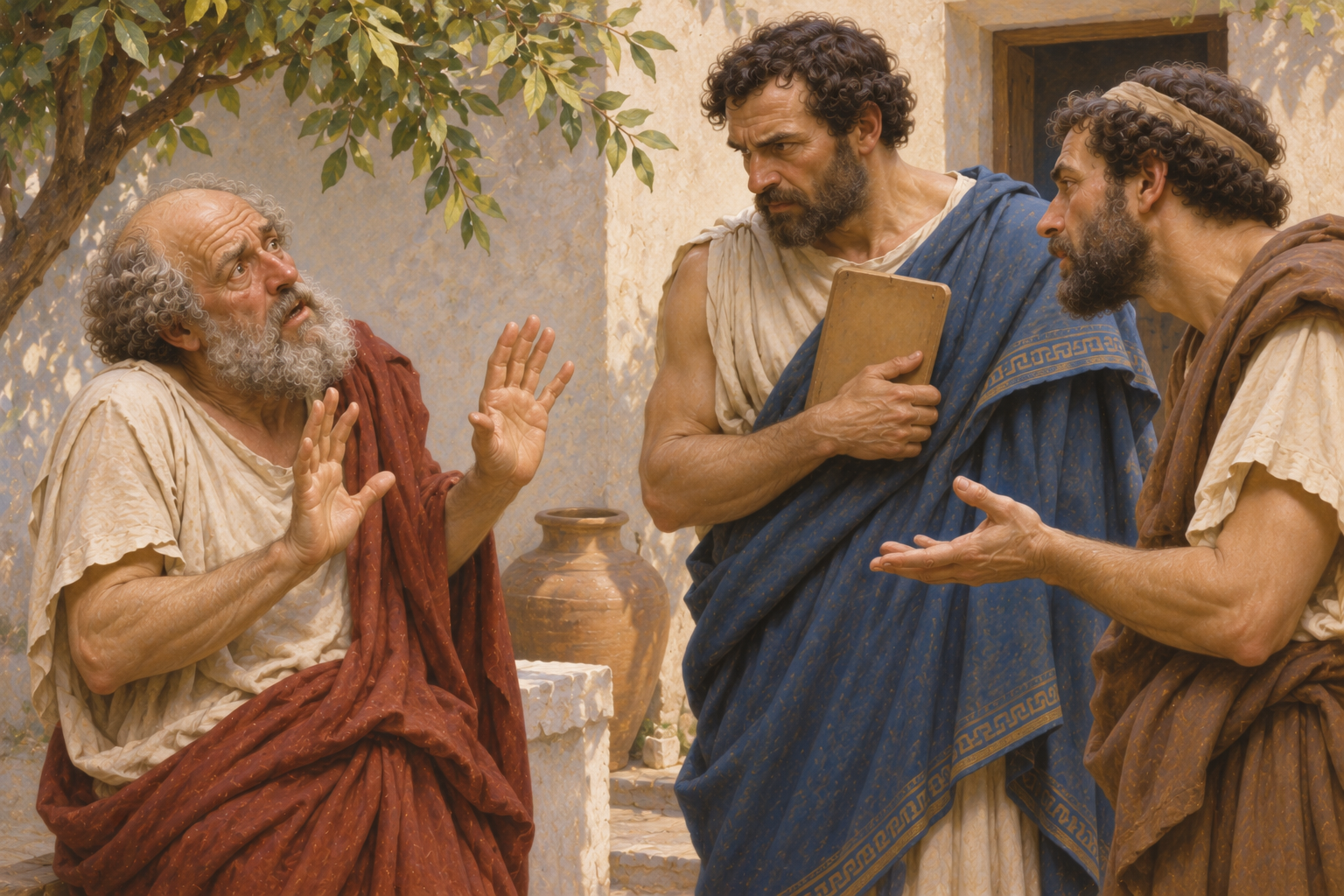
In Aristophanes’ Clouds, a father seeks an education that will help him escape his debts. Instead, he discovers that the ability to argue persuasively can undermine the very relationships and obligations he hopes to protect.
The comedy examines the tensions between traditional values and new intellectual fashions, asking whether clever reasoning necessarily leads to wisdom or good conduct.
1. Education: Knowledge or Character?
The contest between the Better Argument and the Worse Argument presents contrasting views of education.
The Better Argument praises discipline, modesty, physical training, and respect for elders. The Worse Argument demonstrates how persuasive reasoning can challenge established rules and excuse questionable behavior.
Aristophanes makes both positions comic, but the contest raises a serious question: should education teach students how to succeed, how to think, or how to live well?
For discussion: Does the play criticize education itself, or the purposes for which education is used?
2. Persuasion Without Moral Responsibility
Strepsiades wants to master argument so that he can avoid paying his creditors. He is not primarily interested in truth.
His ambition exposes the difference between an argument that convinces an audience and one that is ethically defensible. Pheidippides later demonstrates this danger when he uses his newly acquired argumentative skill to defend striking his father.
The reversal is central to the comedy: Strepsiades becomes the victim of the very technique he hoped to exploit.
For discussion: Can reasoning be intelligent but morally wrong? How does the play demonstrate this distinction?
3. Fathers, Sons, and Changing Authority
The conflict between Strepsiades and Pheidippides reflects tensions between generations.
Strepsiades resents his son's expensive interests but also hopes to use him to solve the family's financial problems. Pheidippides initially resists his father's demands, then gains the verbal power to challenge paternal authority.
Their relationship suggests that authority based only on age or position may be vulnerable when it is not supported by consistent conduct.
For discussion: How does Strepsiades contribute to the breakdown of his own authority?
4. Debt, Self-Deception, and Personal Responsibility
Strepsiades begins the play in genuine financial distress. Yet his response is not to settle his obligations but to search for a way to defeat his creditors through argument.
His repeated attempts to evade responsibility make him both sympathetic and ridiculous.
The comedy therefore questions the human tendency to blame circumstances or other people while overlooking one's own choices.
For discussion: At what moments does Strepsiades have opportunities to act differently?
5. Intellectual Fashion and the Comic Socrates
The Socrates of Clouds presides over the Thinkery, where students investigate unusual questions about nature and language.
Aristophanes' portrayal is a comic caricature rather than a dependable account of the historical Socrates. The character combines traits associated with different intellectual movements in fifth-century Athens.
The satire targets the prestige of specialized knowledge when it becomes detached from ordinary judgment and practical responsibility.
For discussion: What makes the Thinkery impressive to Strepsiades, and what makes it absurd to the audience?
6. Appearance, Change, and the Chorus of Clouds
The Clouds are associated with shifting forms and appearances. Their changing nature reflects a world in which familiar beliefs and confident claims can be transformed.
They also serve as a chorus that comments upon the action and eventually emphasizes Strepsiades' responsibility for his misfortunes.
The contrast between appearances and consequences is especially important: what initially seems to offer freedom from debt ultimately leads to disorder and humiliation.
For discussion: How do the Clouds contribute to the play's treatment of uncertainty and self-deception?
7. Comic Reversal and the Limits of Cleverness
The play's structure repeatedly reverses expectations.
Strepsiades hopes to learn from Socrates but proves an unsuccessful student. He then sends his son to study, only to discover that Pheidippides' success threatens his own position. Finally, Strepsiades turns against the institution he once admired.
These reversals connect the play's humor with its central warning: cleverness cannot protect someone from the consequences of using it irresponsibly.
For discussion: Is Strepsiades wiser at the end of the play, or merely angrier?
Classroom Activity: Winning an Argument Versus Being Right
Present students with the following claim:
"If someone can successfully defend an action through reasoning, that action must be acceptable."
Divide the class into two groups. Ask one group to construct the strongest possible defense of the claim and the other to challenge it.
Then compare their arguments with the contest between Better and Worse Argument and Pheidippides' confrontation with Strepsiades.
Conclude by asking students to explain the difference between logical consistency, persuasive effectiveness, and moral responsibility.
Note to the Educator
Avoid presenting Clouds as a simple rejection of philosophy or new learning. Aristophanes also exposes the foolishness, selfishness, and inconsistencies of those who claim to defend traditional values. Encourage students to distinguish the comic Socrates from the historical philosopher and to consider how the play criticizes the misuse of education rather than assuming it condemns every form of intellectual inquiry.
Reading the Play
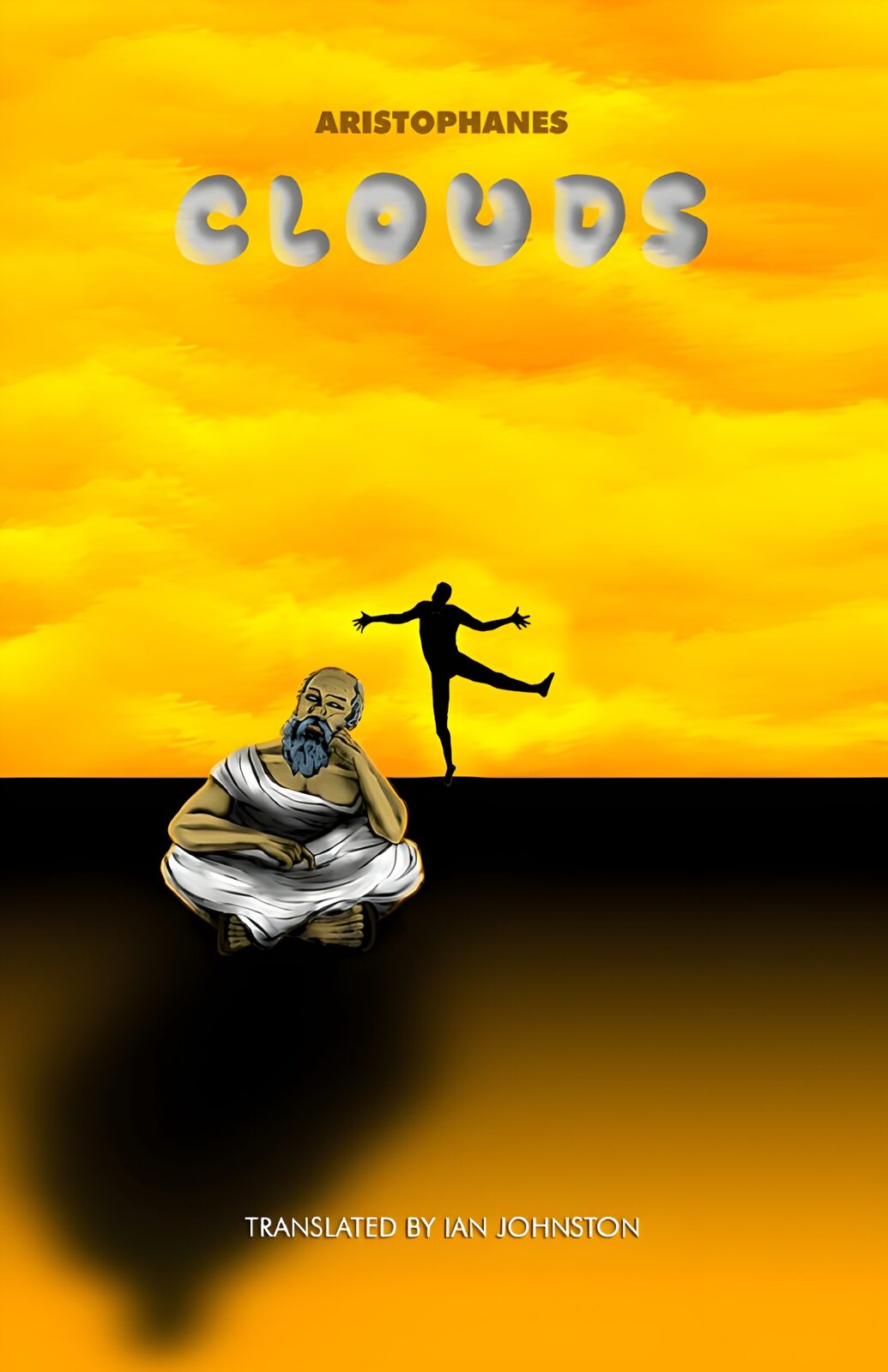
This resource may be used alongside Ian Johnston's translation of Aristophanes' Clouds, available from Richer Resources Publications.
A printable PDF version of this resource is available by email.