Language, Symbolism, and the Shape of Tragedy
In Seven Against Thebes, Aeschylus creates suspense largely through language rather than visible combat. The audience hears reports of the attacking warriors, witnesses Eteocles' decisions, and listens to the Chorus express its fears for the city. Close reading reveals how imagery, repetition, contrast, and dramatic structure transform a military crisis into a tragedy of family destruction.
Shield Imagery and Characterization
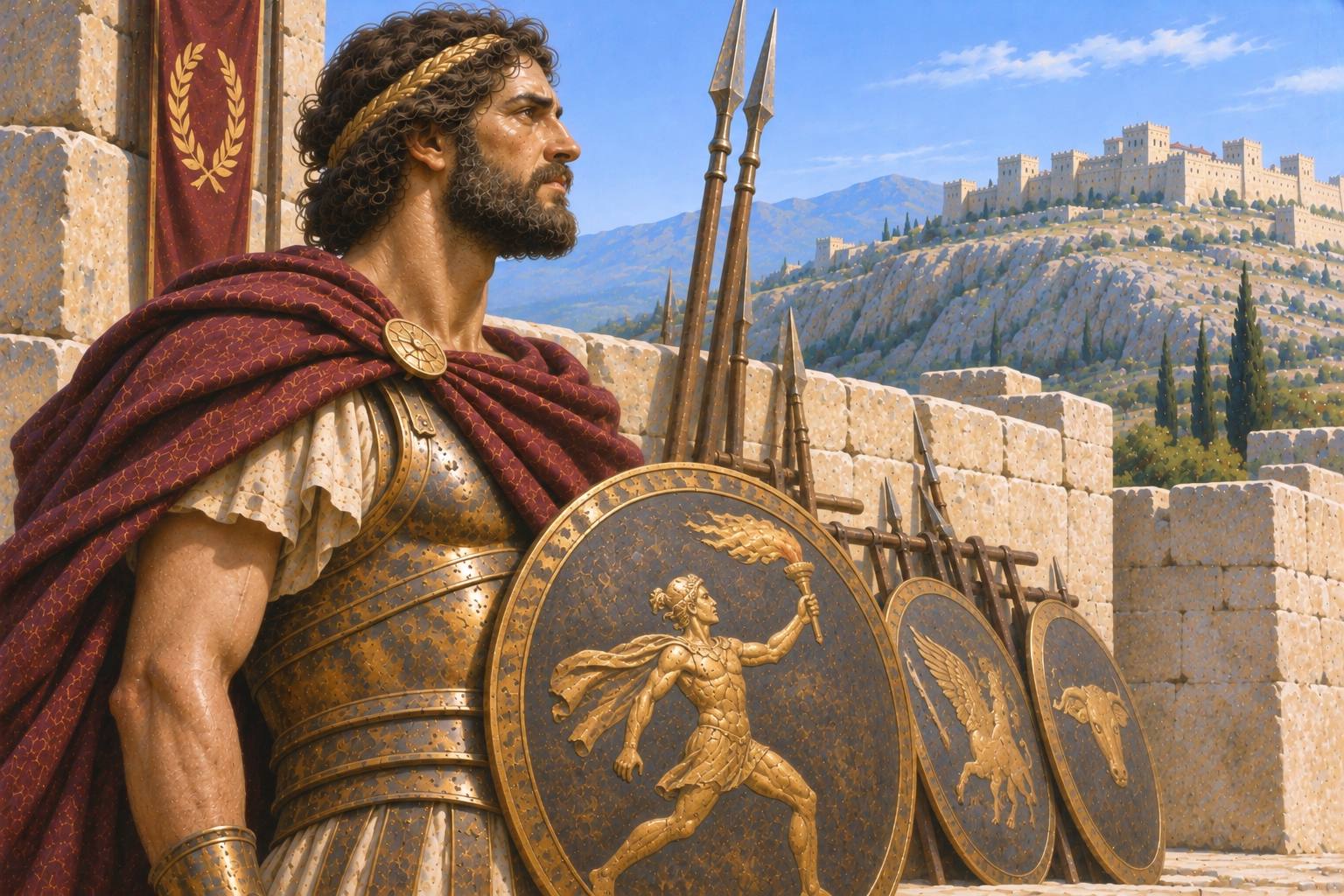
The Scout describes the shields carried by the attacking champions. Their images and inscriptions reveal how the warriors wish to present themselves to their enemies.
Capaneus' shield and threats, for example, express extraordinary confidence and defiance, while the imagery associated with other champions suggests aggression, ambition, or divine protection.
The shields are more than military equipment. They communicate character and help the audience imagine warriors who remain offstage.
Close-reading task: Choose one attacking champion and examine how his shield device and reported behavior contribute to his characterization.
Repetition and the Seven-Gate Sequence
The central portion of the play follows a repeated pattern: the Scout describes an attacker, and Eteocles names a defender.
This repetition establishes expectations and gives the audience a sense of the city's organized resistance. Each new report increases the pressure upon Eteocles.
The pattern changes decisively at the seventh gate, when Polynices is identified as the attacker. The military sequence becomes a confrontation between brothers.
Close-reading task: Compare Eteocles' response to an earlier gate report with his response to the announcement of Polynices. What changes in his language or reasoning?
Contrasting Voices: Eteocles and the Chorus
Eteocles speaks as a ruler responsible for the city's defense. His language emphasizes discipline, courage, and the need to resist fear.
The Chorus of Theban women responds with prayers, alarm, and concern for the city's inhabitants. Their language brings the emotional consequences of warfare into the foreground.
The contrast encourages the audience to consider both the demands of military leadership and the vulnerability of civilians.
The Language of Fate and Inherited Curses
References to Oedipus' curse connect the immediate conflict with the troubled history of the royal family.
As the confrontation between Eteocles and Polynices approaches, the language of inherited destruction becomes increasingly important.
Yet Eteocles also makes choices. The tension between prophecy and decision allows the audience to question how much responsibility belongs to fate and how much to the characters themselves.
Close-reading task: Identify a passage referring to the family curse. Explain how it influences the audience's expectations without eliminating the importance of individual decisions.
Offstage Action and Messenger Reports
The audience does not watch the seven battles unfold. Instead, the Scout's descriptions and the later report of the brothers' deaths bring events beyond the stage into the drama.
This technique directs attention toward anticipation, decision-making, and the consequences of violence rather than the physical spectacle of combat.
The contrast between what the audience hears and what it sees is central to the play's dramatic effect.
Dramatic Irony and the Meaning of Victory
Eteocles seeks to save Thebes, but his determination to confront Polynices leads to the destruction of both brothers.
The city survives while its ruling family suffers catastrophe. This contrast complicates the meaning of success and encourages the audience to distinguish political victory from personal tragedy.
The audience's knowledge of the family curse also creates foreboding as Eteocles moves toward the seventh gate.
Questions for Literary Analysis
- How do the shield devices help characterize warriors who never appear directly onstage?
- What dramatic effect does the repeated gate-report structure create?
- How does the language of Eteocles differ from that of the Chorus?
- How do references to Oedipus' curse shape the audience's expectations?
- Why does Aeschylus present the decisive battles through reports rather than direct action?
- How does the survival of Thebes contrast with the fate of Eteocles and Polynices?
- What does the play suggest about the relationship between outward displays of courage and responsible judgment?
Note to the Educator
Encourage students to explain how a literary technique contributes to meaning rather than merely naming it. Comparing the shield descriptions, Eteocles' responses to the Scout, and the Chorus' expressions of fear can help students see how Aeschylus develops suspense and characterization through contrasting voices.
Students should cite passages from their classroom edition, since wording and line numbering may differ among translations. Teachers may also wish to distinguish the central action from the disputed portions of the surviving concluding scene.
This guide accompanies the Richer Resources Publications edition of Seven Against Thebes, translated by Ian Johnston.
A printable PDF version of this resource is available by email.