Sanctuary, Consent, and the Responsibilities of Power
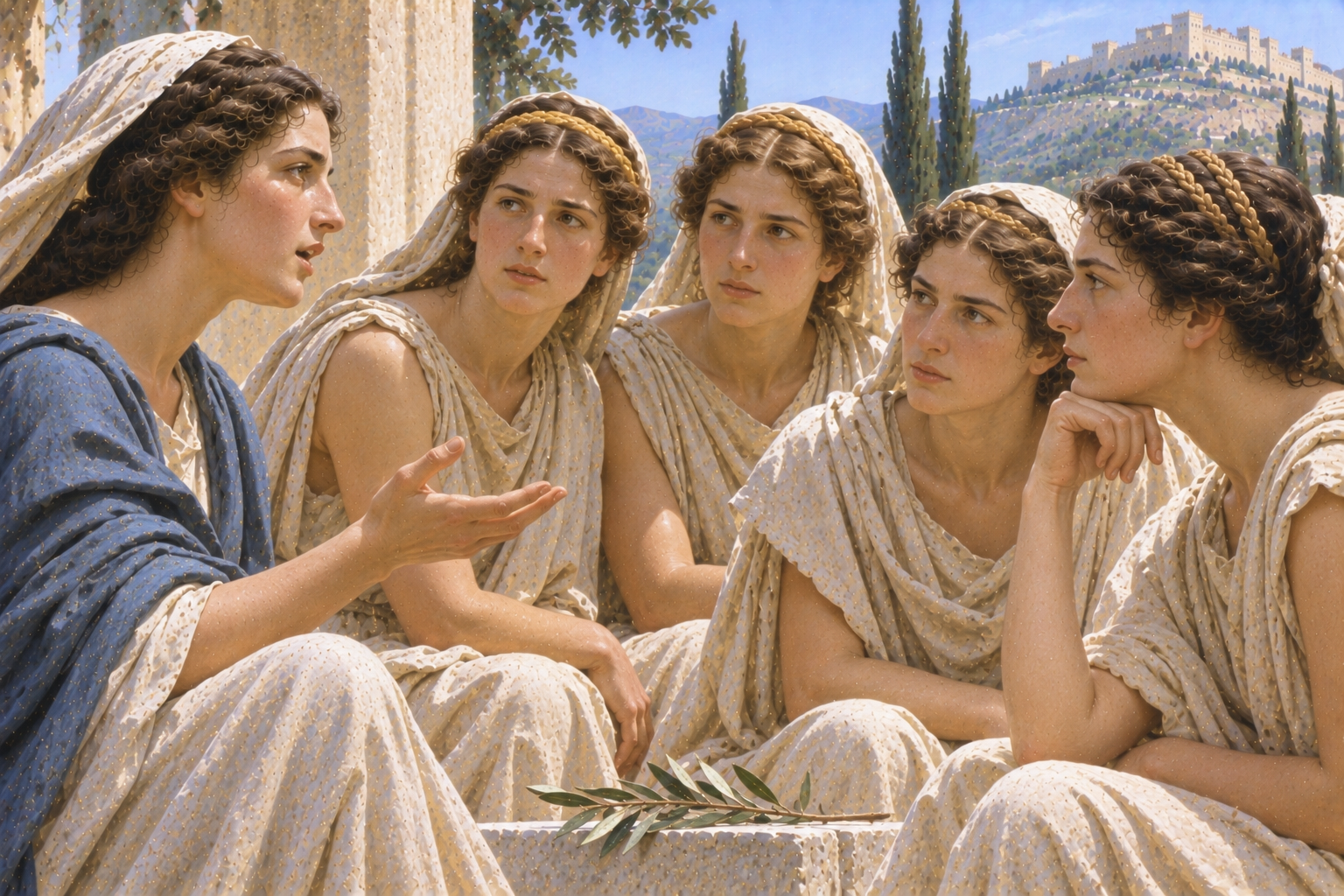
In Aeschylus’ Suppliant Women, the daughters of Danaus seek protection from marriages they reject. Their arrival in Argos forces King Pelasgus and his people to confront difficult questions about religious duty, personal freedom, and the political consequences of sheltering strangers.
These discussion questions and essay prompts encourage students to examine the play's competing claims and develop interpretations supported by evidence.
Questions for Classroom Discussion
Sanctuary and Religious Obligation
- Why do the Danaids seek protection at sacred altars rather than simply asking Pelasgus for political assistance?
- What responsibilities does the play suggest a community has toward vulnerable strangers?
- Does the religious obligation to protect suppliants outweigh the danger of conflict with their pursuers?
Consent and Family Authority
- How do the Danaids explain their refusal to marry the sons of Aegyptus?
- In what ways does Danaus support his daughters, and how might his authority complicate our understanding of their independence?
- How does the Egyptian herald's behavior influence the audience's judgment of the marriages the women resist?
Leadership and Civic Responsibility
- Why does Pelasgus hesitate before agreeing to protect the Danaids?
- What is the significance of Pelasgus referring the decision to the Argive people?
- Does the citizens' decision to offer sanctuary demonstrate courage, religious obedience, political judgment, or some combination of these?
Dramatic Form and Interpretation
- How does making the Danaids the Chorus affect the audience's relationship with the central conflict?
- Why is the confrontation between Pelasgus and the Egyptian herald an important dramatic turning point?
- Does the surviving play end with a genuine resolution, or merely a temporary promise of safety?
Analytical Essay Prompts
1. Sanctuary and the Limits of Political Responsibility
Examine Pelasgus' dilemma when the Danaids request protection. How does Aeschylus present the competing obligations of religious duty, public safety, and justice? Consider whether Pelasgus' decision offers a model of responsible leadership.
2. Consent, Coercion, and the Danaids' Resistance
Analyze the Danaids' rejection of marriage to the sons of Aegyptus. How does the play represent the difference between consent and coercion? Discuss the roles of Danaus, the Egyptian herald, and the women's own collective voice.
3. The Chorus as the Center of the Drama
Unlike many Greek tragedies, Suppliant Women places the Chorus at the center of the action. Examine how the Danaids' prayers, fears, and arguments shape the dramatic conflict and the audience's response.
4. Ancestry, Identity, and Belonging
Discuss the importance of the Danaids' descent from Io. How does their ancestral connection to Argos strengthen their appeal? What does the play suggest about the relationship between shared ancestry and obligations toward strangers?
5. Protection Without Final Security
Analyze the ending of the surviving play. Although the Argives grant the Danaids sanctuary, the threat from Egypt remains. How does this incomplete resolution shape the play's treatment of justice, political courage, and uncertainty?
Developing a Literary Argument
A strong analytical essay should begin with a specific claim that answers the chosen question. Students should support that claim with relevant speeches, decisions, and dramatic exchanges rather than relying primarily on plot summary.
Students should also consider competing interpretations. For example, an essay praising Pelasgus' decision to protect the Danaids might acknowledge the danger that his decision creates for the Argive community.
Passages should be cited according to the classroom edition, since wording and line numbering may differ among translations.
Note to the Educator
Encourage students to distinguish the Danaids' resistance to unwanted marriage from the wider religious and political question of sanctuary. These concerns overlap, but they are not identical. Comparing the women's appeals, Pelasgus' deliberations, and the herald's threats can help students evaluate how Aeschylus presents different uses of authority.
For classroom discussions, students may be assigned contrasting positions and asked to defend them with evidence from the play. Remind them that the surviving tragedy does not establish the final outcome of the wider Danaid myth.
This resource accompanies the Richer Resources Publications edition of Suppliant Women, translated by Ian Johnston.
A printable PDF version of this resource is available by email.