The House of Atreus: The Myth Behind Electra
About This Guide
Euripides’ Electra belongs to a larger body of Greek mythology concerning the House of Atreus, a royal family whose history is marked by betrayal, murder, and revenge. Understanding this background helps readers recognize why Electra and Orestes believe they must avenge their father—and why their actions remain morally troubling.
1. The House of Atreus
The family takes its name from Atreus, an ancestor of Agamemnon and Menelaus. According to the broader mythological tradition, Atreus and his brother Thyestes became enemies in a struggle for power. Their conflict included an especially terrible act: Atreus killed Thyestes’ sons and served their flesh to their father at a banquet.
Later generations inherited this legacy of violence. Aegisthus, a son of Thyestes, eventually became the enemy of Agamemnon, the son of Atreus.
The family’s history establishes a recurring pattern: each act of revenge becomes the cause of another.
2. Agamemnon and the Trojan War
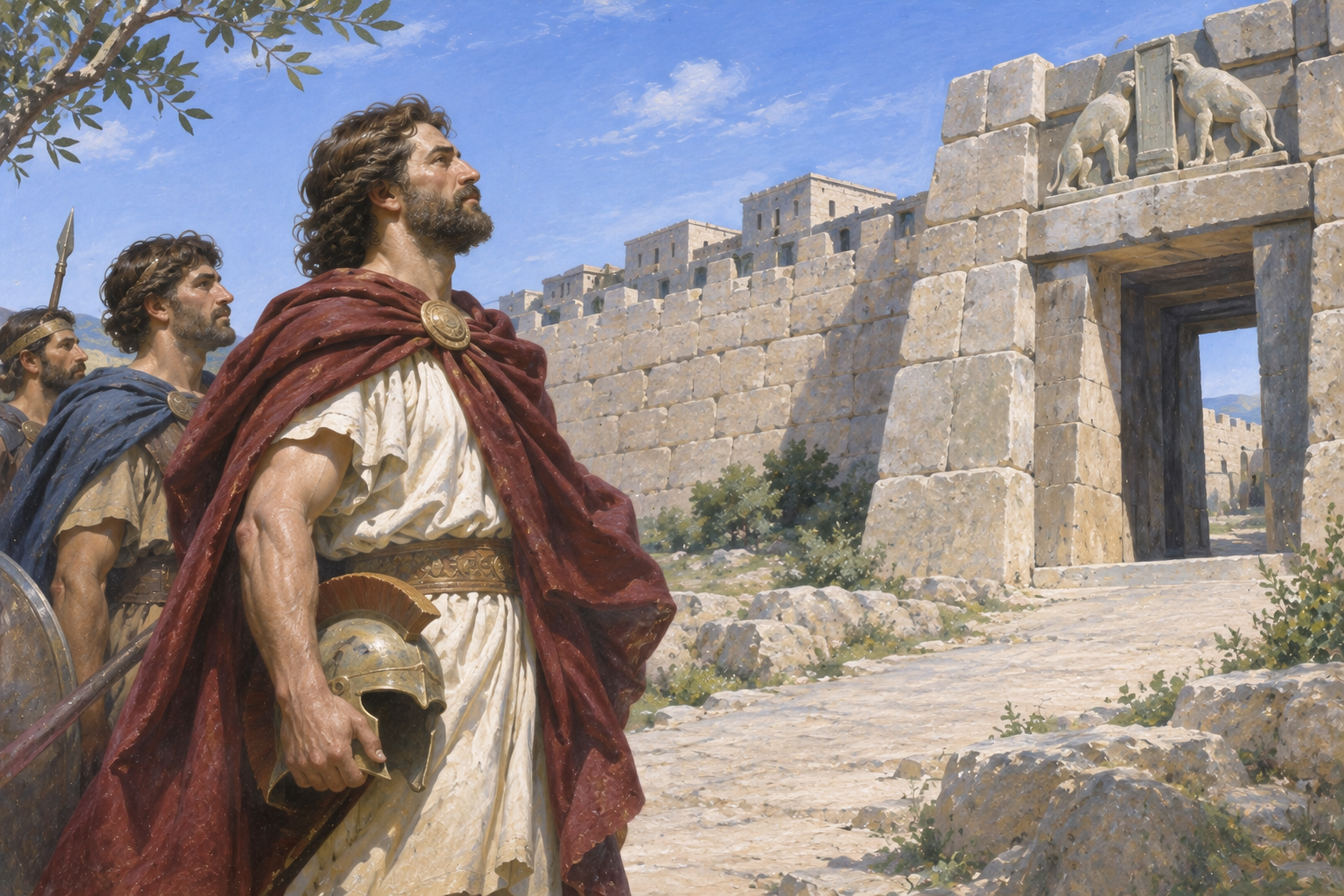
Agamemnon, king of Mycenae or Argos in different traditions, commanded the Greek forces during the Trojan War. His brother Menelaus was the husband of Helen, whose departure for Troy helped bring about the conflict.
Before the Greek fleet could sail, Agamemnon faced a demand involving his daughter Iphigenia. In the version of the myth central to Electra, he sacrificed her to secure the expedition’s departure.
This act created a deep conflict within his own household. Clytemnestra, Iphigenia’s mother, regarded the sacrifice as an unforgivable wrong.
3. The Murder of Agamemnon
After the Trojan War, Agamemnon returned home. During his absence, Clytemnestra had formed a relationship with Aegisthus.
Clytemnestra and Aegisthus murdered Agamemnon. Their actions can be understood within two overlapping conflicts: Clytemnestra’s anger over Iphigenia and Aegisthus’ inherited hostility toward Agamemnon’s family.
Neither explanation makes the murder morally simple. Euripides uses these competing claims to complicate the audience’s understanding of justice.
4. The Fate of Electra and Orestes
Following Agamemnon’s death, Orestes was sent away and grew up in exile. Electra remained in the region but was removed from the royal household.
In Euripides’ version, she is married to a poor farmer so that any children she might bear will be unlikely to threaten Aegisthus’ position. The farmer nevertheless treats her honorably.
When Orestes returns, the siblings are reunited and prepare to punish their father’s killers.
5. Apollo, Revenge, and Divine Authority
Orestes believes that Apollo has commanded him to avenge Agamemnon. Yet obeying such a command involves killing his own mother.
This creates one of the tragedy’s central problems: an action may appear to fulfill a sacred duty while violating another profound moral obligation.
At the conclusion, Castor and Polydeuces address the consequences of the killings and announce the characters’ futures. Their appearance does not make the violence seem uncomplicated or triumphant.
6. One Myth, Different Tragedies
Greek playwrights frequently retold familiar myths, but they did not always emphasize the same characters, events, or moral questions.
Aeschylus’ Oresteia presents the revenge and its aftermath as part of a larger movement toward civic justice. Sophocles’ Electra offers another treatment of the siblings and their vengeance. Euripides places particular emphasis on Electra’s rural circumstances, the moral character of her husband, the recognition scene, and the siblings’ distress after the murders.
These differences remind readers that Greek tragedy is not a single fixed account of mythology, but a series of dramatic interpretations.
Family Connections at a Glance
- Atreus: Father of Agamemnon and Menelaus.
- Thyestes: Brother and enemy of Atreus; father of Aegisthus.
- Agamemnon: Husband of Clytemnestra; father of Iphigenia, Electra, and Orestes.
- Clytemnestra: Wife of Agamemnon and mother of his children.
- Iphigenia: Daughter whose sacrifice becomes a central grievance.
- Electra and Orestes: Surviving siblings who seek revenge for their father.
- Aegisthus: Son of Thyestes, partner of Clytemnestra, and enemy of Agamemnon.
Questions for Discussion
- How does the earlier conflict between Atreus and Thyestes help explain Aegisthus’ hostility?
- Why is the sacrifice of Iphigenia essential to understanding Clytemnestra?
- What conflicting family obligations confront Orestes?
- How does Euripides distinguish inherited grievances from personal responsibility?
- Why might different playwrights interpret the same myth differently?
Classroom Activity: A Cycle of Revenge
Ask students to construct a timeline beginning with the conflict between Atreus and Thyestes and ending with the events of Euripides’ Electra.
For each act of violence, identify the person responsible, the stated motive, and the consequences for the next generation.
Conclude by asking whether the family’s history makes revenge seem inevitable or whether individuals still have opportunities to choose differently.
Note to the Educator
Distinguish the broader mythological tradition from the particular events and emphases of Euripides’ play. Students should understand that the playwright assumes familiarity with inherited stories while also reshaping them for dramatic and moral purposes.
A printable PDF version of this resource is available by email.