Understanding the Characters and Conflicting Loyalties in Medea
About This Guide
Euripides’ Medea presents a family conflict shaped by betrayal, exile, unequal power, and revenge. Each character responds differently to questions of loyalty, justice, and personal responsibility.
This guide introduces the principal characters and their relationships, helping students understand how their choices contribute to the tragedy.
Principal Characters
Medea — A woman from Colchis who helped Jason obtain the Golden Fleece and left her homeland to live with him. Now abandoned for a new marriage, she struggles with betrayal, humiliation, and the threat of exile. Her intelligence and determination make her formidable, but her revenge ultimately destroys her own children.
Jason — Medea's husband and the father of their two sons. He has arranged to marry the daughter of Creon, king of Corinth. Jason presents this marriage as a practical decision that will benefit his family, but Medea sees it as a profound betrayal.
Creon — King of Corinth and father of Jason's intended bride. Fearing Medea's anger and intelligence, he orders her into exile. His decision to grant her one additional day has disastrous consequences.
The Corinthian Princess — Creon's daughter and Jason's new bride, sometimes called Glauce or Creusa in mythological traditions. She does not speak in the play, but her marriage to Jason is central to the conflict.
Aegeus — King of Athens. He encounters Medea while seeking a solution to his childlessness. He promises her refuge in Athens, giving her a possible place of safety after her revenge.
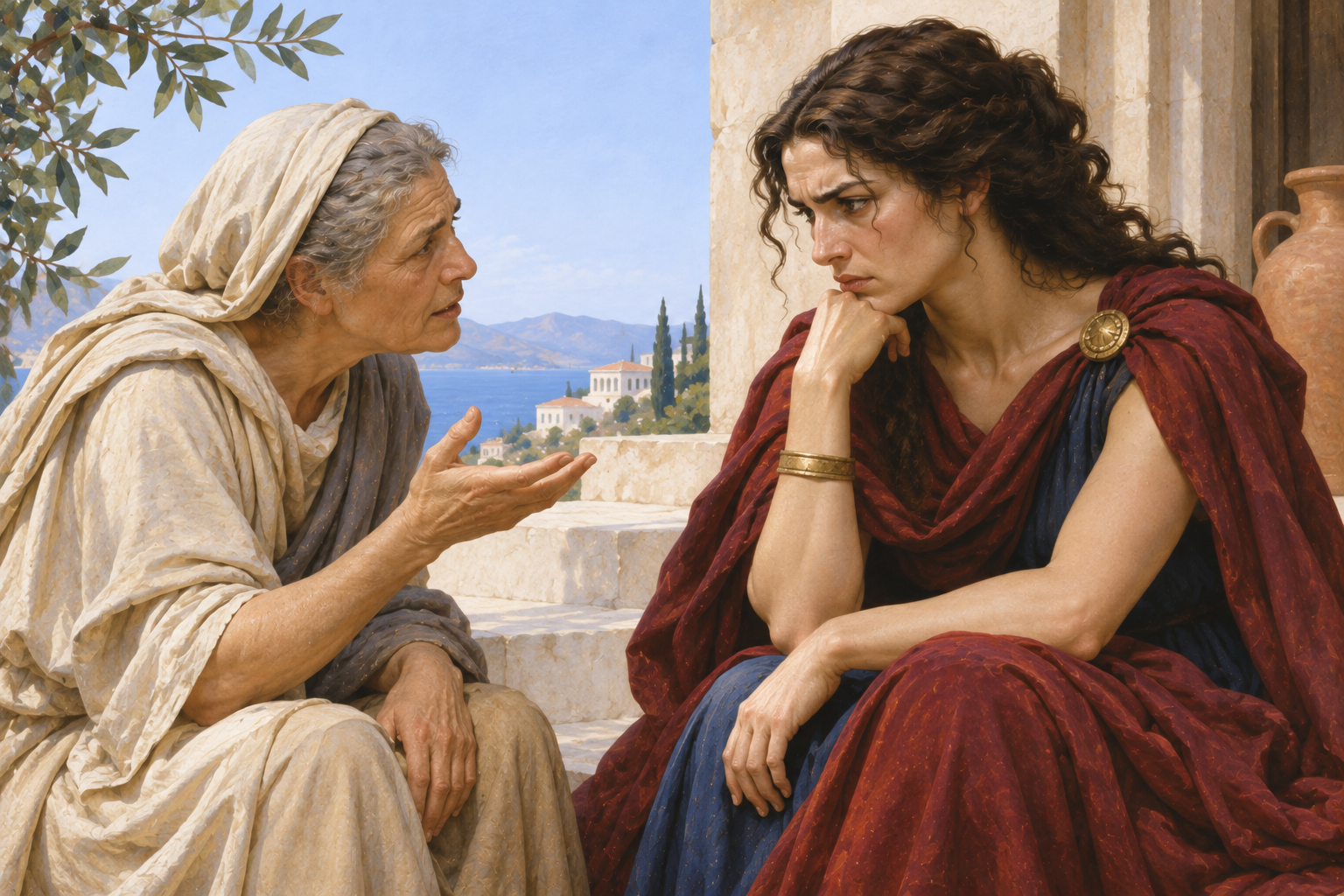
The Nurse — Medea's longtime attendant. She understands her mistress's suffering and fears what Medea may do. Her opening speech introduces the family history and warns of the approaching danger.
The Tutor — The attendant responsible for Medea and Jason's children. His conversations with the Nurse and Medea help reveal developments affecting the household.
The Chorus — Women of Corinth who sympathize with Medea's suffering and criticize Jason's betrayal. As her plans become increasingly violent, their sympathy is tested by their horror at what she intends.
The Messenger — Reports the deaths of Creon and his daughter after the princess receives Medea's poisoned gifts.
Medea and Jason's Children — Their two sons are innocent of the adults' conflict. Their vulnerability makes the final stage of Medea's revenge especially devastating.
Family and Political Relationships
- Medea and Jason: Former partners whose shared history is destroyed by Jason's decision to marry another woman.
- Medea and her children: A mother whose love for her sons comes into terrible conflict with her determination to punish Jason.
- Jason and the Corinthian princess: A proposed marriage that promises Jason greater political security and social standing.
- Creon and his daughter: A father seeking to protect his child and his royal household.
- Medea and Aegeus: A relationship based on reciprocal promises of assistance and protection.
- Medea and the Chorus: A bond of sympathy that becomes strained as Medea's revenge develops.
Four Central Character Conflicts
1. Betrayal and Loyalty
Medea believes that Jason has violated the obligations created by their marriage and their shared past. Jason attempts to justify his decision through arguments about security and advantage.
2. Power and Exile
Medea is a foreign woman without the political protection enjoyed by Jason and Creon. Her threatened exile exposes her dependence on others while intensifying her determination to act.
3. Compassion and Revenge
The Chorus recognizes Medea's suffering but cannot accept the destruction of innocent children as a just response to betrayal.
4. Love and Destruction
Medea's feelings for her children conflict with her desire to inflict the greatest possible suffering upon Jason. This internal struggle is central to the tragedy.
Questions for Character Analysis
- How does Medea's foreign background influence her position in Corinth?
- What reasons does Jason give for his new marriage? How convincing are they?
- Why does Creon fear Medea, and why does he nevertheless grant her an additional day?
- How does the Chorus' attitude toward Medea change during the play?
- What does Aegeus' promise of refuge make possible?
- How does Medea's conflict between maternal love and revenge complicate our understanding of her character?
Classroom Activity: Mapping Relationships and Responsibilities
Ask students to place Medea at the center of a relationship diagram. Connect her to Jason, their children, Creon, the Corinthian princess, Aegeus, the Nurse, and the Chorus.
Label each connection with the obligations, interests, or conflicts involved.
Students should then choose three relationships and explain how a character's attempt to protect one interest causes harm to another person.
Note to the Educator
Encourage students to distinguish sympathy for Medea's suffering from approval of her actions. The play offers opportunities to examine unequal social power, broken promises, and competing obligations without reducing its characters to simple examples of good and evil.
Reading the Play
This guide may be used with any complete translation of Euripides’ Medea. Readers using Ian Johnston's translation, published by Richer Resources Publications, can follow the characters' arguments and relationships while considering how Euripides develops the tragedy through dialogue and conflicting perspectives.
A printable PDF version of this resource is available by email.