From the Seven Gates to the Brothers' Destruction
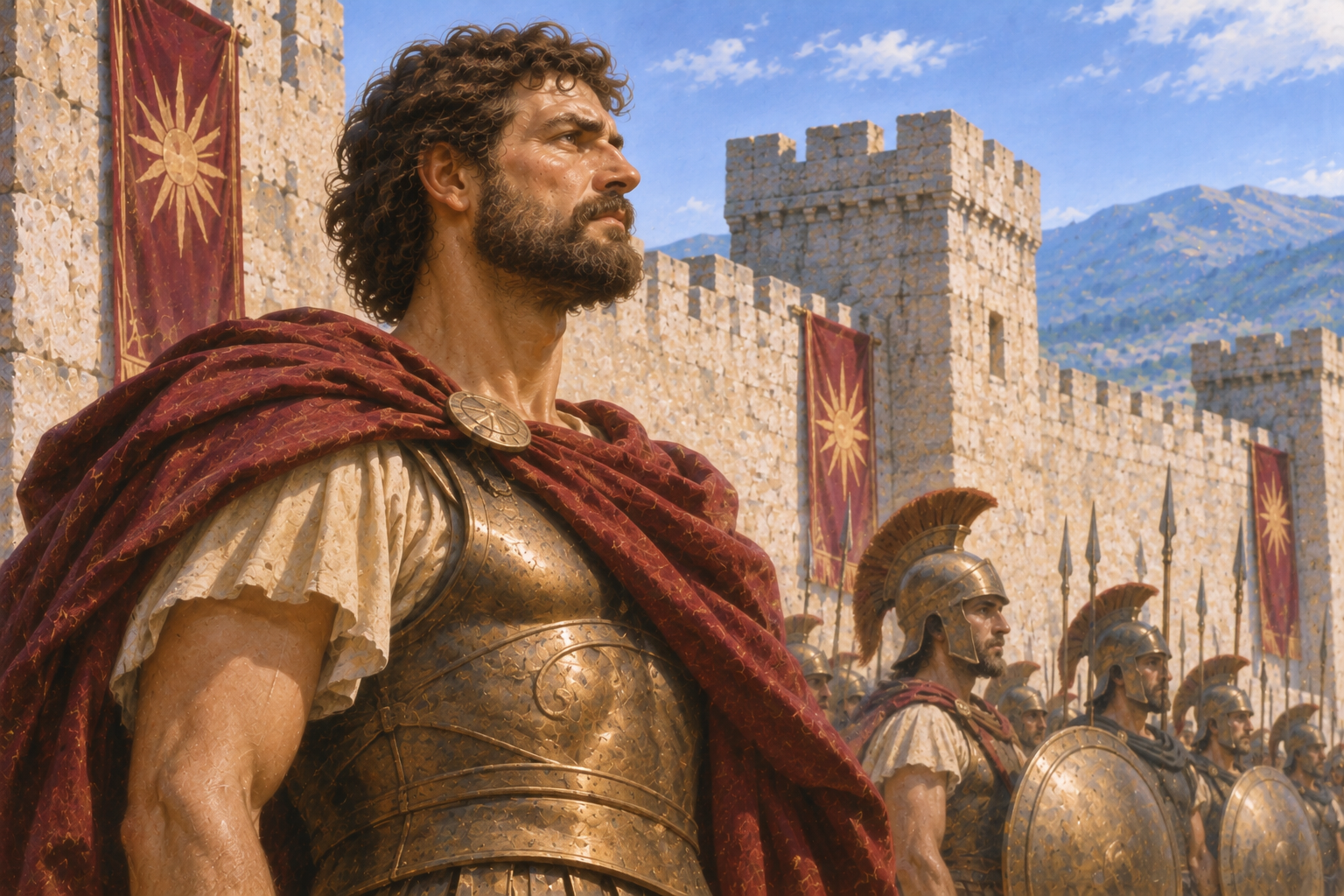
In Seven Against Thebes, Aeschylus creates dramatic tension through the threatened destruction of a city and the conflict between two brothers. Much of the military action occurs beyond the audience's view. Instead of showing the battles directly, the playwright uses reports, dialogue, and the responses of the Chorus to develop suspense and bring the tragedy toward its fatal conclusion.
Opening: The City Under Threat
The play begins with Eteocles addressing the citizens of Thebes as an enemy army approaches. He emphasizes the responsibility of defending the city and maintaining courage in the face of danger.
A Scout reports the preparations of the attacking forces. These opening scenes establish both the immediate military crisis and Eteocles' role as the city's leader.
The Chorus and the Fear of War
The Chorus of Theban women enters in alarm, praying for protection from the invading army. Their fear contrasts with Eteocles' insistence on discipline and confidence.
This disagreement introduces a central tension between military leadership and civilian vulnerability. The Chorus reminds the audience that the consequences of war extend beyond the soldiers who fight it.
The Seven-Gate Sequence
The central portion of the play follows a carefully organized pattern. The Scout describes an enemy champion assigned to one of the seven gates of Thebes, and Eteocles selects a defender to oppose him.
The descriptions include the attackers' behavior, weapons, and shield devices. Each report increases suspense while allowing the audience to imagine the approaching battle.
The repeated structure also draws attention to Eteocles' decisions as commander. His responses reveal confidence, strategic judgment, and growing personal involvement.
The Seventh Gate: The Turning Point
The sequence changes decisively when the Scout announces that Polynices, Eteocles' brother, stands at the seventh gate.
Eteocles resolves to confront him personally. The defense of the city now becomes inseparable from the inherited conflict within the family of Oedipus.
The Chorus urges him to reconsider, fearing that the brothers' encounter will fulfill their father's curse. Eteocles nevertheless proceeds toward the confrontation.
The Battle Beyond the Stage
The decisive fighting occurs offstage. A messenger subsequently reports that Thebes has survived the assault but that Eteocles and Polynices have killed one another.
This contrast between civic survival and family destruction gives the tragedy much of its force. The city is saved, yet the royal household suffers a catastrophe.
By keeping the battle out of sight, Aeschylus concentrates attention on the choices that precede it and the consequences revealed afterward.
Mourning and the Concluding Scene
The brothers' deaths lead to lamentation. The surviving text also contains a concluding dispute about the burial of Polynices, involving Antigone and Ismene.
Scholars have questioned whether portions of this ending were added after the original production. Students should therefore distinguish the central tragic action from the textual questions surrounding the surviving conclusion.
How the Structure Creates Suspense
The play's dramatic organization depends upon repetition followed by a decisive change. The first six gate reports establish a recognizable pattern of threat and response. The seventh transforms that pattern into a personal and irreversible confrontation.
The Scout's descriptions bring distant military events into the drama, while the Chorus expresses the emotional consequences of the approaching violence.
The structure ultimately joins two outcomes that seem difficult to reconcile: the successful defense of Thebes and the destruction of its ruling brothers.
Questions for Discussion
- How does the opening establish Eteocles' responsibilities as ruler?
- Why does Aeschylus give the Chorus such a prominent role in expressing fear?
- How does the repeated sequence of gate reports build suspense?
- Why is the seventh gate the turning point of the play?
- What is gained dramatically by reporting the battle rather than presenting it onstage?
- How does the contrast between the city's survival and the brothers' deaths shape the ending?
Note to the Educator
Ask students to outline the play's major stages and identify the moment when the military conflict becomes a personal tragedy. The seven-gate sequence provides a particularly useful example of how repetition can build expectations before a decisive reversal. Students may also consider how the Scout and Chorus allow the playwright to represent a large-scale war within the limited space of the ancient Greek stage.
This guide accompanies the Richer Resources Publications edition of Seven Against Thebes, translated by Ian Johnston. Teachers may wish to mention that the authenticity of portions of the surviving concluding scene remains disputed.
A printable PDF version of this resource is available by email.