From Divine Revelation to Tragic Recognition
Euripides builds the tragedy around a conflict whose outcome the audience can anticipate but cannot prevent. The dramatic movement from divine revelation to human recognition creates both suspense and moral unease.
Prologue: The God Reveals His Purpose
Dionysus announces that he has returned to Thebes to establish his divine identity and punish those who deny that Zeus was his father. Because the audience knows who he is from the beginning, Pentheus’ later attempts to expose the stranger are charged with dramatic irony.
The Conflict Takes Shape
The Chorus celebrates Dionysus, while Cadmus and Tiresias counsel respect for his rites. Pentheus rejects their advice and orders the stranger’s arrest. The play sets royal command against a power that cannot be confined by law or imprisonment.
Warnings and Messenger Reports
The palace is shaken and Pentheus’ efforts to restrain Dionysus fail. A messenger reports the extraordinary behavior of the women on Mount Cithaeron: their apparent harmony with nature and their sudden capacity for violence. Events described rather than staged enlarge the play’s world and heighten suspense.
The Reversal: Pentheus Becomes the Spectator
Dionysus exploits Pentheus’ curiosity and persuades him to dress as a woman to watch the worshippers. The ruler who sought to control the rites now follows the god’s instructions. His altered appearance and distorted perceptions signal a decisive reversal of power.
Catastrophe on Mount Cithaeron
A second messenger describes how Pentheus is discovered and torn apart by the frenzied women, including his mother, Agave. The violence occurs offstage, in keeping with a common tragic convention, but the detailed report makes its consequences immediate.
Recognition and Aftermath
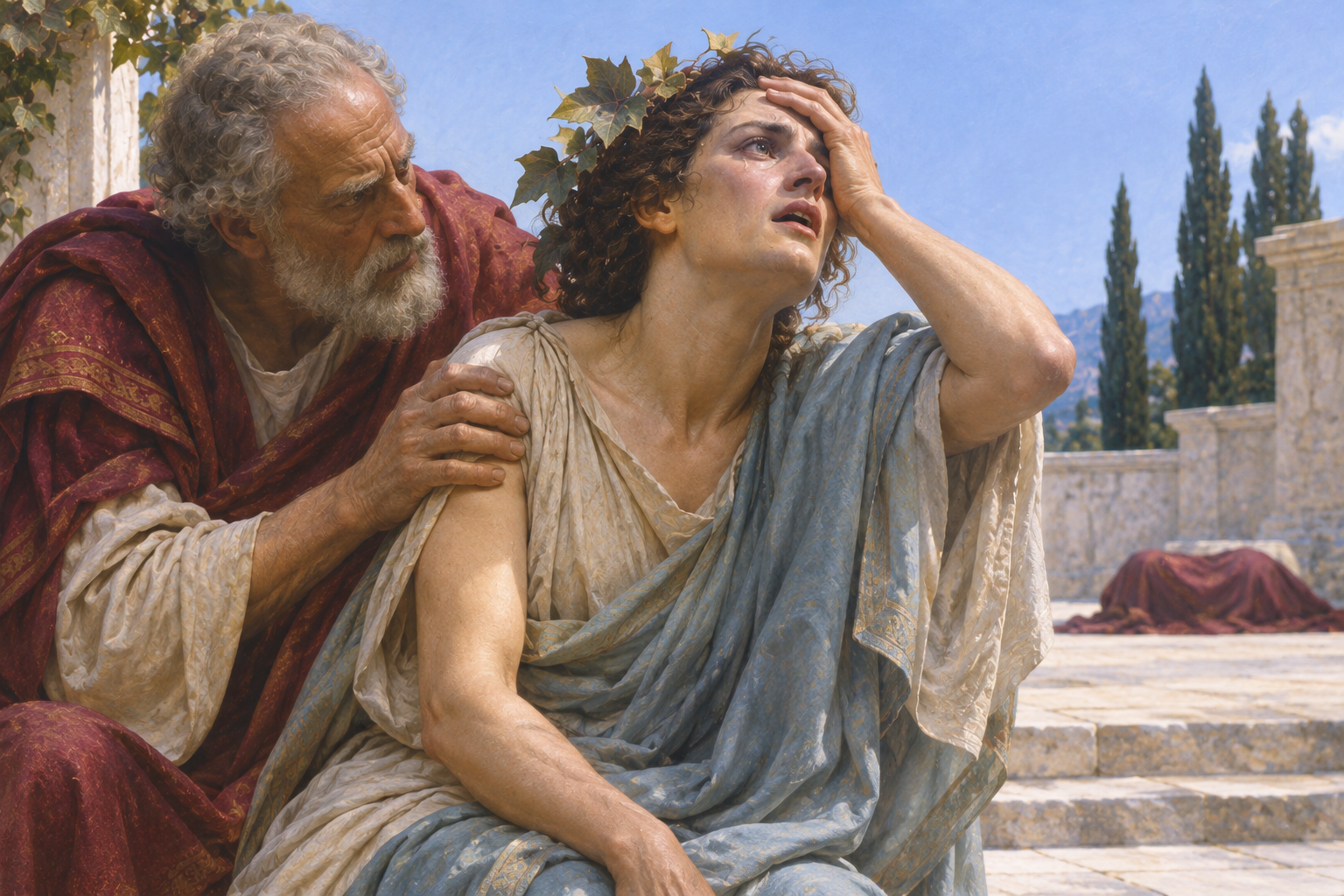
Agave enters believing she has captured a wild animal. Cadmus slowly brings her to recognize that the victim is her son. This recognition, or anagnorisis, turns celebration into grief. Dionysus then declares the family’s punishment, leaving the audience to judge both human error and divine severity.
How the Structure Creates Tragedy
The prologue gives the audience knowledge withheld from Pentheus. Warnings accumulate; the king refuses them. A reversal transfers control from ruler to god. Messenger speeches report the catastrophe, and Agave’s recognition reveals its human cost. The structure moves from certainty to disorientation and finally to devastating knowledge.
Questions for Discussion
- How does the prologue change the audience’s understanding of Pentheus’ decisions?
- What role do Cadmus and Tiresias play in the rising conflict?
- Why are the events on Mount Cithaeron reported by messengers rather than enacted?
- At what moment does Pentheus lose control of events? Defend your answer.
- How does Agave’s recognition alter the emotional meaning of the ending?
- Does the conclusion resolve the conflict between human and divine authority, or complicate it?
Classroom Activity: Trace the Turning Point
Have students choose three moments—an early warning, the reversal, and the recognition—and identify what Pentheus, Dionysus, Agave, and the audience know at each point. Ask students to explain how differences in knowledge create dramatic tension.
Note to the Educator
Emphasize the distinction between a plot summary and an analysis of dramatic structure: students should explain why Euripides reveals, delays, or reports particular information. The play includes graphic familial violence; preview the messenger account and recognition scene before assigning them. This resource accompanies the Richer Resources Publications edition of Bacchae, translated by Ian Johnston.
A printable PDF version of this resource is available by email.