Character Guide to Sophocles’ Oedipus the King
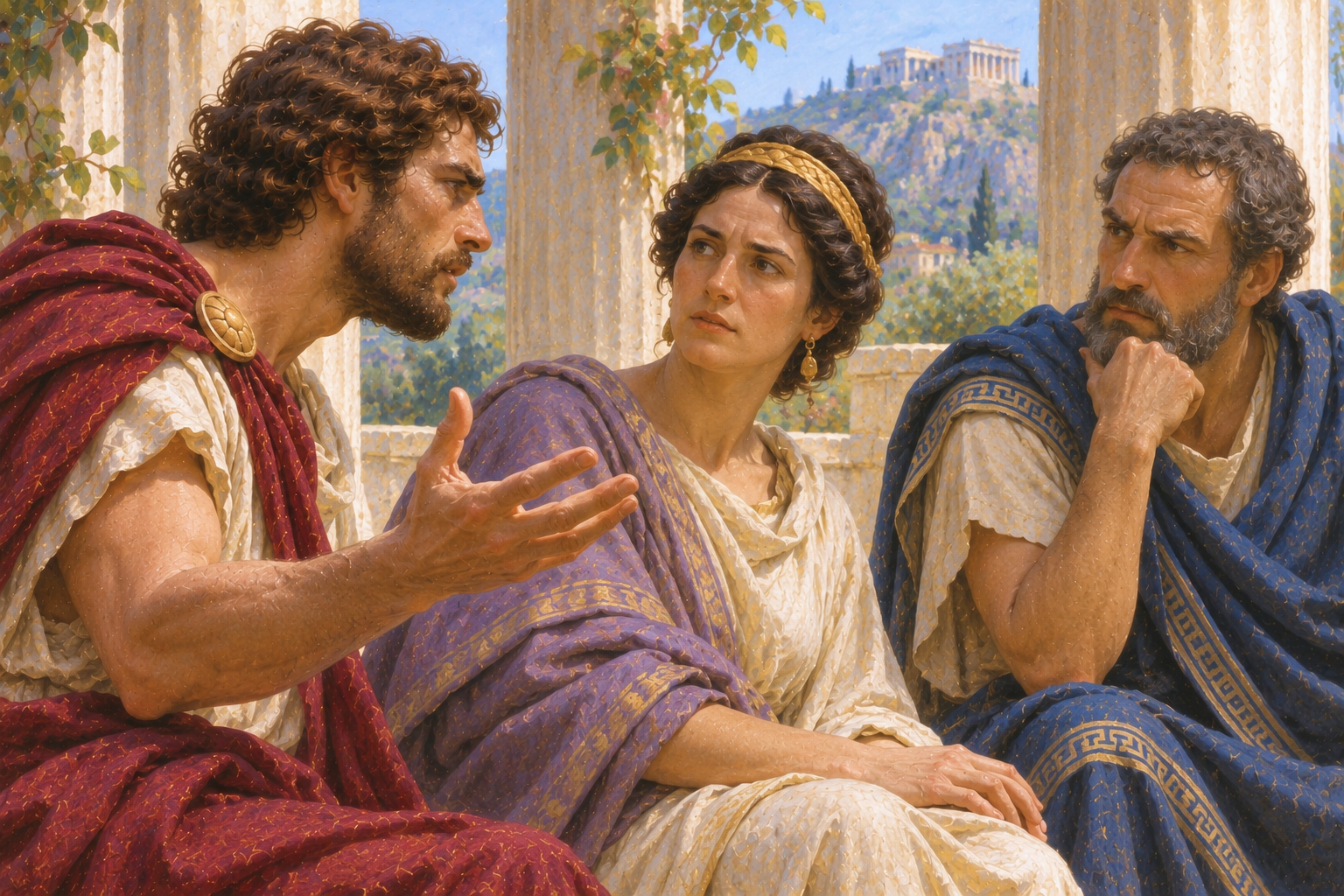
The characters in Sophocles’ Oedipus the King reveal the tragedy's central conflicts through their actions, relationships, and responses to the discovery of truth. As Oedipus investigates the murder of the former king of Thebes, each encounter brings him closer to a revelation that will transform his understanding of himself.
This free character guide accompanies Ian Johnston's English translation and helps students examine the principal figures, their motivations, and their contributions to the unfolding tragedy.
Principal Characters
Oedipus — King of Thebes
An intelligent and determined ruler who undertakes an investigation to save his city. His courage and persistence are complicated by anger, suspicion, and an inability to recognize the truth about his own past.
Jocasta — Queen of Thebes
Oedipus's wife and the widow of Laius. She initially questions the reliability of prophecy but gradually recognizes the implications of the evidence being uncovered.
Creon — Jocasta's Brother
A prominent Theban who brings news from Apollo's oracle. His conflict with Oedipus raises questions about political authority, loyalty, and suspicion.
Tiresias — The Blind Prophet
A seer whose knowledge challenges Oedipus's assumptions. His physical blindness contrasts with his ability to perceive truths hidden from others.
The Corinthian Messenger
A visitor whose apparently reassuring news leads to unexpected discoveries about Oedipus's birth and upbringing.
The Shepherd
An elderly former servant of Laius whose reluctant testimony provides crucial evidence about Oedipus's origins.
The Priest and Suppliants
Representatives of the suffering citizens of Thebes, whose appeals establish Oedipus's responsibilities as king.
The Chorus of Theban Elders
A collective voice reflecting the concerns, religious beliefs, and changing understanding of the Theban community.
Relationships and Conflicts
The guide explores the relationships among Oedipus, Jocasta, Creon, Tiresias, and the witnesses who reveal his past. Particular attention is given to the conflict between public duty and personal identity, the difficulty of accepting unwelcome knowledge, and the consequences of suspicion and pride.
Character Development and Dramatic Irony
Sophocles develops dramatic tension by allowing the audience to recognize connections that Oedipus does not yet understand. The characters' differing levels of knowledge and willingness to speak help shape the tragedy's movement toward recognition.
Classroom Activities
The downloadable guide includes:
- Character profiles and reading-focus questions.
- An overview of important relationships and conflicts.
- Six close-reading and discussion questions.
- A character-evidence chart activity.
- A knowledge-timeline exercise tracing the unfolding discovery.
- A structured discussion about Oedipus's strengths and weaknesses.
- Teacher notes encouraging evidence-based interpretation.
Download the Character Guide
Download the free Character Guide to Sophocles’ Oedipus the King for classroom instruction, independent study, or literature discussion.
This resource complements Ian Johnston's English translation of Sophocles’ tragedy, published by Richer Resources Publications.