Why Does History Matter?
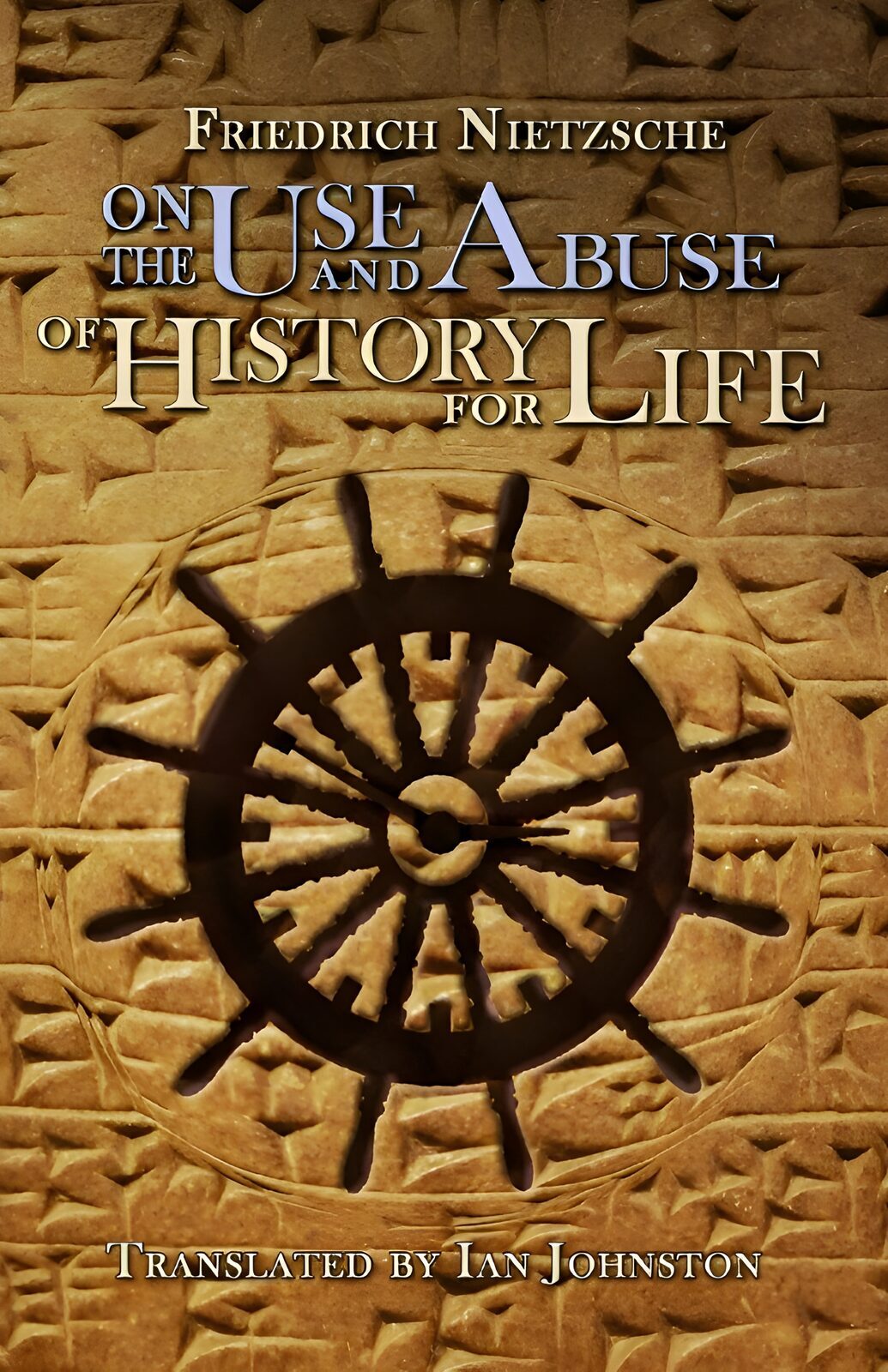
History helps us understand people, cultures, and events that came before us. But can studying the past ever make it harder to act in the present? In On the Use and Abuse of History for Life (1874), Friedrich Nietzsche argues that historical knowledge is valuable when it serves life—not simply because it accumulates facts.
Meet Nietzsche
Friedrich Nietzsche (1844–1900) was a German philosopher who began his career studying ancient languages and literature. This early essay, part of his Untimely Meditations, challenges the nineteenth-century enthusiasm for historical scholarship. Nietzsche is not asking us to abandon history. He asks us to consider what history does for individuals and communities.
Three Ways We Use History
Monumental history. We study extraordinary achievements and people for inspiration. Its benefit is courage; its danger is turning the past into a simplified story of heroes and victories.
Antiquarian history. We cherish and preserve traditions, buildings, and customs. Its benefit is a sense of belonging; its danger is refusing to question or change what we inherit.
Critical history. We examine the past and judge what should be rejected or changed. Its benefit is freedom from harmful legacies; its danger is imagining we can completely separate ourselves from our history.
Remembering—and Forgetting
Nietzsche observes that people need memory to learn, but also need some ability to stop looking backward. He calls attention to the “unhistorical”: the capacity to live and act without constantly comparing the present to the past. This is not an excuse to deny historical facts or conceal injustice. It is a question about how memory and attention affect human action.
What Is a Horizon?
A horizon marks the limits of what we can see. Nietzsche uses this idea to suggest that people need a manageable perspective from which to make decisions. If every action is weighed against everything that has ever happened, confidence and creativity may suffer. But a narrow horizon can also prevent us from recognizing mistakes.
Questions for Reading
- How can an inspiring historical example also mislead us?
- Why might someone preserve an old custom even when it no longer helps people?
- When is criticizing the past necessary? Can criticism go too far?
- What is the difference between healthy forgetting and deliberate denial?
- Do you think historical knowledge must be useful to have value? Why?
Try It Yourself
Three versions of one event. Choose a historical person, event, or building. Write three brief accounts: one monumental, one antiquarian, and one critical. What does each account emphasize or leave out?
A memory worth keeping. Choose a family, school, or community tradition. Explain what it preserves and whether it should remain unchanged.
A short argument. Respond to this claim: “We learn history best when we connect it to questions about the present.” Give a reason and a counterargument.
Read with Care
Nietzsche’s categories are ways of thinking about history, not rigid labels for historians. His concern about too much historical awareness does not excuse censorship, distortion, or forgetting people who suffered. Evaluate his argument while keeping the importance of accurate evidence in view. Cite section numbers when discussing passages.
Before You Finish
In one paragraph, explain which of Nietzsche’s three uses of history seems most important today. Give a concrete example, identify a possible danger, and explain how that danger could be avoided.
A printable PDF version of this resource is available by email.