Reading Nietzsche: Questioning What Seems Obvious
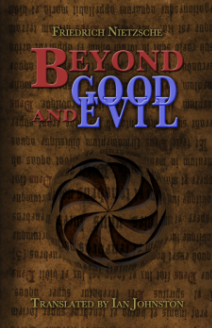
Why do we believe certain things are true or good? Are our moral judgments based on universal principles, or have they been shaped by history, habit, and personal interests? In Beyond Good and Evil (1886), Friedrich Nietzsche challenges readers to examine the assumptions behind their beliefs. His aim is not simply to supply a new list of rules, but to make us more alert to the ways we think.
Meet Nietzsche
Friedrich Nietzsche (1844–1900) was a German philosopher trained in classical literature. He wrote in a striking style, often using brief numbered sections called aphorisms. His statements can be ironic, provocative, or deliberately unsettling. Read carefully: a memorable sentence is not always a complete argument.
Five Ideas to Understand
The will to truth. Nietzsche asks why philosophers prize truth and whether their pursuit of it is influenced by hidden assumptions or desires. Questioning the motives behind a belief does not automatically prove the belief false.
Perspectivism. Our interpretations are shaped by particular standpoints. Nietzsche challenges the idea that a thinker can always view the world from nowhere, but this does not mean every claim is equally well supported.
Beyond conventional morality. Nietzsche questions familiar categories of good and evil and asks how moral values develop. He does not simply tell readers that every action is acceptable.
Will to power. Nietzsche explores striving, influence, and the expression of strength in human life. The idea is complex and should not be reduced to a command to dominate other people.
Free spirits and future philosophers. Nietzsche admires thinkers willing to question inherited assumptions and accept the difficulty of forming independent judgments.
How to Read an Aphorism
Choose a short numbered section. First, restate its central claim in your own words. Next, identify the assumption Nietzsche challenges. Then ask what reasons he offers, what might count against his claim, and whether he uses irony or exaggeration. Record section numbers when citing the book.
Questions for Close Reading
- Why does Nietzsche ask questions about the value of truth in the opening sections?
- How is explaining the psychological origin of a belief different from proving it wrong?
- What might it mean to think independently without simply rejecting everything others believe?
- What does Nietzsche criticize about conventional morality? Which criticisms do you find persuasive or unpersuasive?
- What difficulties arise when Nietzsche discusses hierarchy, equality, or the differences between people?
Try It Yourself
Aphorism detective. Select one numbered section from Parts One or Two. Write its main claim, one supporting reason, and one objection. Explain how Nietzsche’s wording affects your interpretation.
Values under examination. Choose a familiar value, such as honesty, loyalty, or ambition. Ask where it comes from, whom it benefits, and whether it can be defended with reasons.
Two-sided discussion. Debate whether questioning inherited moral rules makes people more responsible or less responsible. Support both sides before offering your conclusion.
A Note on Difficult Passages
Nietzsche makes remarks about women, nations, social hierarchy, and other groups that many readers will find objectionable. Do not ignore these passages or assume they are justified because they are provocative. Examine the claims, their context, and the evidence for or against them. Nietzsche’s views are open to criticism.
Before You Finish
In a paragraph, explain one assumption Nietzsche made you reconsider. State whether you ultimately agree with his challenge and give a reason. The goal is thoughtful evaluation, not agreement.
A printable PDF version of this resource is available by email.