Understanding the Comedy of Cleverness
Reading Comprehension and Analysis
Aristophanes’ Clouds follows Strepsiades, an indebted father who hopes to escape his financial obligations by learning the art of persuasive argument. His plan leads him to Socrates’ Thinkery, a contest between opposing approaches to education, and an unexpected reversal when his son turns newly acquired argumentative skills against him.
This quiz combines factual comprehension with interpretive questions about the play's comic structure and moral concerns.
Part I: Reading Comprehension
Answer the following questions in complete sentences.
1. What financial problem keeps Strepsiades awake at the beginning of the play?
2. Why does Strepsiades want someone in his family to study at the Thinkery?
3. Why does Strepsiades initially enter the Thinkery himself?
4. What unusual position is Socrates in when Strepsiades first meets him?
5. Why is Strepsiades unsuccessful as a student?
6. What do Better Argument and Worse Argument represent in their contest?
7. Which Argument wins, and why is this victory important to the plot?
8. What happens when Pheidippides returns from his education?
9. How does Strepsiades react to the Thinkery at the end of the play?
Part II: Analysis
Support your answers with specific events from the play.
10. Explain the central irony in Strepsiades’ plan. Use two events from the play.
11. How does the chorus of Clouds contribute to the play beyond simply appearing as characters?
12. Why should readers distinguish Aristophanes’ Socrates from the historical Socrates?
Classroom Extension: A Different Ending
Ask students to imagine that Strepsiades recognizes the moral weakness of his scheme before Pheidippides enters the Thinkery.
Have them write a short alternative scene in which Strepsiades must choose between accepting responsibility for his debts and continuing to seek a clever escape.
Students should then explain how their alternative ending changes the play's irony and its treatment of education.
Note to the Educator
Questions 1–9 assess understanding of the plot and major characters. Questions 10–12 require interpretation and should be evaluated for accurate reasoning and appropriate supporting examples.
The separate teacher answer key provides suggested responses rather than the only acceptable wording. Encourage students to distinguish the historical Socrates from Aristophanes’ comic caricature.
Reading the Play
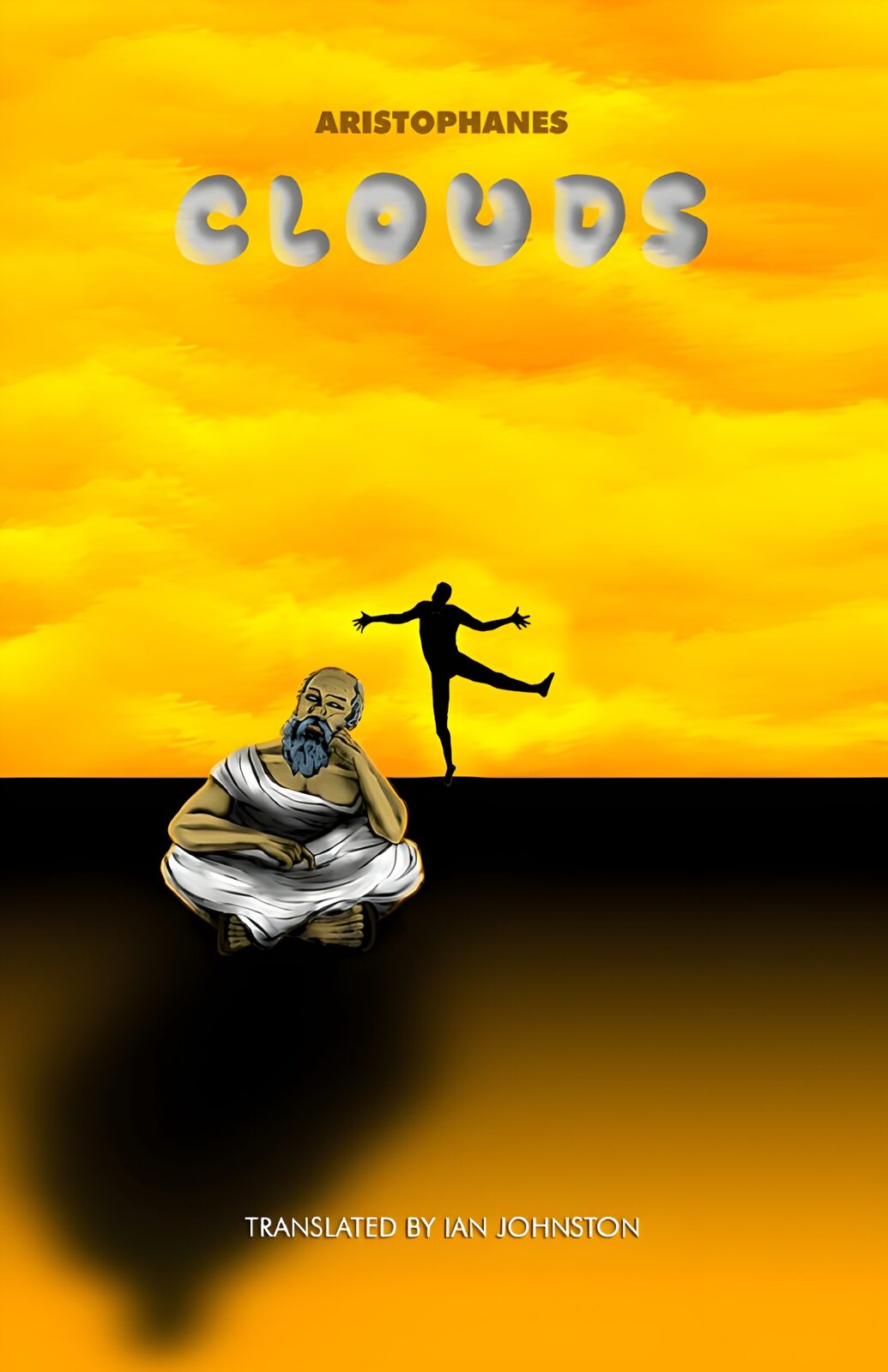
This resource may be used alongside Ian Johnston’s translation of Aristophanes’ Clouds, available from Richer Resources Publications.
A printable PDF version of this resource is available by email.