Reading Beneath the Words: Literary and Dramatic Techniques in Electra
About This Guide
Euripides’ Electra uses familiar mythological events to explore difficult questions about justice, revenge, and human responsibility. Much of the play’s meaning emerges not simply from what happens, but from how characters speak, how information is revealed, and how the audience's expectations are challenged.
This guide introduces six important literary and dramatic techniques, with close-reading questions and classroom activities.
1. Dramatic Irony: Knowing More Than the Characters
When Orestes first encounters Electra, he conceals his identity. The audience knows who he is, but Electra does not.
This difference in knowledge gives her words additional meaning. Her longing for her absent brother is especially affecting because he is already standing before her.
Close-reading questions:
- How does Electra speak about Orestes before recognizing him?
- What emotions might the audience experience that Electra cannot yet share?
- Why might Euripides delay the revelation of Orestes' identity?
2. Recognition and the Question of Evidence
Recognition scenes are important features of Greek tragedy. Euripides makes this convention unusually self-conscious by having Electra question whether hair, footprints, or woven clothing could reliably establish Orestes' identity.
The Old Man eventually recognizes Orestes through a scar.
The scene encourages audiences to consider how people distinguish convincing evidence from wishful thinking.
Close-reading questions:
- What objections does Electra raise to the proposed recognition signs?
- How does the scar differ from the other clues?
- Does the scene introduce humor or skepticism into an otherwise serious tragedy?
3. Contrast: Noble Birth and Noble Conduct
Electra's husband is a poor farmer, yet he behaves with dignity and restraint. His conduct contrasts with the violence committed by members of the royal household.
This contrast challenges the assumption that social rank and moral worth are naturally connected.
Close-reading questions:
- How does the farmer explain his treatment of Electra?
- Which actions establish his character?
- How does his behavior influence our judgment of the royal family?
4. Persuasive Dialogue: Competing Claims of Justice
The confrontation between Electra and Clytemnestra is more than a family argument. Each woman presents an interpretation of Agamemnon's murder.
Clytemnestra invokes the sacrifice of Iphigenia, while Electra challenges her mother's motives and conduct.
Their speeches reveal how characters select, interpret, and emphasize events to justify their actions.
Close-reading questions:
- What evidence does each woman offer?
- Which claims concern past actions, and which concern personal motives?
- How does the audience's knowledge of the planned murder affect this debate?
5. Messenger Speech: Violence Through Narration
Rather than showing Aegisthus' death directly, Euripides has a messenger describe it.
The messenger's account allows the audience to imagine the action while also experiencing it through another person's interpretation.
Notice the sequence of events, the descriptive details, and the reactions included in the report.
Close-reading questions:
- How does the messenger build suspense?
- Which details make the account vivid?
- How might the scene feel different if the killing occurred visibly onstage?
6. Reversal and the Tragic Ending
Electra and Orestes believe revenge will answer the wrong done to their father. Yet after Clytemnestra's murder, they are overcome by distress.
Their emotional reversal challenges the expectation that completing a long-awaited task will bring satisfaction.
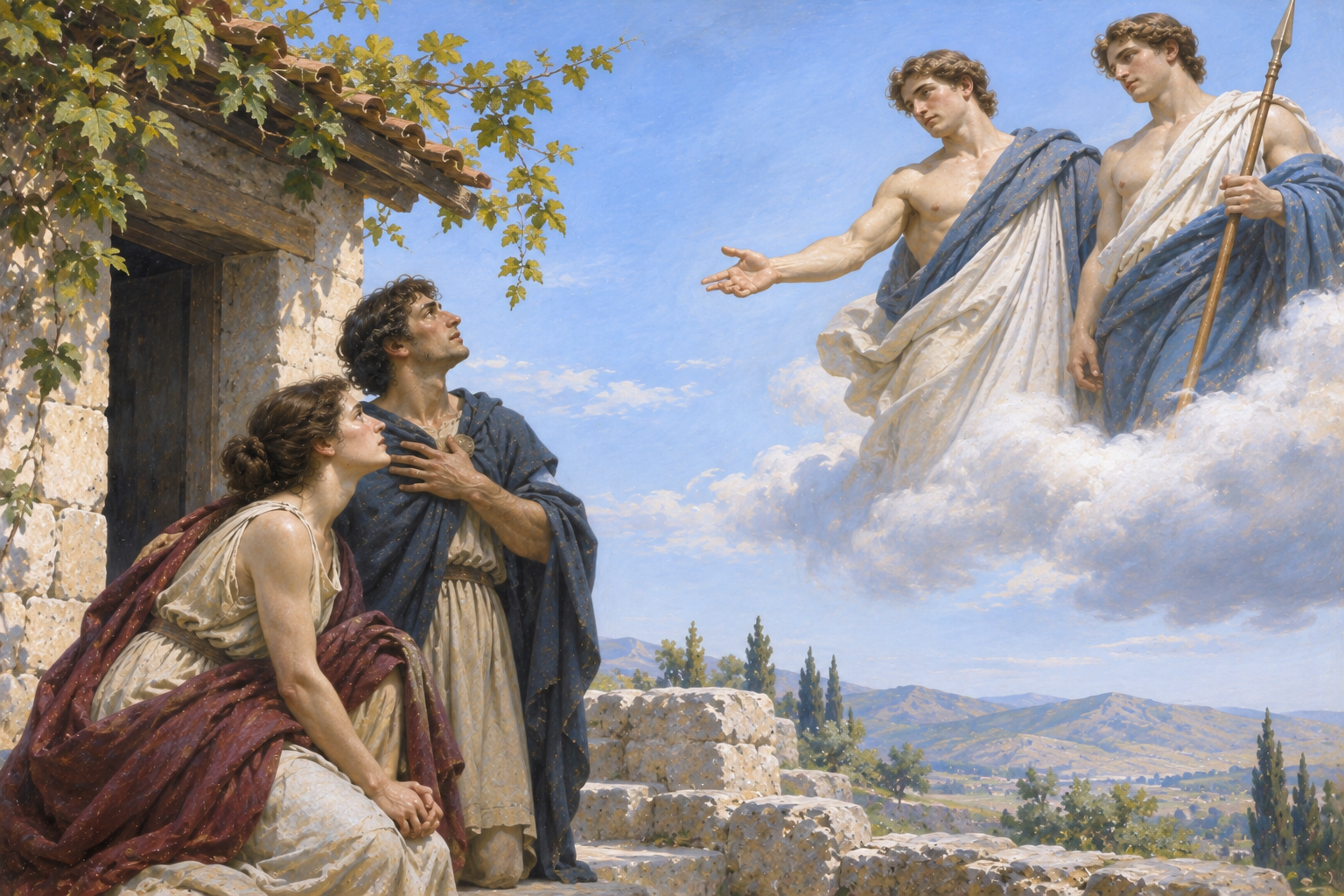
The appearance of Castor and Polydeuces provides directions for the future but does not remove the moral difficulty of the killings.
Close-reading questions:
- How does the siblings' language change after the murder?
- What expectations established earlier in the play are overturned?
- Does the ending offer reassurance, criticism, or a mixture of both?
Literary Devices at a Glance
- Dramatic irony: The audience possesses information a character lacks.
- Recognition: A character discovers another person's identity.
- Contrast: Differences between characters or situations reveal important values.
- Persuasive dialogue: Speakers use arguments to defend competing interpretations.
- Messenger speech: An offstage event is presented through detailed narration.
- Reversal: An anticipated outcome produces an unexpected result.
Classroom Activity: A Close-Reading Comparison
Choose two passages: Electra's conversation with the disguised Orestes and her confrontation with Clytemnestra.
For each passage, identify:
- What each speaker knows or believes.
- What the audience knows that a speaker may not.
- The most important argument or emotional appeal.
- How the passage prepares the audience for what follows.
Conclude by comparing how Euripides uses conversation to create sympathy, suspense, and moral uncertainty.
Short Analytical Writing Assignment
Choose one literary device from this guide and explain how it contributes to the tragedy's larger meaning.
Your response should identify a specific scene, describe the technique, and explain how it influences the audience's understanding of character or conflict.
Note to the Educator
Students may use different translations of Electra, so wording and line numbers may vary. Encourage them to identify passages by scene or dramatic situation and to support their interpretations with evidence from the edition they are reading.
A printable PDF version of this resource is available by email.