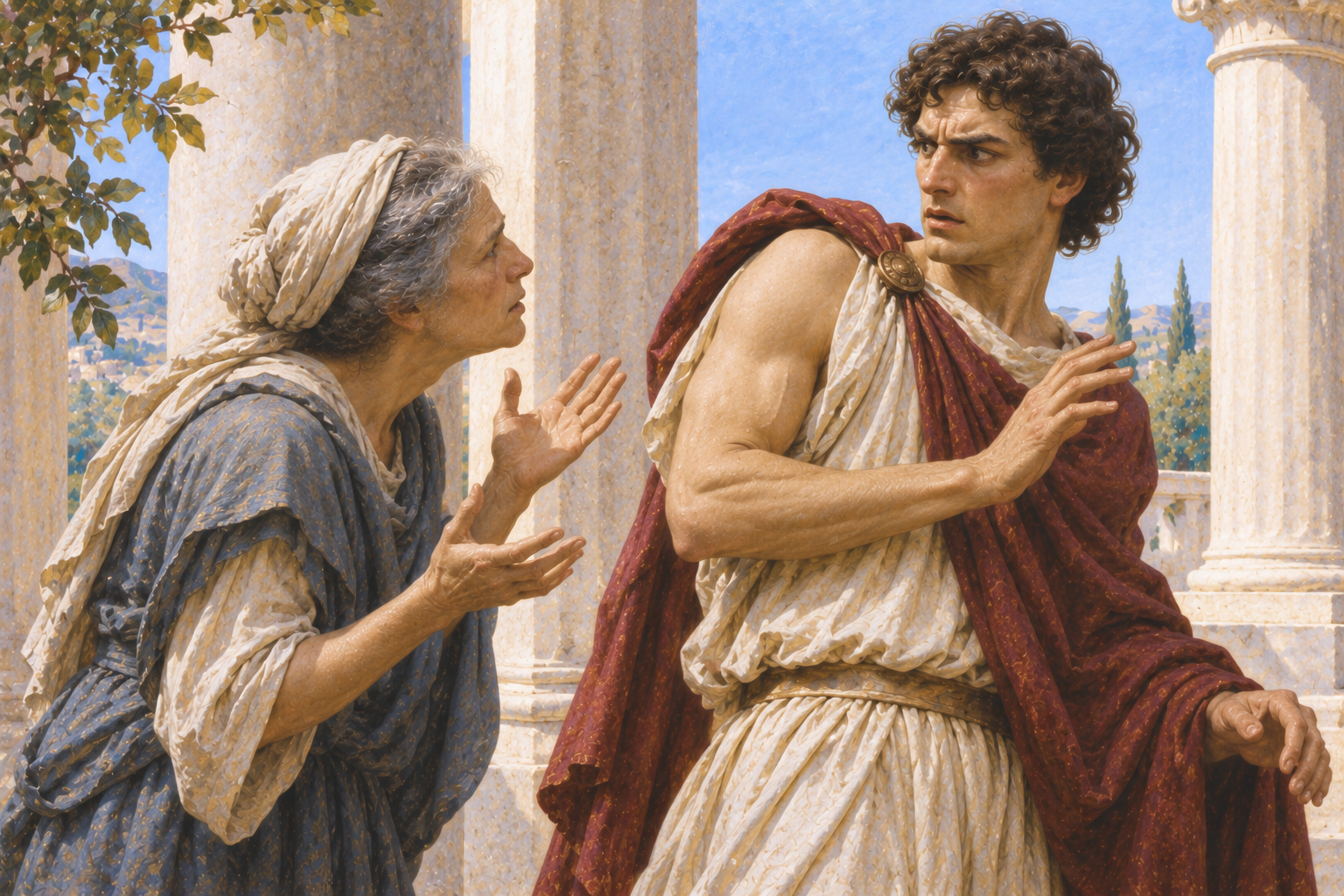
Testing Understanding: Choices and Consequences in Hippolytus
About This Quiz
This assessment combines factual comprehension with interpretation of Euripides’ Hippolytus. Students review the principal events and characters before considering the tragedy's treatment of desire, secrecy, justice, and divine power.
Suggested use: After completing the play, as an individual assessment, homework assignment, or guided classroom review.
Part I — Reading Comprehension
Choose the best answer.
1. Why does Aphrodite decide to punish Hippolytus?
A. He refuses to obey Theseus.
B. He rejects her worship and honors Artemis instead.
C. He has abandoned his duties as a prince.
D. He has broken a promise to Phaedra.
2. Who is Phaedra in relation to Hippolytus?
A. His sister
B. His cousin
C. His stepmother
D. His aunt
3. Which character reveals Phaedra's secret to Hippolytus?
A. Artemis
B. The Nurse
C. Theseus
D. The Messenger
4. Why does Hippolytus refuse to reveal the truth to Theseus?
A. He has forgotten what happened.
B. He fears punishment from Artemis.
C. He has sworn an oath of secrecy.
D. He believes Phaedra's accusation.
5. What does Theseus discover after Phaedra's death?
A. A written accusation against Hippolytus
B. A letter from Artemis
C. A message from Poseidon
D. A confession from the Nurse
6. What causes Hippolytus' fatal chariot accident?
A. A storm sent by Zeus
B. An attack by soldiers
C. A monstrous bull rising from the sea and frightening his horses
D. A broken wheel caused by sabotage
7. Who reveals the truth to Theseus near the end of the play?
A. Aphrodite
B. Artemis
C. Poseidon
D. The Nurse
Part II — Short-Answer Questions
Answer each question in two to four sentences.
8. How does Hippolytus' devotion to Artemis influence his attitude toward Aphrodite?
9. Why does Phaedra struggle to keep her feelings secret?
10. What motivates the Nurse to speak to Hippolytus, and what are the consequences?
11. Why does Theseus believe Phaedra's accusation?
12. How does the relationship between Theseus and Hippolytus change at the conclusion?
Part III — Literary and Moral Analysis
Support each answer with specific events or dialogue from the play.
13. Dramatic irony: How does Aphrodite's opening speech affect the audience's understanding of the tragedy?
14. Responsibility: To what extent are the human characters responsible for events initiated by Aphrodite?
15. Honor and secrecy: How do Phaedra's concern for reputation and Hippolytus' oath contribute to the catastrophe?
16. Justice and forgiveness: Does the final reconciliation between Theseus and Hippolytus resolve the tragedy? Explain.
Classroom Extension
Choose Phaedra, Hippolytus, Theseus, or the Nurse. Write a paragraph explaining how that character's intentions differ from the consequences of their actions. Use at least two examples from the play.
Note to the Educator
Questions 1–7 assess factual comprehension. Questions 8–16 invite explanation and interpretation. Evaluate analytical responses for accurate references to the play, clear reasoning, and attention to competing moral claims rather than a single prescribed interpretation.
Reading the Play
A printable student quiz and a separate answer key are available by email.