Skip to content
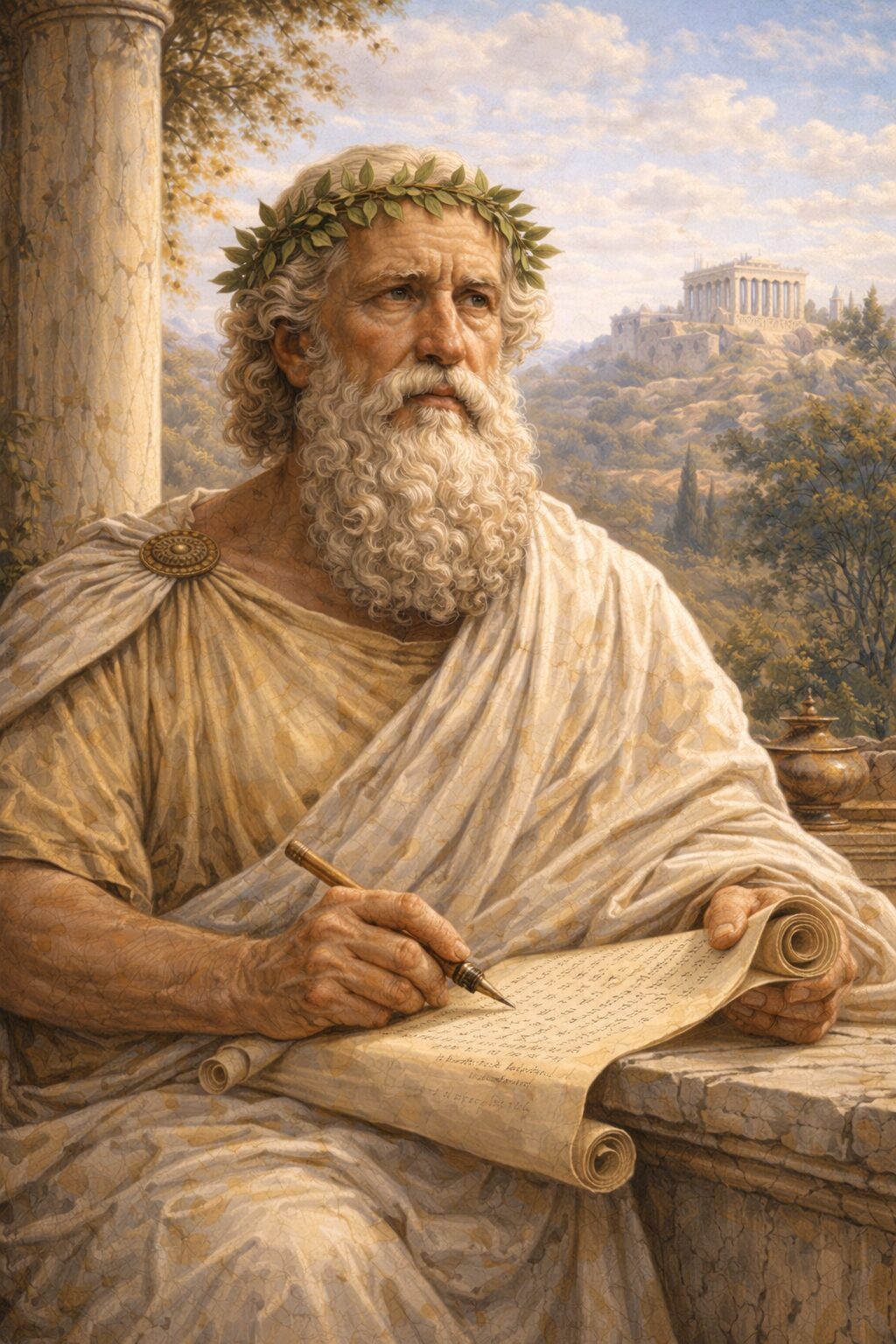
Portrait of Aristophanes

Author

Aristophanes

Aristophanes, (ca. 456 BC – ca. 386 BC), was a Greek Old Comic dramatist. He is known asthe Father of Comedy. Although there were other comic writers in ancient Greece, only the works of Aristophanes remain. By most accounts, he was the greatest comic writer of his day. Of the estimated forty or so plays thought to have written by him, eleven remain. In addition to writing plays, Aristophanes also wrote poetry.

Many of Aristophanes' plays were written for the theatrical competitions at the festival of Dionysus. Their satirical tone and often ribald humor was directed at politicians and cultural heroes alike. Clouds poked fun at  the popular Socrates and Frogs at involved a contest between fellow playwrights Euripides and Aeschylus. Largely, however,  his plays captured the debauchery, war and corruption of the politics of the day.

Aristophanes had an excellent education and was well versed in literature, especially the poetry of Homer and other great Athenian writers. He died in 385 B.C. in Athens.

Resources

Birds 11 resources

GREEK COMEDY · CLOSE READING & LITERARY DEVICES

Aristophanes’ Birds — Close Reading and Literary Devices

Examine how Aristophanes uses rhetoric, comic exaggeration, irony, imagery, and dramatic reversal in Birds. Includes close-reading exercises on Pisthetairos’ speeches, the bird chorus, the visitors to Cloudcuckooland, and the negotiations with the gods.

Read resource →

GREEK COMEDY · DISCUSSION & ESSAY PROMPTS

Aristophanes’ Birds — Discussion Questions and Essay Prompts

Engage students in thoughtful discussion and analytical writing about Aristophanes’ Birds. Questions explore the dream of an ideal society, political persuasion, the authority of the gods, the role of the chorus, and the play’s ambiguous ending. Includes essay prompts and a classroom debate activity.

Read resource →

GREEK COMEDY · MAJOR THEMES & SATIRE

Aristophanes’ Birds — Major Themes

Explore the major themes of Aristophanes’ Birds, including the search for a better society, the seductions of political power, persuasion, human nature, and the comic reversal of divine authority. Includes interpretive questions and a classroom activity.

Read resource →

GREEK COMEDY · PLOT & DRAMATIC STRUCTURE

Aristophanes’ Birds — Plot and Dramatic Structure

Explore the dramatic progression of Aristophanes’ Birds, from two Athenians’ search for a peaceful life to the creation of Cloudcuckooland and Pisthetairos’ triumph over the gods. Includes an analysis of the play’s comic structure, reversals, satire, and classroom questions.

Read resource →

Greek Comedy · Student’s Guide

Aristophanes’ Birds — Student’s Guide

A student-friendly introduction to Aristophanes’ Birds, with an accessible plot summary, character descriptions, explanations of satire and utopia, major themes, reading questions, and a short writing activity exploring the promises and realities of Cloudcuckooland.

Read resource →

Greek Comedy · Teacher’s Guide

Aristophanes’ Birds — Teacher’s Guide

A teaching guide to Aristophanes’ Birds, exploring political ambition, utopian dreams, persuasive speech, imperial power, and the transformation of an imagined peaceful society into a new political order. Includes historical context, plot, characters, themes, teaching objectives, close-reading suggestions, classroom activities, and discussion questions.

Read resource →

BOOK TRAILER

Birds Book Trailer

Birds by Aristophanes is a comic Greek play that satirizes politics, ambition, and utopian dreams through wit, fantasy, and sharp social critique. 

Read resource →

GREEK COMEDY

On Aristophanes’s The Birds

Ian Johnston examines Aristophanes’s The Birds as a satire of Athenian ambition and imperialism, tracing how Pisthetairos’s search for escape and freedom gradually becomes a pursuit of power, domination, and control.

Read resource →
Clouds 11 resources

GREEK COMEDY · CHARACTER GUIDE & RELATIONSHIPS

Aristophanes’ Clouds — Character Guide and Relationships

Explore the principal characters and relationships in Aristophanes’ Clouds, including Strepsiades, Pheidippides, Socrates, the Better and Worse Arguments, and the chorus of Clouds. Examines family conflict, education, rhetoric, and the reversal of traditional authority, with classroom questions and an activity.

Read resource →

GREEK COMEDY · CLOSE READING & LITERARY DEVICES

Aristophanes’ Clouds — Close Reading and Literary Devices

Examine how Aristophanes uses dramatic irony, exaggeration, personification, parody, wordplay, and comic reversal in Clouds. This resource guides students through key scenes, explains how literary techniques support the play’s satire of education and persuasive speech, and includes close-reading questions and a classroom activity.

Read resource →

GREEK COMEDY · DISCUSSION QUESTIONS & ESSAY PROMPTS

Aristophanes’ Clouds — Discussion Questions and Essay Prompts

Encourage close reading and thoughtful classroom discussion of Aristophanes’ Clouds through questions about education, rhetoric, family conflict, intellectual fashion, and comic reversal. Includes extended essay prompts, a structured classroom debate, and guidance for supporting interpretations with evidence from the play.

Read resource →

GREEK COMEDY · HISTORICAL & INTELLECTUAL CONTEXT

Aristophanes’ Clouds — Historical and Intellectual Background

Explore the historical and intellectual world of Aristophanes’ Clouds, first performed in Athens in 423 BCE. This resource introduces Athenian democracy, the Sophists, natural philosophy, traditional education, and the comic portrayal of Socrates, with discussion questions and a classroom activity distinguishing satire from historical evidence.

Read resource →

GREEK COMEDY · MAJOR THEMES

Aristophanes’ Clouds — Major Themes

Explore the central themes of Aristophanes’ Clouds, including traditional and new education, persuasive speech, intellectual pride, family authority, debt, and moral responsibility. Includes discussion questions and a classroom activity examining the difference between winning an argument and making a sound moral judgment.

Read resource →

GREEK COMEDY · PLOT & DRAMATIC STRUCTURE

Aristophanes’ Clouds — Plot and Dramatic Structure

Follow the plot and dramatic structure of Aristophanes’ Clouds, from Strepsiades’ financial troubles and his visit to Socrates’ Thinkery to the contest between Better and Worse Argument, Pheidippides’ education, and the play’s destructive conclusion. Includes a scene-by-scene outline, discussion questions, and a classroom activity on comic reversal.

Read resource →

GREEK COMEDY · READING COMPREHENSION & ANALYSIS

Aristophanes’ Clouds — Reading Comprehension and Analysis Quiz

Assess students’ understanding of Aristophanes’ Clouds through twelve questions covering Strepsiades’ debts, the Thinkery, Socrates, the contest between Better and Worse Argument, the chorus, and the play’s ironic conclusion. Includes interpretive questions, a classroom extension, and a separate teacher answer key.

Read resource →

Greek Comedy · Student’s Guide

Aristophanes’ Clouds — Student’s Guide

A student-friendly guide to Aristophanes’ Clouds, exploring Strepsiades’ debts, the comic portrayal of Socrates, competing approaches to education, and the difference between persuasive speech and sound judgment. Includes a plot summary, character guide, themes, reading suggestions, and discussion questions.

Read resource →

Greek Comedy · Teacher’s Guide

Aristophanes’ Clouds — Teacher’s Guide

A teaching guide to Aristophanes’ Clouds, exploring the comic portrayal of Socrates, the conflict between traditional and fashionable education, the misuse of persuasive speech, and the consequences of Strepsiades’ attempts to escape his debts. Includes historical context, plot, characters, themes, teaching objectives, close-reading passages, activities, and discussion questions.

Read resource →

BOOK TRAILER

Clouds Book Trailer

Clouds by Aristophanes is a satirical Greek comedy that mocks intellectual fashions, rhetoric, and moral relativism through sharp humor and fantasy. 

Read resource →

GREEK COMEDY

On Satire in Aristophanes’s Clouds

Ian Johnston examines how Aristophanes uses satire in The Clouds, tracing the play’s shifting targets from Socrates and the Thinkery to Strepsiades and, ultimately, the Athenian audience itself. He explores the social function of laughter, the manipulation of language, and the increasingly troubling implications of the play’s comic attack.

Read resource →
Frogs 3 resources

Greek Comedy · Student’s Guide

Aristophanes’ Frogs — Student’s Guide

A student-friendly guide to Aristophanes’ Frogs, featuring a plot summary, character descriptions, an introduction to literary parody, major themes, reading questions, and a writing activity about the competing claims of Aeschylus and Euripides.

Read resource →

Greek Comedy · Teacher’s Guide

Aristophanes’ Frogs — Teacher’s Guide

A teaching guide to Aristophanes’ Frogs, exploring Dionysus’ journey to the underworld, the rivalry between Aeschylus and Euripides, literary criticism, civic responsibility, and the role of poetry during political crisis. Includes historical context, plot, characters, themes, teaching objectives, classroom activities, and discussion questions.

Read resource →

BOOK TRAILER

Frogs Book Trailer

Frogs by Aristophanes is a satirical Greek comedy that stages a contest between poets, mocking literary fashion while debating art, culture, and civic values.

Read resource →
Knights 2 resources

Greek Comedy · Student’s Guide

Aristophanes’ Knights — Student’s Guide

A student-friendly introduction to Aristophanes’ Knights, exploring the rivalry between Paphlagon and the sausage seller, the representation of the Athenian people as Demos, political flattery, satire, and civic judgment. Includes character explanations, reading guidance, discussion questions, and a short classroom activity.

Read resource →

Greek Comedy · Teacher’s Guide

Aristophanes’ Knights — Teacher’s Guide

A teaching guide to Aristophanes’ Knights, examining political demagoguery, public persuasion, corruption, the rivalry between Paphlagon and the sausage seller, and the representation of the Athenian people as Demos. Includes historical context, plot, characters, major themes, teaching objectives, close-reading passages, classroom activities, and discussion questions.

Read resource →
Lysistrata 3 resources

Greek Comedy · Student’s Guide

Aristophanes’ Lysistrata — Student’s Guide

An accessible student guide to Aristophanes’ Lysistrata, examining the women’s campaign for peace, the occupation of the Acropolis, gender and political authority, comic reversal, and the costs of war. Includes a plot summary, characters, themes, reading questions, and a writing activity.

Read resource →

Greek Comedy · Teacher’s Guide

Aristophanes’ Lysistrata — Teacher’s Guide

A comprehensive teaching guide to Aristophanes’ Lysistrata, examining the women’s campaign to end the Peloponnesian War, collective action, gender and political authority, financial power, and the comedy’s frank sexual satire. Includes historical context, characters, themes, teaching objectives, discussion questions, and classroom activities.

Read resource →

BOOK TRAILER

Lysistrata Book Trailer

A visual introduction to Aristophanes’ Lysistrata, a Greek comedy using satire and wit to examine war, power, gender, and collective resistance.

Read resource →
Peace 2 resources

Greek Comedy · Student’s Guide

Aristophanes’ Peace — Student’s Guide

An accessible student guide to Aristophanes’ Peace, examining Trygaeus’s journey to Olympus, the rescue of the goddess Peace, cooperation among Greek communities, the competing interests created by war, and the importance of farming and celebration. Includes historical context, character explanations, themes, reading questions, and a short activity.

Read resource →

Greek Comedy · Teacher’s Guide

Aristophanes’ Peace — Teacher’s Guide

A comprehensive teaching guide to Aristophanes’ Peace, exploring Trygaeus’s fantastic journey, the rescue of the goddess Peace, the costs of warfare, agricultural life, political satire, and collective action. Includes historical context, character explanations, major themes, teaching objectives, close-reading suggestions, classroom activities, and discussion questions.

Read resource →
Across Works 3 resources

THE WORLD OF THE ANCIENT GREEKS

Introduction to Ancient Greece

A concise guide to the geography, history, political life, and cultural development of ancient Greece, from the Bronze Age civilizations of Crete and Mycenae through the rise of the city-states, Classical Athens and Sparta, and the age of Alexander the Great.

Read resource →

Refine these resources