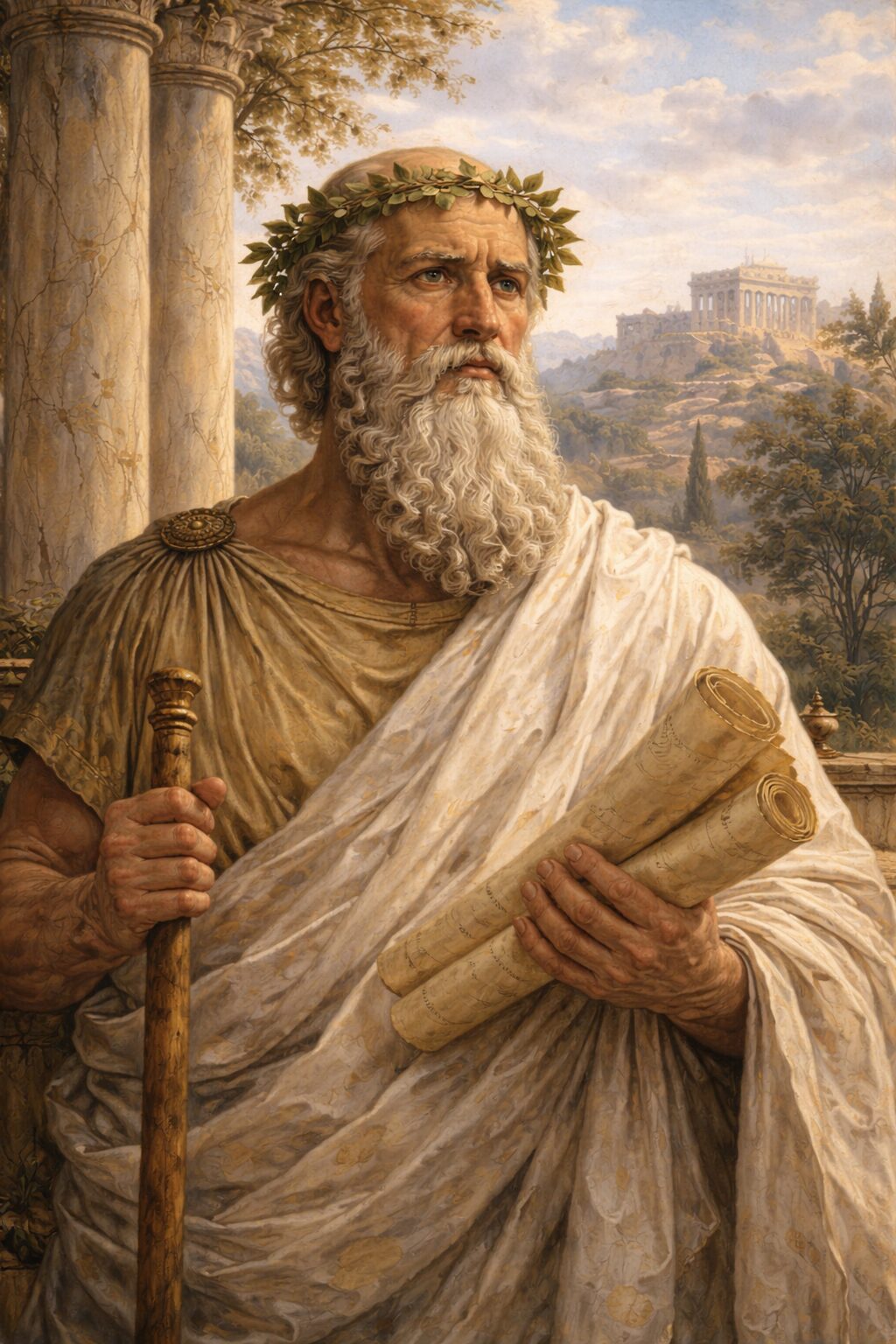
Aeschylus, (525 BC/524 BC – 456 BC/455 BC) was a Greek playwright of the 6th century B.C. Known as the founder of tragedy, he was the earliest of three Greek tragedians whose plays survive, the others being Sophocles and Euripides.
Many of Aeschylus' works were influenced by the Persian invasion of Greece, which took place during his lifetime. The war was so important to Greeks and to Aeschylus himself that, upon his death around 456 BC, his epitaph included a reference to his participation in the Greek victory at Marathon but not to his success as a playwright.
Aeschylus was born in Eleusis, a town near Athens, around 525 BC. He grew up during the development of Athenian democracy and fought at the battle of Marathon in 490 BC, a high point of Greek culture, when the Greek army, predominantly Athenians, defeated a force of Persian invaders. Aeschylus wrote many plays (probably around ninety), only seven of which have survived. His Oresteia, the only complete surviving trilogy of plays by an ancient Greek dramatist, won the annual drama competition in Athens in 458 BC.
Aeschylus died in Sicily in 455 BC. Some legends have it that the cause of death was a turtle dropped onto his head by a bird flying above him.